Repairs · Woolwich
Off-Track Garage Door Reset in Woolwich
Your car is inside and the door is stuck crooked across the opening.
In plain words
A reset is different from a track repair, although one visit can include both. Resetting means returning the rollers, cables and sections to the path the track already defines and correcting the small misalignments that let them leave it. Track repair means the rail itself is bent, crushed or torn from the jamb and must be re-formed or replaced before anything can ride on it. The technician looks at the door and tells you which situation you have. Many doors need only a reset with a few new rollers; a door hit by a vehicle often needs a length of new track as well.
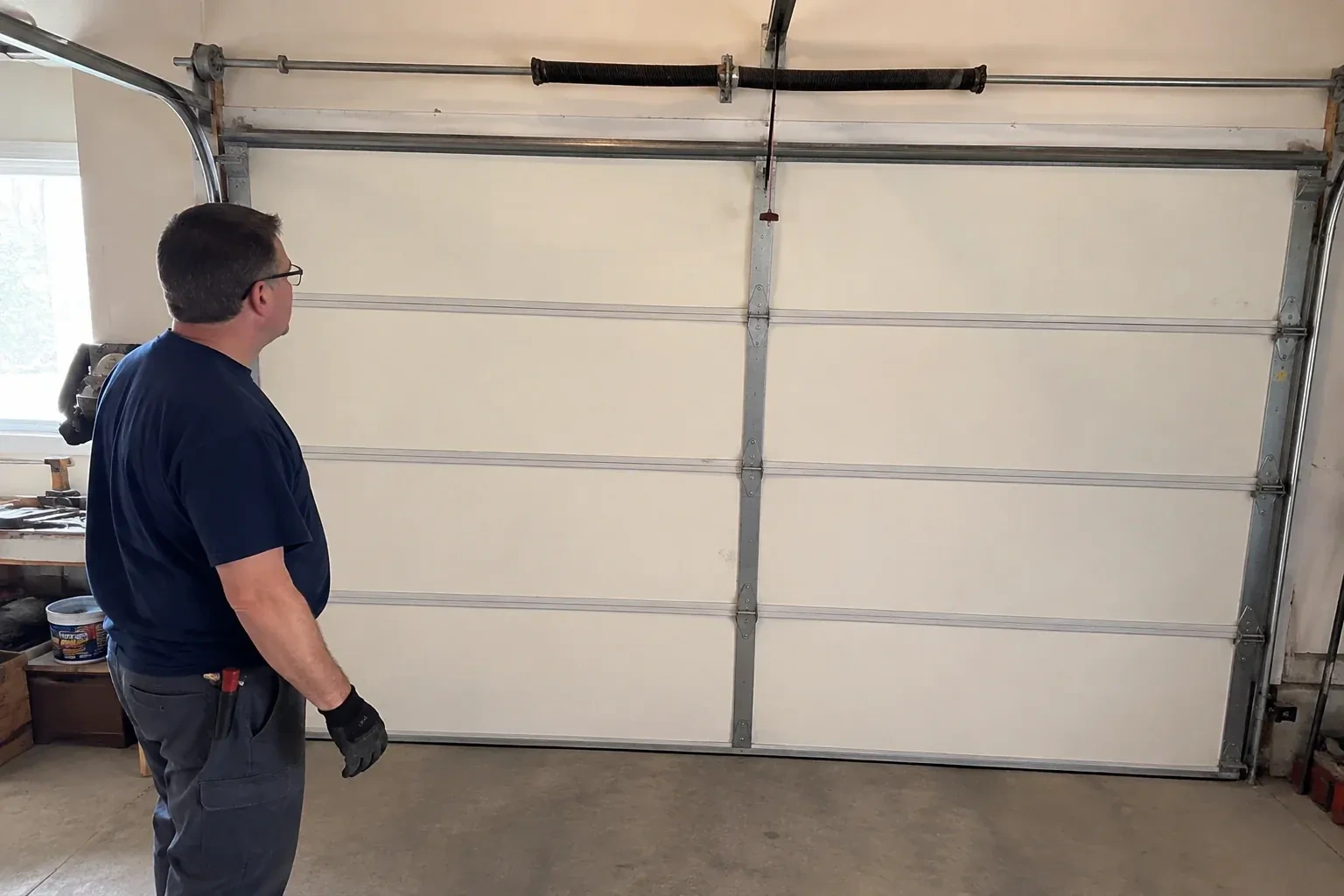
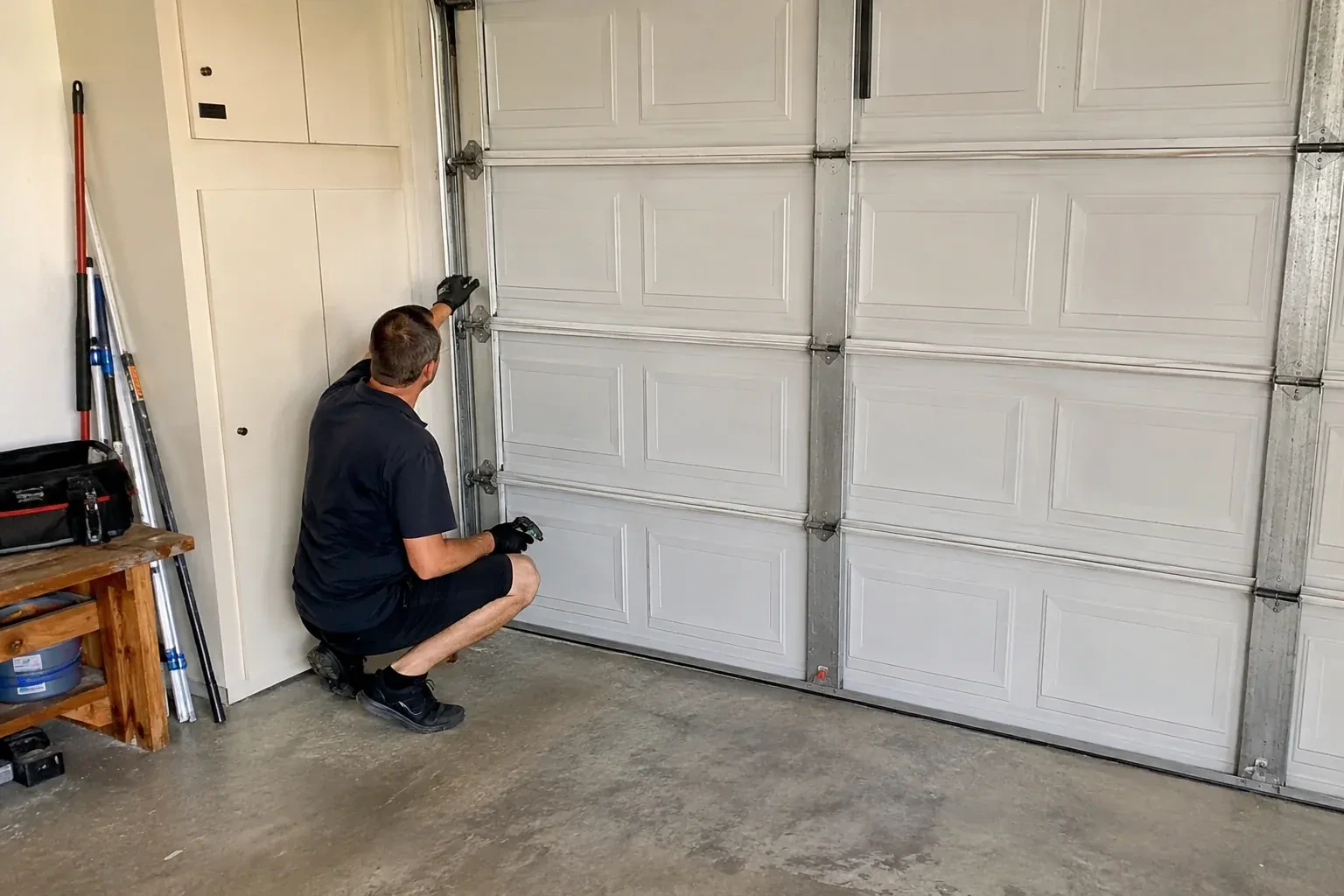
How the visit goesYour car is inside and the door is stuck crooked across the opening. Pushing the wall button just makes the motor hum, and one section is bent where a roller has climbed out of the curve at the top of the track.
Off-Track Garage Door Reset
How the visit goes
The opener's role in what happened
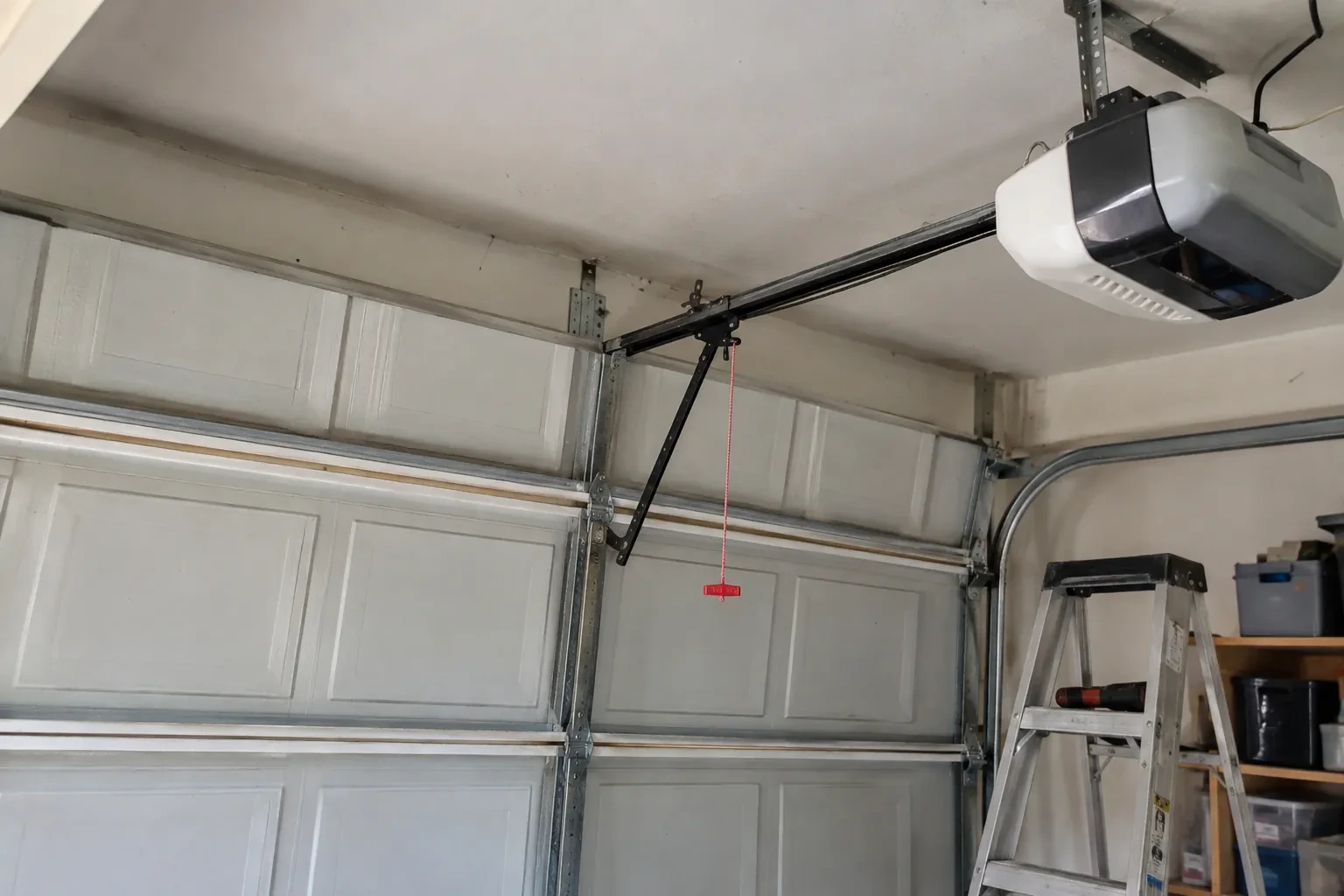
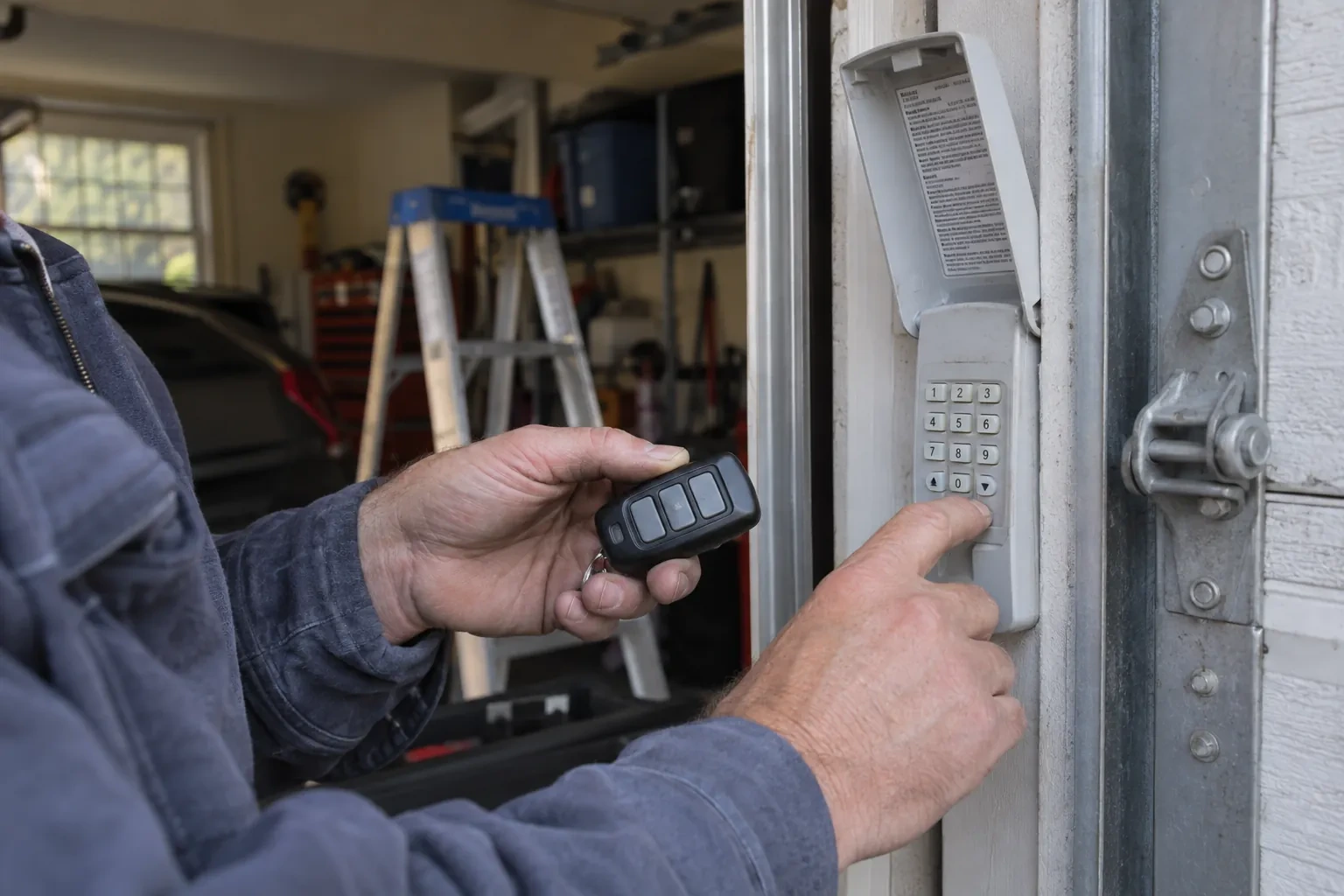
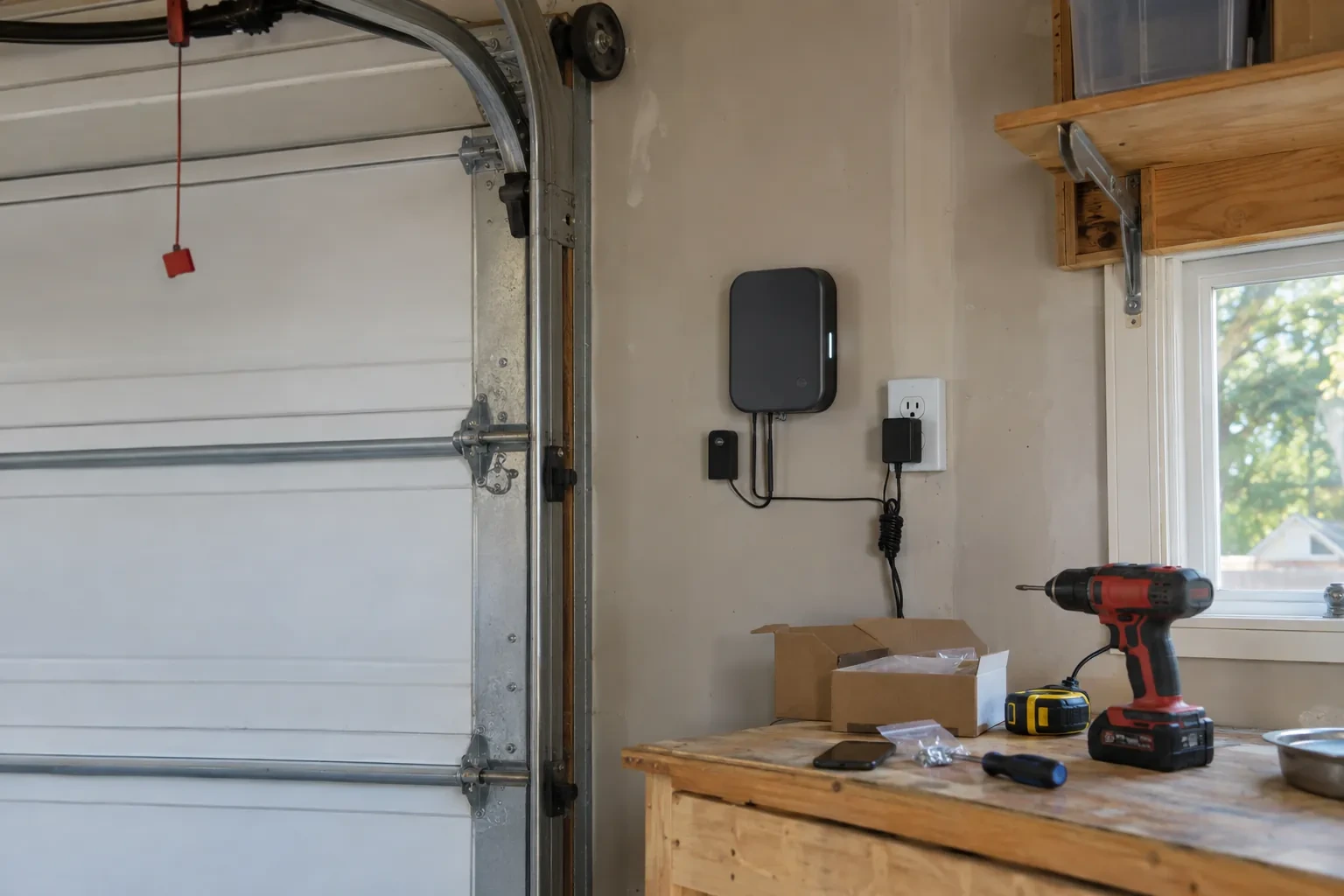
An automatic opener is often the last actor in an off-track event even when it is not the cause. The technician looks at the trolley and rail, the arm connecting it to the top section and any operator reinforcement on the door. Force settings that let the motor push against a stuck door, travel limits set past the floor, a manual slide lock left engaged and photo eyes knocked out of line all get noted. The opener is left disconnected for now; this part of the check is about understanding how much strain it put on the door and what will need resetting once the door runs true again.
Putting the cables back on their drums
A cable that unwound or crossed on its drum is stripped back and rewound in its groove, beginning at the cable stop and laying each turn beside the last. Both cables are set to equal length so the bottom section hangs level, then the drums are locked to the shaft and the springs are rewound to the door's weight. A cable with kinks, rust or broken strands is replaced along with its partner so the two sides age together. This part of the work is done with the door clamped fully closed and the sections held, because a cable coming under tension is exactly when a door wants to move.
Knowing what caused it
The visit closes with a plain explanation of what let the roller go: an impact, a cable that slipped, ice on the threshold, a worn wheel or a bracket that had pulled from the wood. You are told what was reset, what was replaced and what was adjusted, and whether anything was left for a later decision, such as tired springs or a section with a crease that still works but will not improve. Knowing the cause is what lets you prevent a repeat, and it gives you a clear record if the door is ever assessed again or if an insurer asks what a vehicle strike involved.
Off-Track Garage Door Reset
In the van
Level and plumb line
Locking pliers and track clamps
Bottom brackets
Torsion spring winding bars
Replacement rollers, steel or nylon
Off-Track Garage Door Reset
What affects the quote
Track that can be trued versus track that must go
Re-plumbing and tightening existing track is labour only. A crushed or kinked length that has to be cut out and replaced adds the new rail in the door's profile, and the quote says which applies.
Access and a trapped vehicle
A car inside, a tight garage with shelving beside the tracks or a low ceiling around the horizontal rails all slow the work of supporting and moving the door, and the estimate allows for the working space available.
Time of the call
An evening, weekend or holiday visit to secure a door that will not close costs the same amount as a weekday appointment. The technician looks at how far the door has left its track before naming the figure, not at what time the call came in.
What to have ready
- Roughly how old is the door, and when was it last serviced?
- Is the door fully open, part way up, or closed and sitting crooked?
- Are the springs mounted above the door or stretched along the sides?
Off-Track Garage Door Reset: questions
QuestionsOne side of my door hangs lower than the other. What does that mean?
A door that sits tilted almost always has a lifting cable that has gone slack, unwound from its drum or broken on the low side. The springs are still pulling on the other side, which is why the door racks and the rollers escape. Leave it where it is; levelling it means handling the springs and rewinding both cables evenly, which is done with the door clamped and the tension controlled.
I only tapped the door with the bumper. Why is it off its track?
A sectional door is strong in the direction it travels and surprisingly easy to push sideways at a single roller. A light nudge on the bottom section can flex the track lip enough for the roller to slip out, after which the section twists and the rollers above follow. The good news is that this kind of event usually leaves the cables and springs alone, so the reset is often rollers, a re-formed track lip and a hinge check.
Will the track have to be replaced?
Often not. A track that is simply out of plumb, spread at the lip or loose on its brackets is re-formed and re-fixed. Replacement is for rail that has been crushed, kinked or torn by an impact, because a roller passing a tight spot will pop out again. The technician measures the damaged length against the door's roller size and tells you which case you have before any track is ordered or cut.
Related services
- Garage Door Tune-UpThe door lands with a thud you can feel through the kitchen floor, and sometimes it bounces back up a few centimetres before settling.
- Garage Door Panel ReplacementA stray ball went through one of the window panes in the top section.
- Garage Door Bottom Seal ReplacementEvery mild afternoon the snow melts off the car, runs to the door, and by morning the rubber strip along the bottom is frozen to the concrete.