Garage Doors in Elmira, OntarioButton, keypador phone.
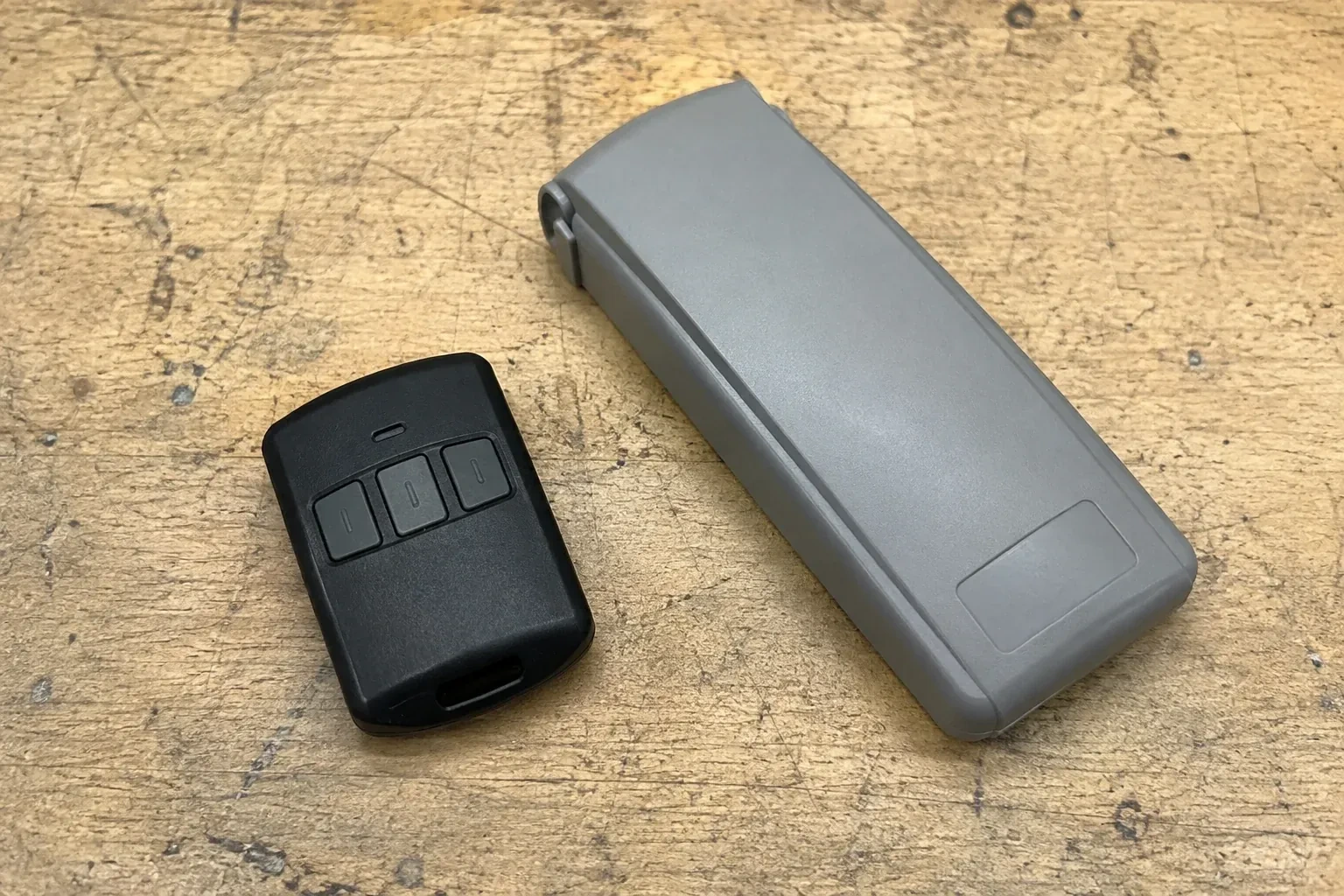
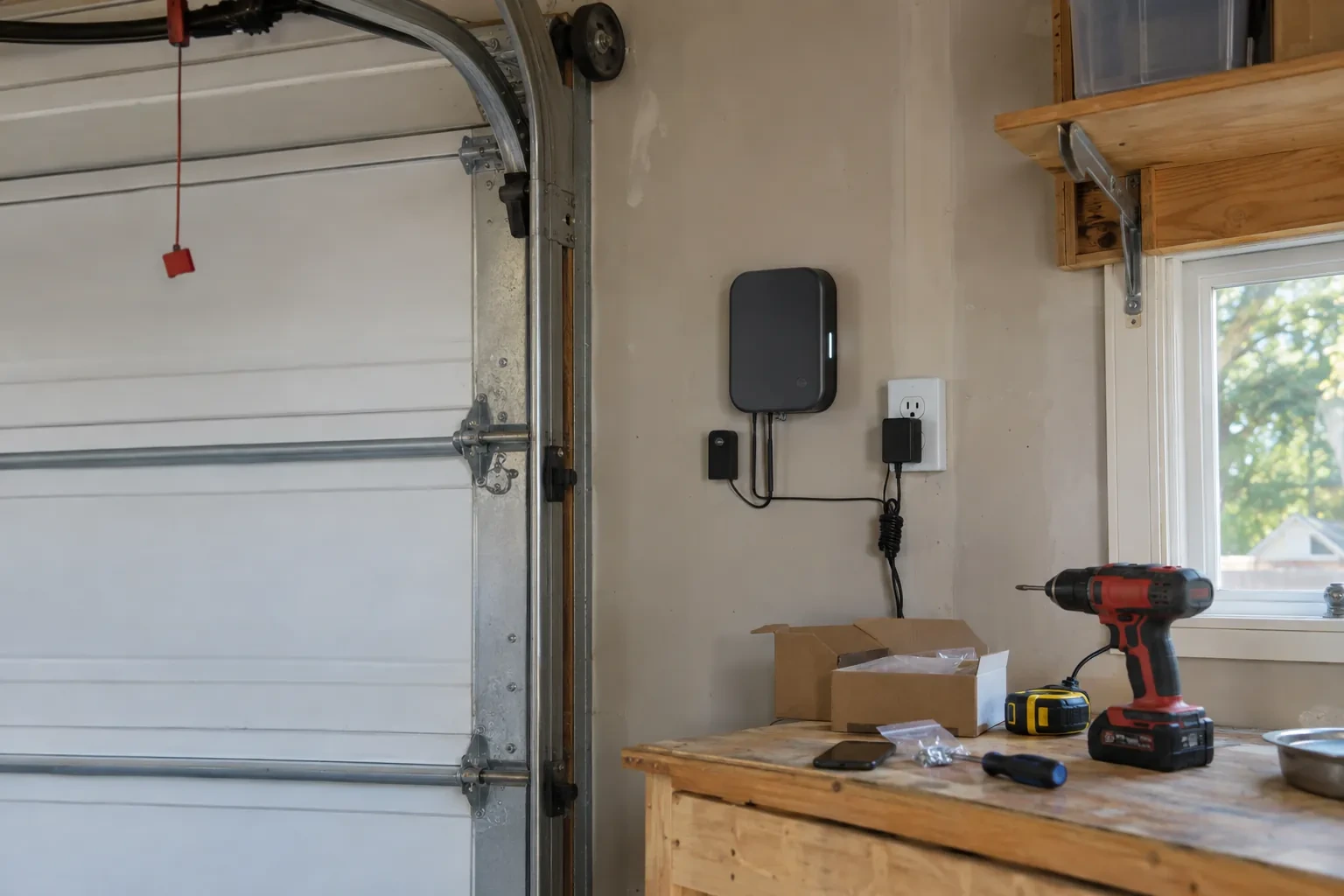
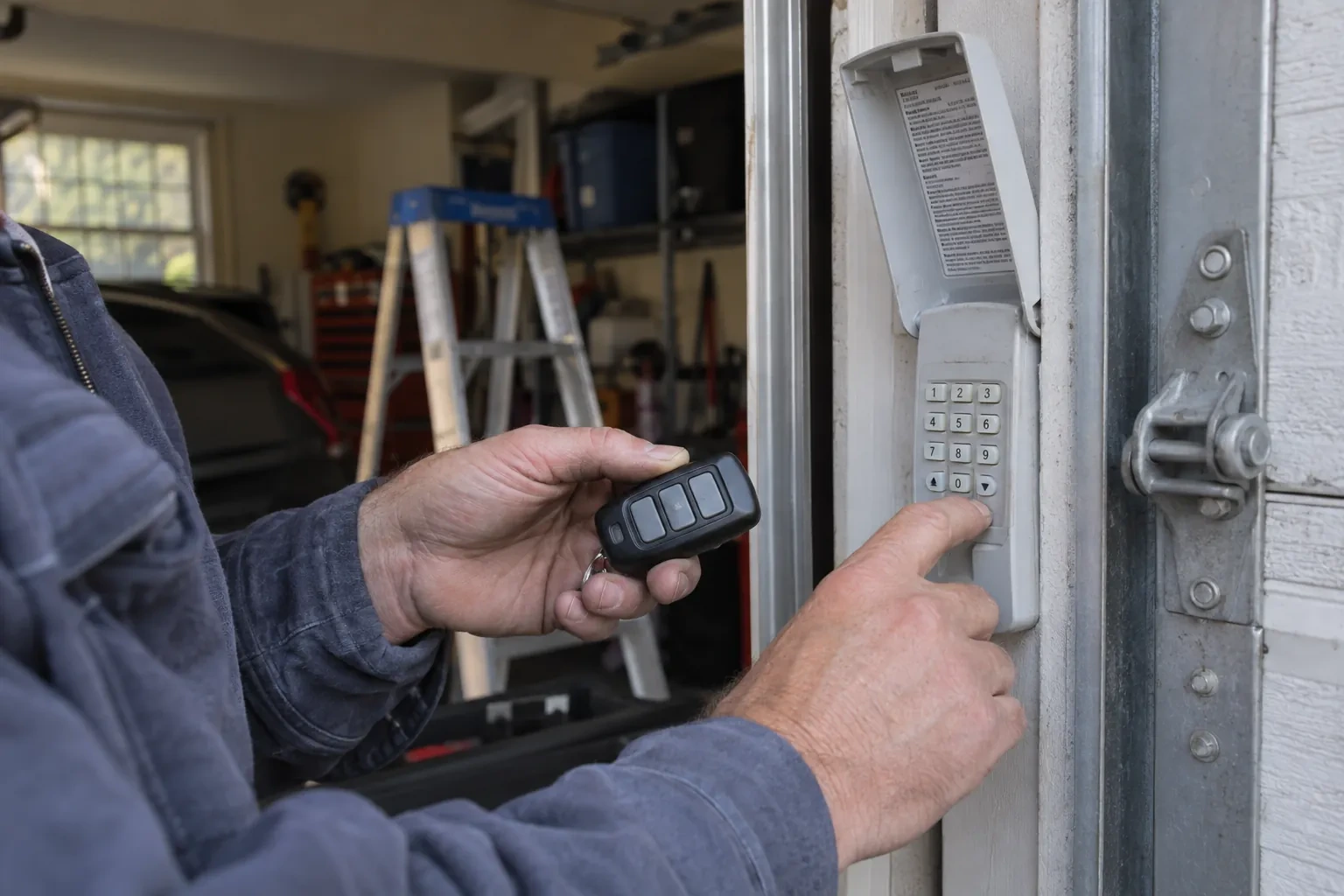
Some households in Elmira want a keypad by the door for the kids, a second remote for the other car, and an app that says whether the door was left open. We set up each of those, walk you through them, and leave the paperwork so the next person can follow it too. We serve Wallenstein as well.
Some households in Elmira want a keypad by the door for the kids, a second remote for the other car, and an app that says whether the door was left open. We set up each of those, walk you through them, and leave the paperwork so the next person can follow it too. We serve Wallenstein as well.
Careful work on heavy doors.
Landlords and property managers in Elmira get a written summary after every visit: the address, what was found, what was replaced, and what is likely to need attention next. Tenants get a door that works and remotes that behave. Everyone knows where things stand without a second phone call.
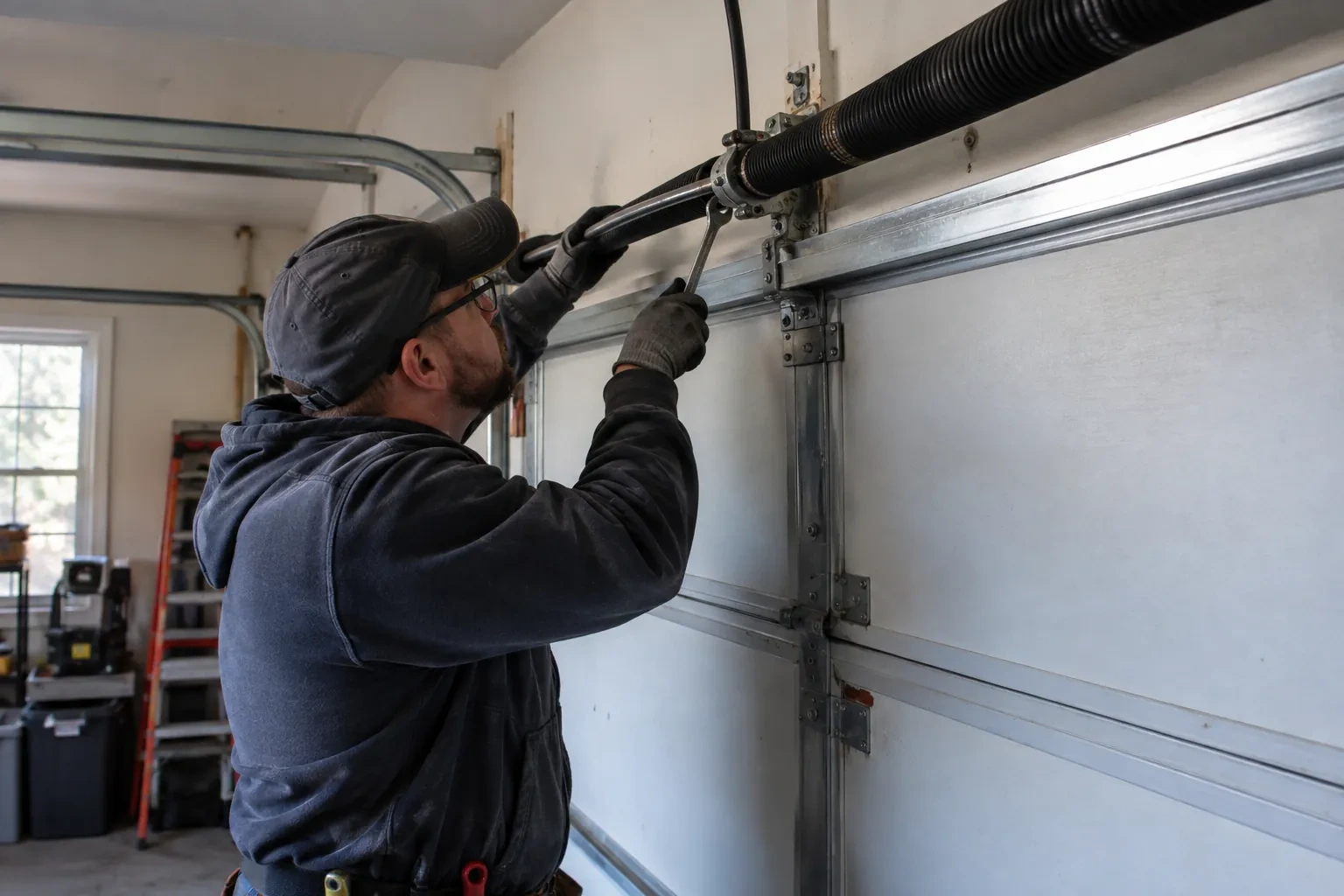
Our vans are stocked like small workshops before they set out for Elmira: torsion and extension springs in the common sizes, cables, drums, bearings, rollers, hinges, seals, opener gears, sensors and remotes. A garage door usually fails in one of a dozen familiar ways, and having the part on hand means the door is working again by the time we drive off.
20years in business
24/7open every day
Understanding first. We explain the fault in plain terms and check that it makes sense to you before moving on to the repair.
Respect for the space. Drop sheets, careful handling of stored items, and a full clean-up. We are guests in your garage and act like it.
Choices laid out plainly. Each option comes with what it involves, how long it tends to last and what it means for the opener and the rest of the door.
Broken spring, snapped cable, door off the track, opener humming but not lifting, remote lost, seal cracked, panel dented, door too loud for the bedroom above: those are the calls we take from Elmira, and each has its own service page explaining how we handle it.
About 47% of homes in Woolwich were built in 1980 or earlier, according to the 2021 Census.
A mixed housing stock means some doors are on their original openers without photo-eyes while others have modern units with apps and keypads. We handle both: upgrading the older ones for safety and quietness and adjusting or expanding the newer ones as the household grows.
Single-detached houses make up about 76% of homes in Woolwich (2021 Census).
Mostly houses
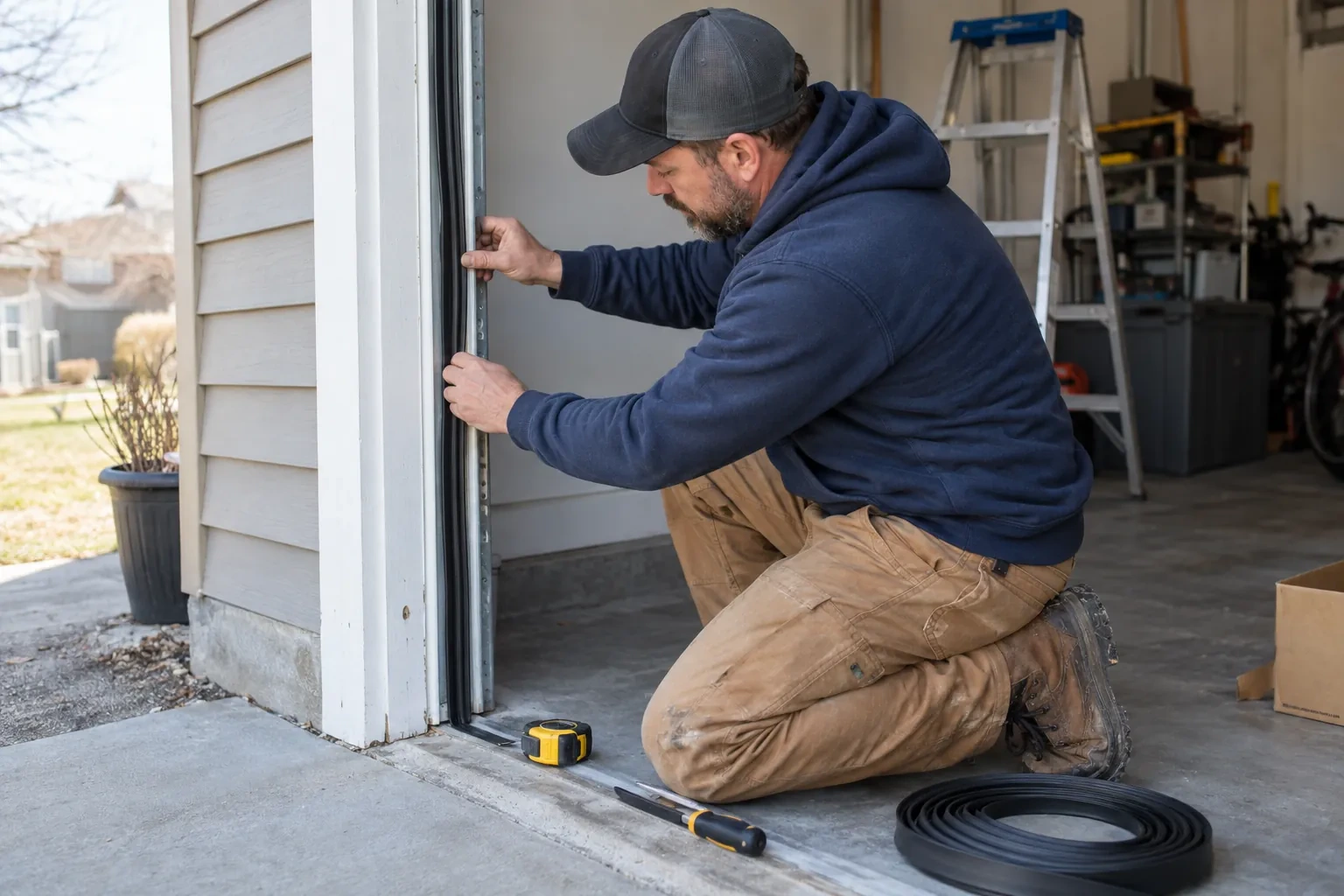
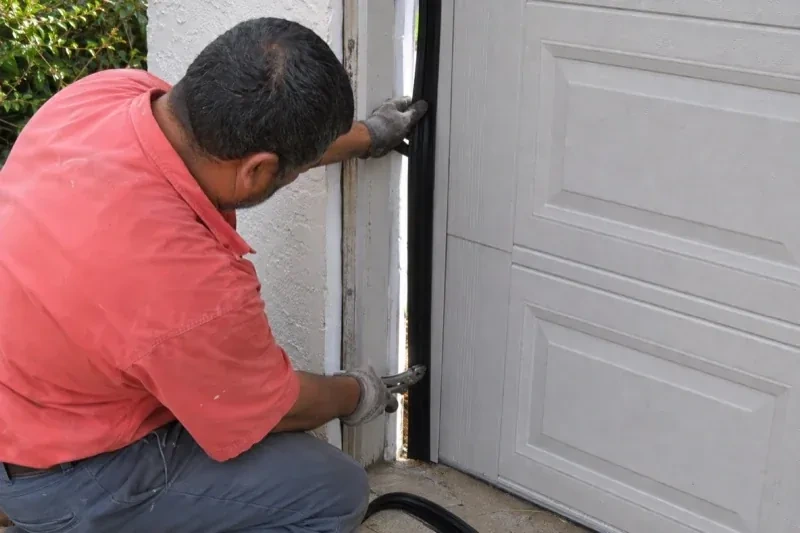
Detached homes usually have their own driveway and apron, and years of freeze and thaw can leave the concrete uneven where the door meets it. A thicker bottom seal or a threshold strip closes the gap, keeping snow, leaves and cold air out of the garage.
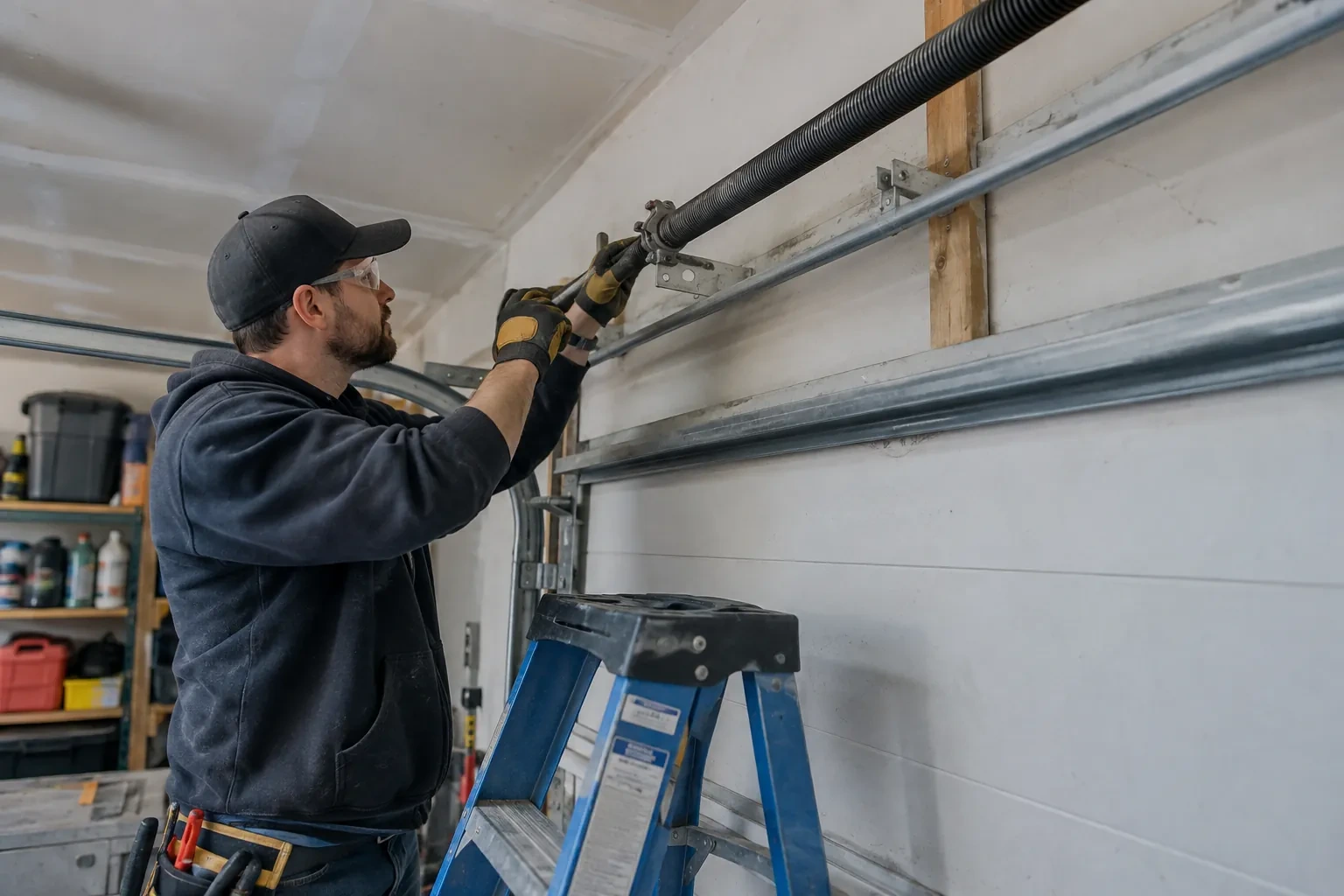
Lifting hardware fails in sequence: a dry bearing loads a cable, the cable frays at the drum, the drum groove wears, the spring works harder than it should. Catching the first link in that chain saves the rest.
Every morning the door announces itself: a rattle on the way up, a grinding squeal on the way down, loud enough that the neighbours know when you leave.
Sectional doors, carriage-house styles, full-view glass and insulated steel all sit in this group, along with the conversions and hardware upgrades that change how a door performs.
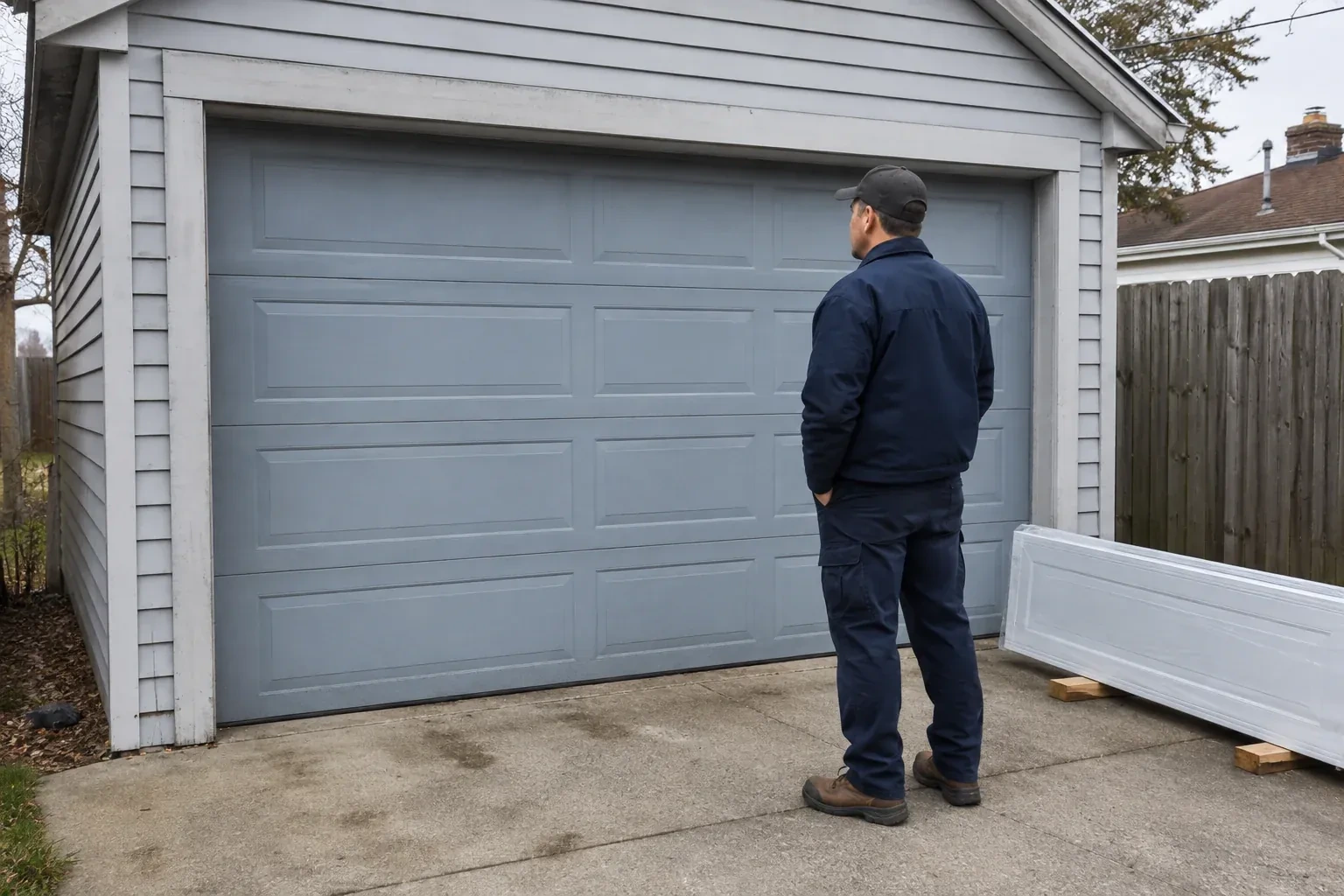
WhyThe useful decision is not simply repair versus replacement; it is which path fits the identified curtain, structure, duty and operating system.
An entrance. Not an afterthought.
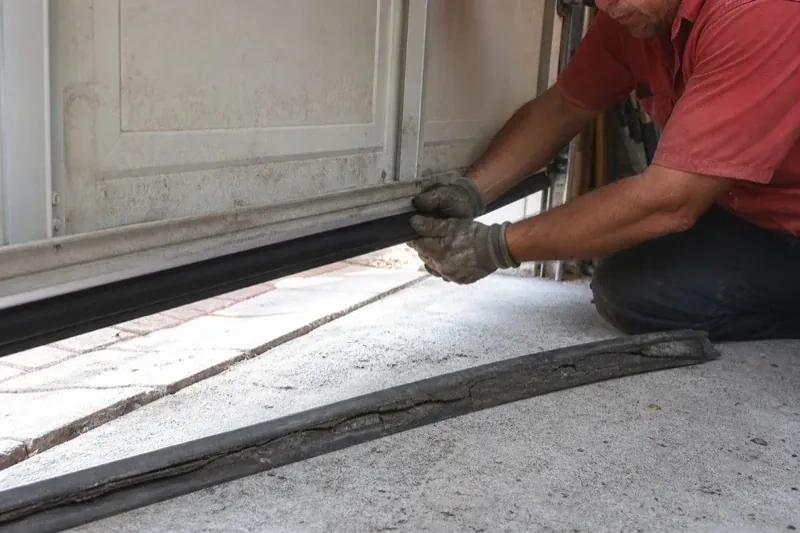
1/10Garage Door Bottom Seal Replacement
After a spring rain there is a puddle inside the door that reaches the tires. The driveway slopes toward the garage, the slab has a low corner, and the flattened old seal is not making up the difference.
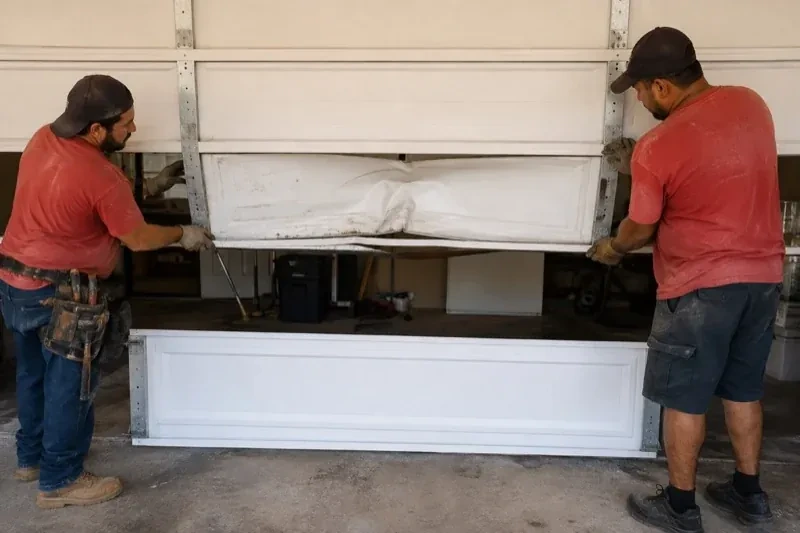
The car nudged the door on the way in. There is a dent low on one end, and above it the hinge that carries the roller is bent so the panel edges rub together and squeal as the door lifts.
The door starts to rise, gets about the height of your knee, then shudders and reverses. The opener sounds strained, and the top section flexes as the trolley pulls on it, because the motor is doing work the spring used to do.
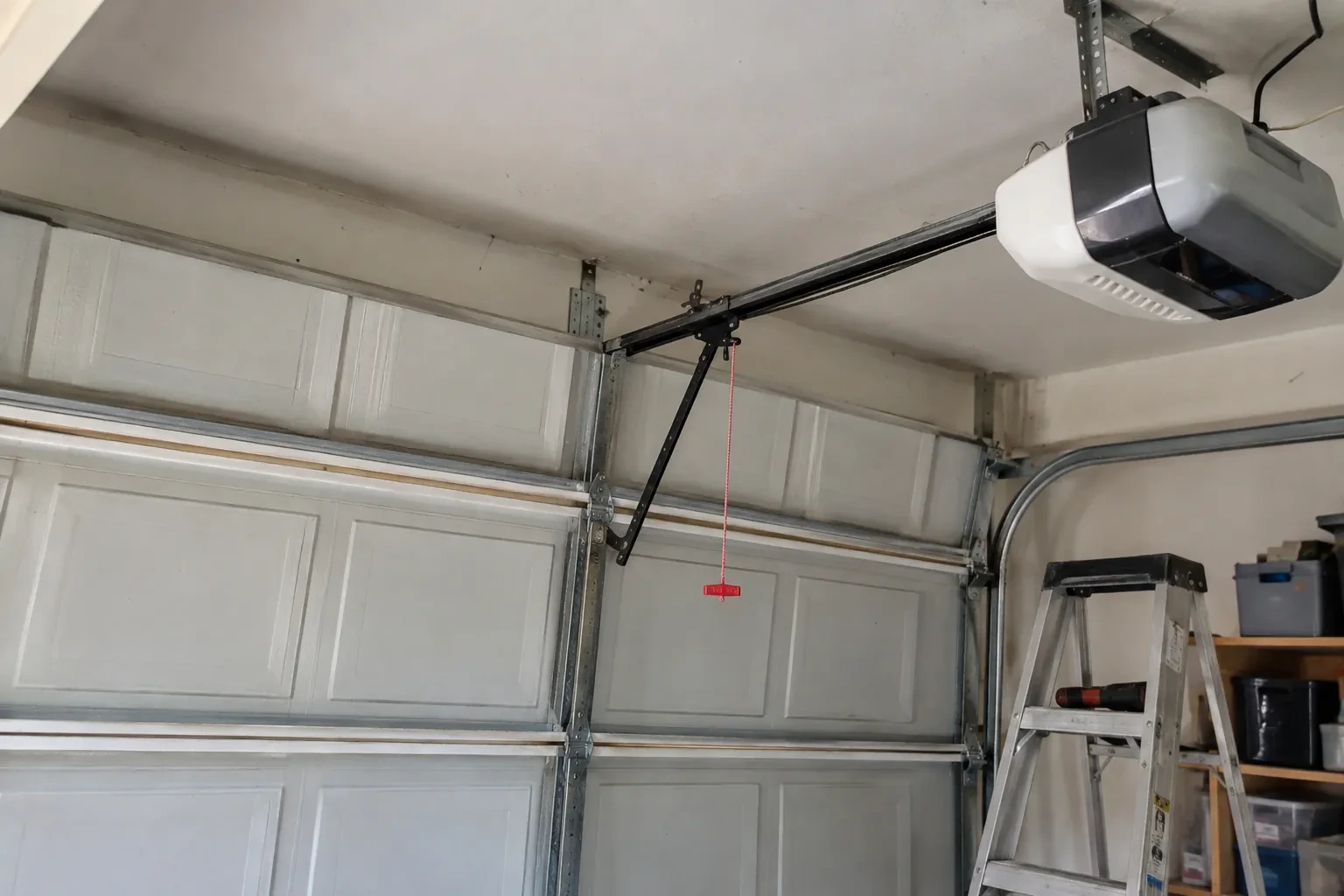
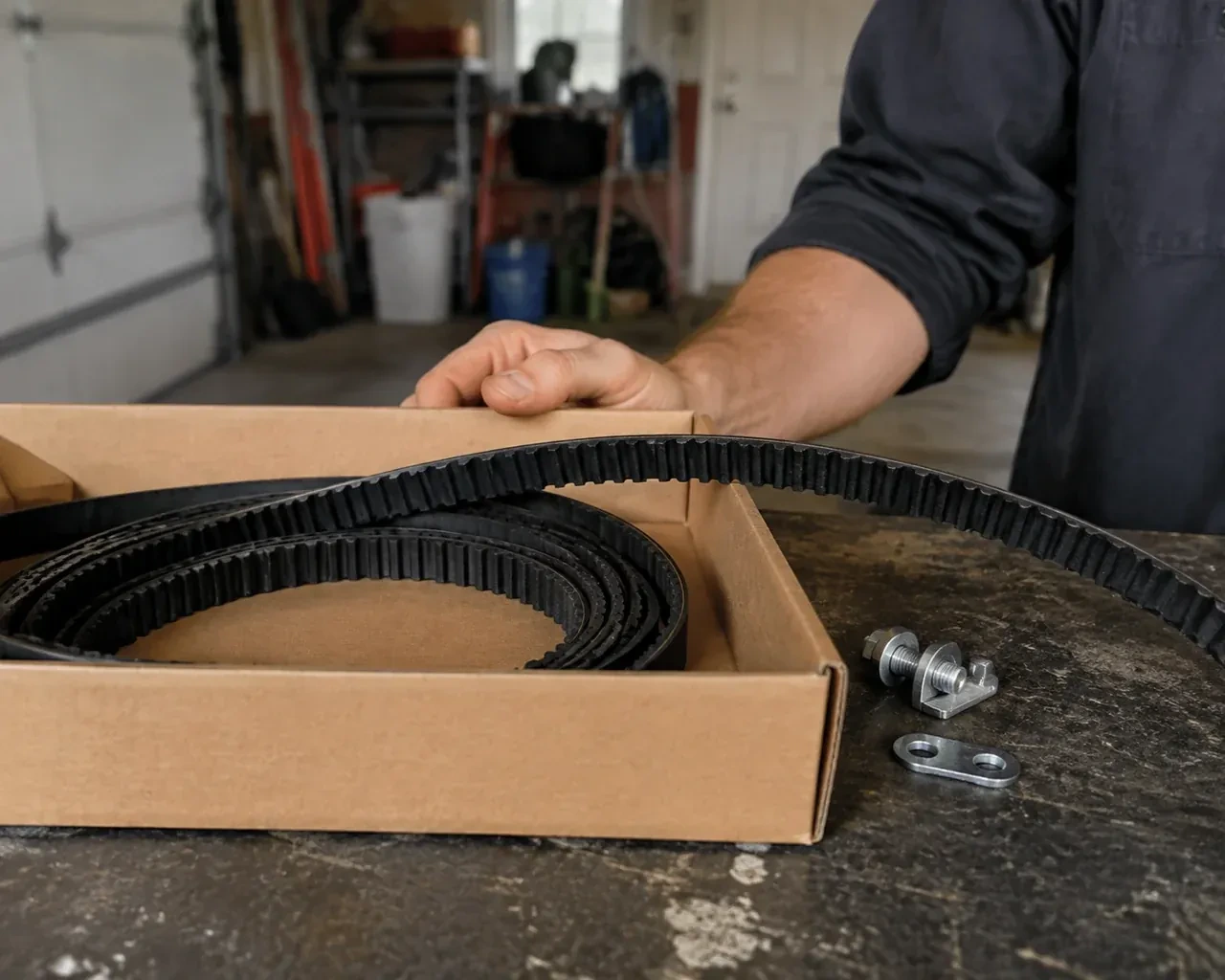
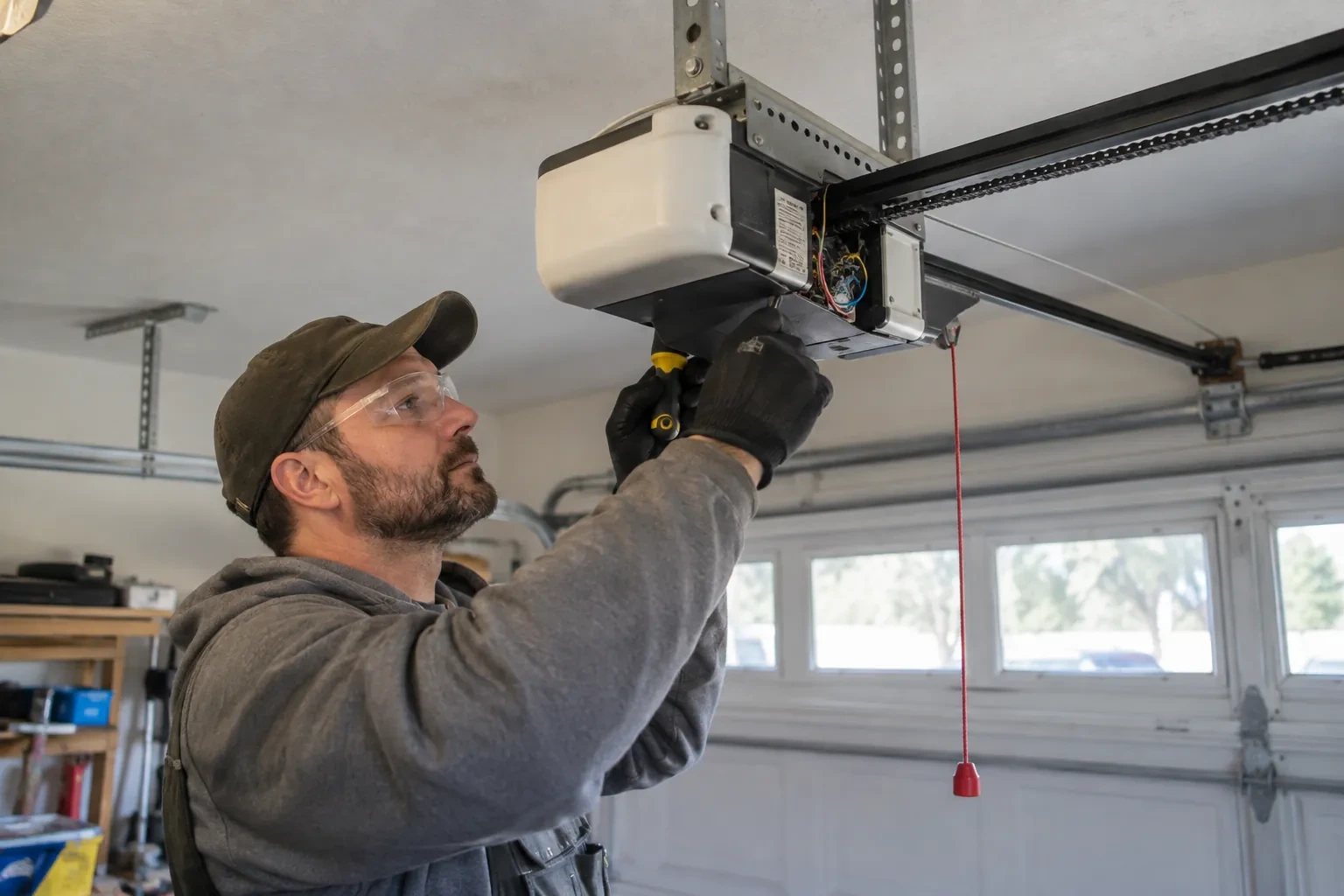
Press the remote and the motor runs its full cycle, lights on, the usual whir, but the door does not move a centimetre. Up at the trolley, the belt is hanging loose where a small plastic clip used to hold it.
Press the button and the motor hums, but the door stays exactly where it is. Under the housing there is a dusting of white plastic shavings, the sign of a stripped drive gear, and this is the second time it has happened.
You bought a new remote at the hardware store, followed the little leaflet twice, and the opener light never blinked. The old remote still works. The new one does nothing at all, from the driveway or standing directly under the motor.
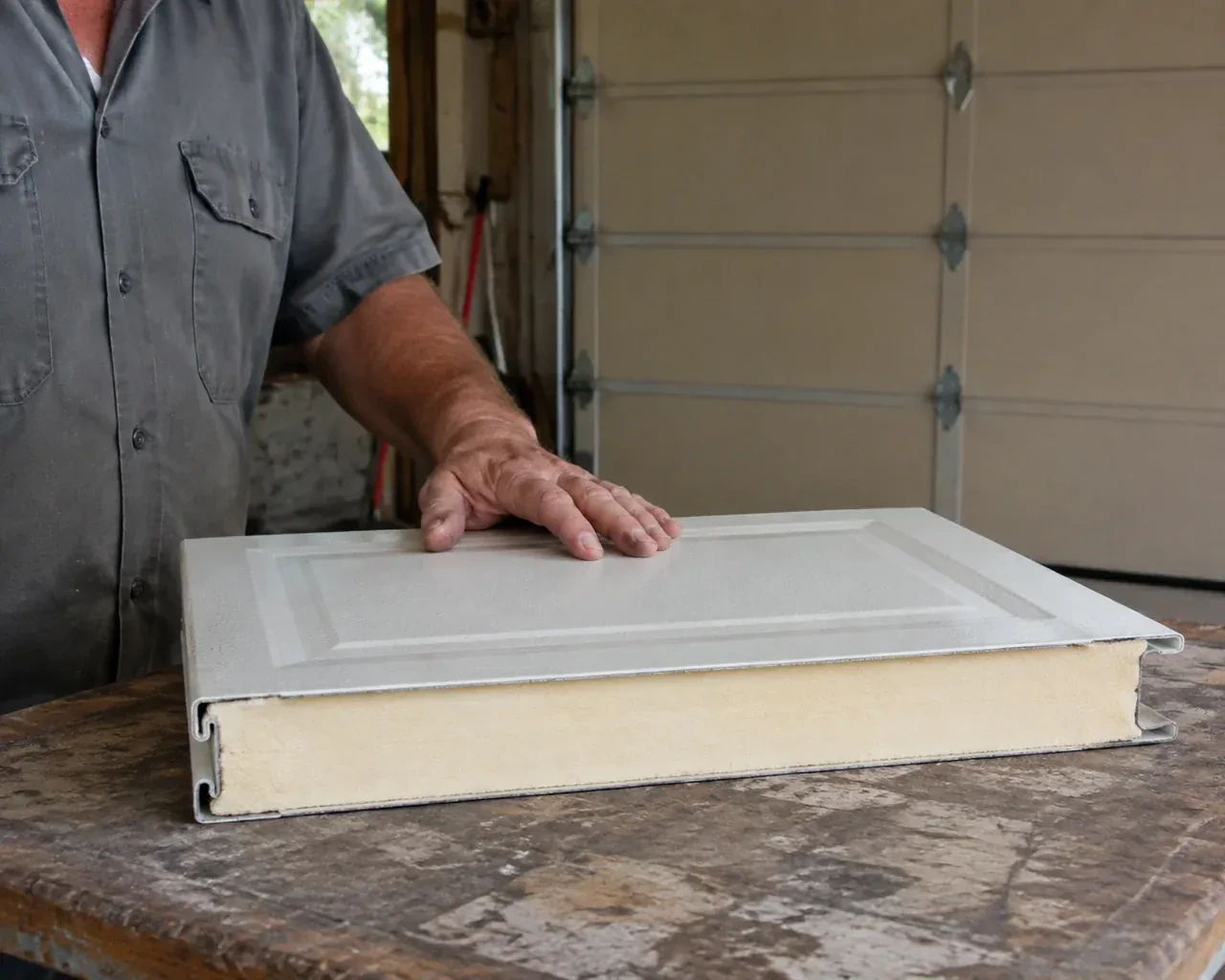
The garage becomes notably colder each winter, with drafts around the perimeter and condensation on thin door sections. You want a replacement selected for better sealing and insulation as part of a more comfortable space.
The room above your attached garage stays chilly while the steel door below feels cold to the touch. Light shows at the edges, and every winter wind seems to find the gaps around the opening.
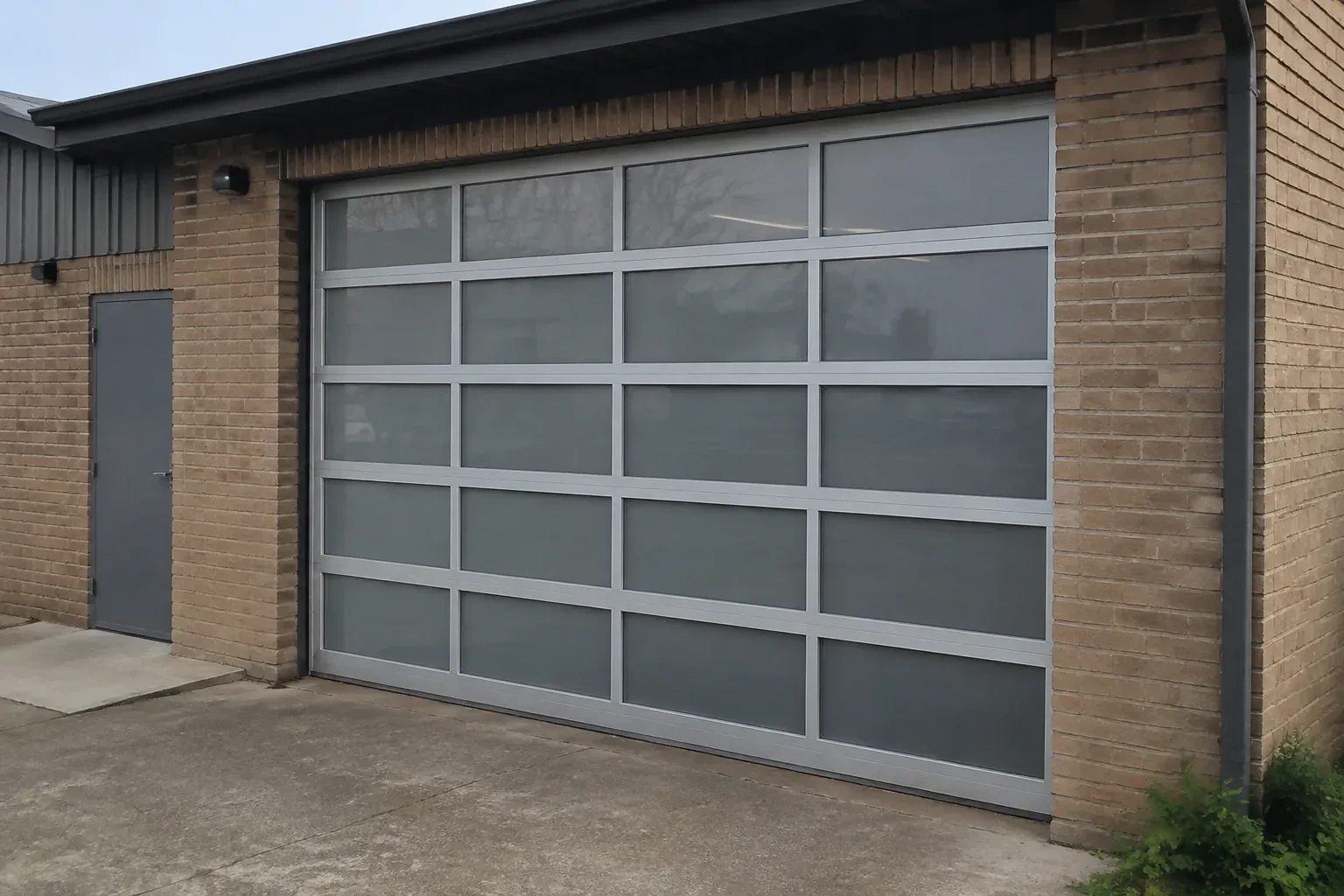
The ceiling has bulkheads, lighting and an opener competing for space above the opening. Before ordering a glazed door, you need to know which track arrangement will travel cleanly through that limited headroom.
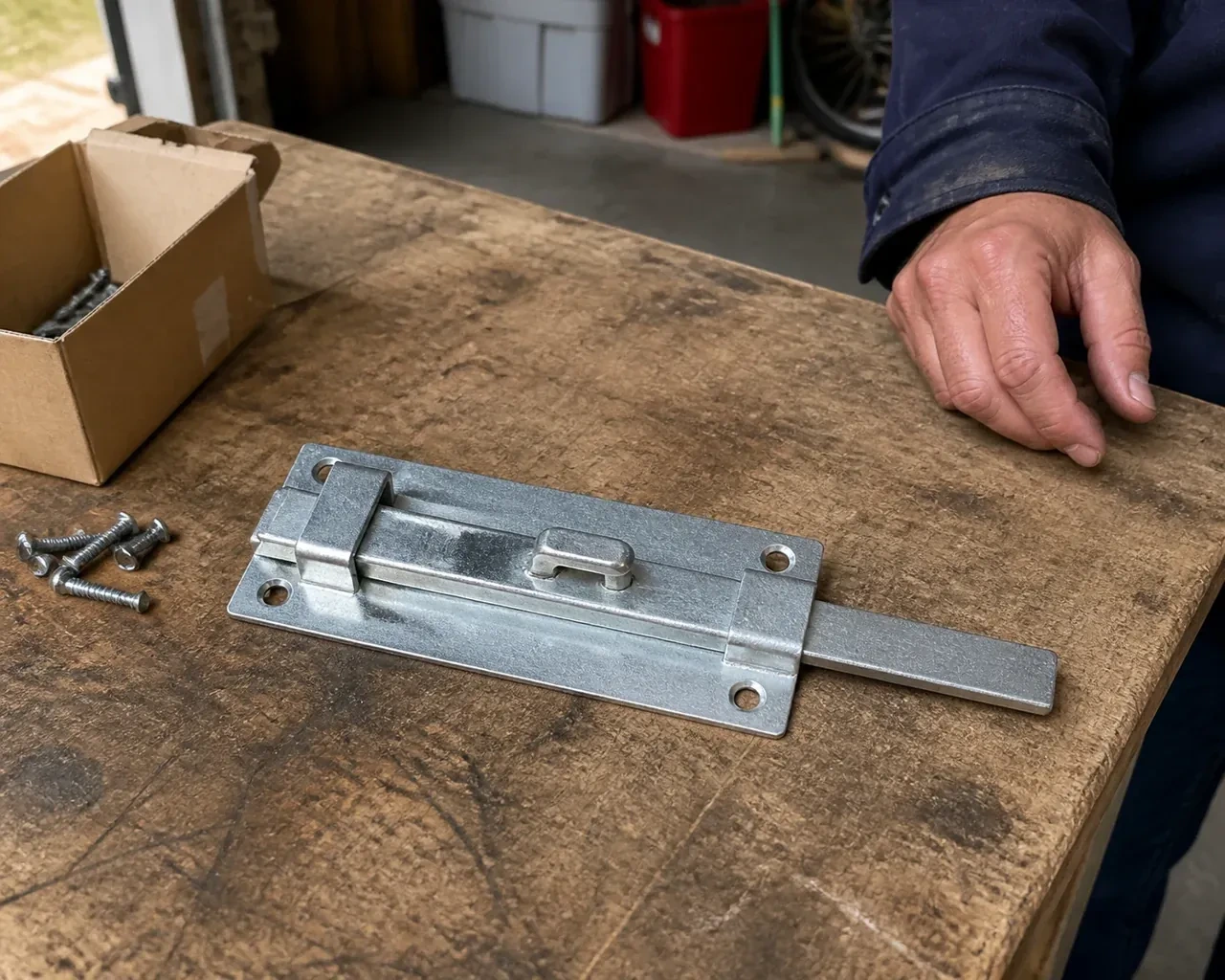
At closing time, the bottom bar reaches the floor on one end while daylight remains under the other. The slide bolts miss their keepers, leaving staff unable to secure the business opening in its usual way.
Plan on an hour or two for a straightforward replacement on a standard door, including the inspection and the opener reset. A retainer replacement, a hardened seal that has to come out in pieces, a wood door with a nail-on strip or the addition of a threshold seal each add time. The technician will give you a realistic window once the door has been looked at.
Will new hinges make the door quieter?
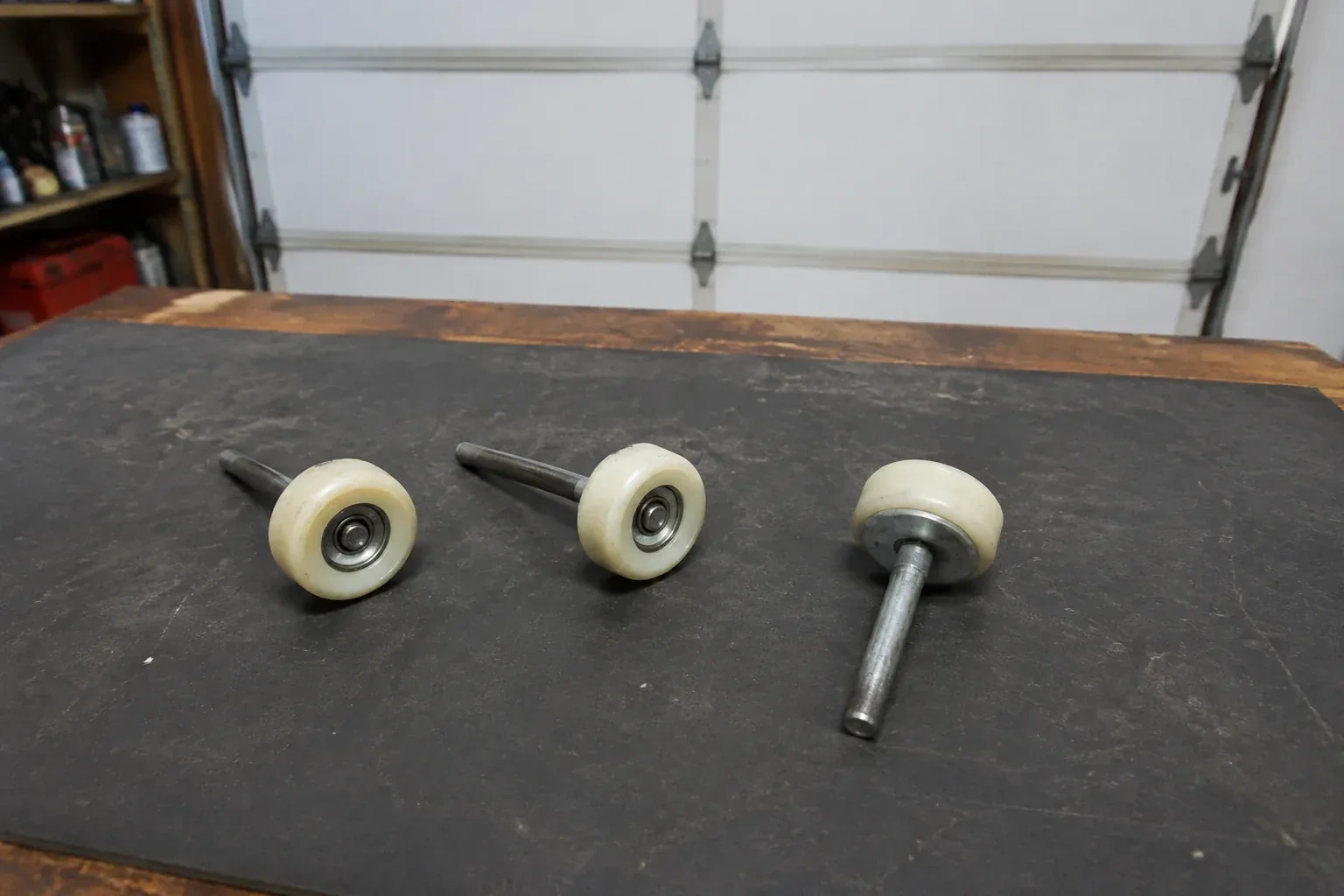
Often noticeably. A cracked or loose hinge is the source of many pops, clicks and rattles, and a hinge that holds its roller square lets the wheel run flat instead of scraping the track lip. Combined with fresh lubricant on the knuckles and rollers, the door settles into a steady rumble. Any noise that remains usually points to the rollers, the opener chain or the springs, which the technician can identify for you.
Can a spring be adjusted rather than replaced?
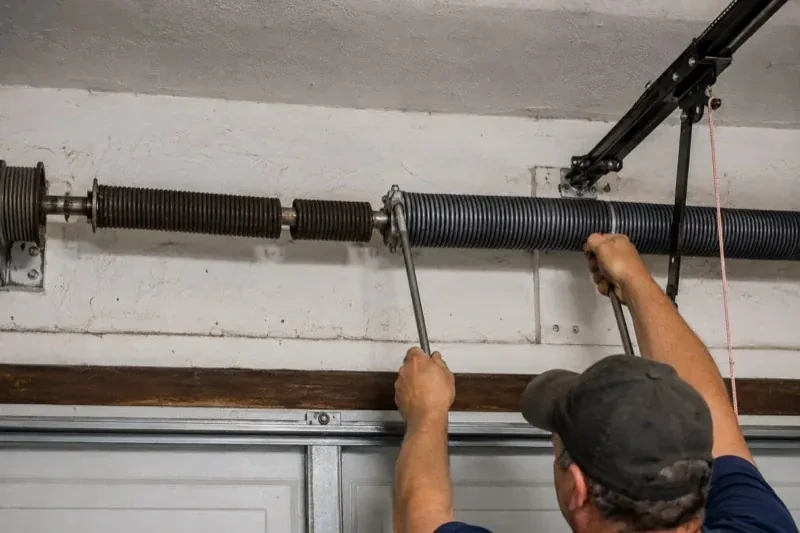
A spring that is intact but has relaxed slightly can be given a little more tension, within limits, to restore balance; this is a normal adjustment on a door that has settled. A spring with a broken coil is replaced as a unit, since the wire has reached the end of its life. The technician checks the condition of the steel and recommends whichever restores a balanced, safe door.
Should the belt be lubricated?
No. The belt is meant to run clean and dry; oils and sprays soften the rubber and gather grit in the teeth, which wears the sprocket. Lubricant belongs on the door instead: hinges, rollers and springs get a garage-door lubricant once a year. The gear inside the motor head takes a light grease when it is serviced, and that is the technician's job.
Should an opener from before the mid-1990s be replaced rather than repaired?
Manufacturers recommend replacing units made before 1993, since most lacked external entrapment protection such as a photo-eye pair, a sensing edge or a constant-contact close control. Identify the model rather than guessing its age or remote type, since a fixed-code remote with small switches is not proof by itself. Replacing rather than repairing brings the sensor beam, a contact-sensitive force setting, remotes whose code changes on every press and a console lock button.
Why does the outdoor keypad struggle in winter?
Small batteries lose output in sustained cold, so a keypad that was fine in autumn can light dimly and transmit too weakly when mornings drop below freezing. Frost and road salt also find their way into buttons and battery contacts over the years. Fresh cells fitted each autumn, clean contacts and a keypad with its slide cover closed carry most households through the season.
How is installation timing planned?
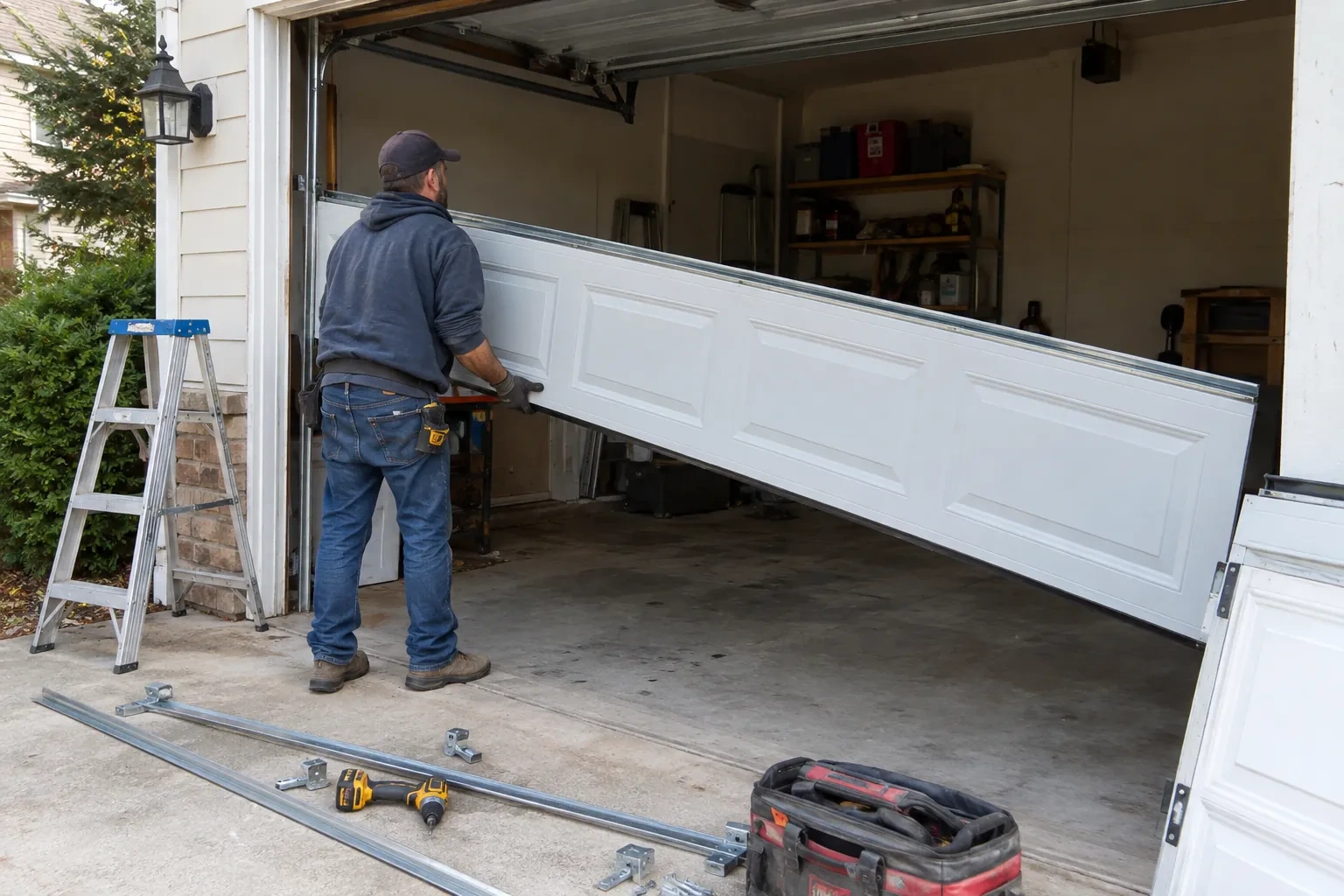
Timing is set after the door specification, site preparation, access and delivered components are confirmed. A straightforward opening and a project needing framing, electrical coordination or unusual track geometry have different sequences. The proposal should identify prerequisites and installation scope so the visit is scheduled around a ready opening and a verified door package.
Can decorative handles and hinges be added?
Decorative hardware can often be included when it is approved for the chosen door and installed in the specified locations. The order records finish, pattern and placement so the exterior remains balanced. Functional lifting hardware is a separate matter and must provide a safe gripping point. Added pieces should not obstruct section joints, tracks, seals or the door's path.
Is the glazing always made from glass?
No. Depending on the selected door system, infill choices may include tempered or laminated glass, acrylic, polycarbonate and solid aluminium panels. Each has its own weight, appearance, privacy, impact and cleaning characteristics. Availability also changes with door size, insulation and frame construction, so the material is confirmed as part of the complete ordered configuration.
When is operator replacement considered?
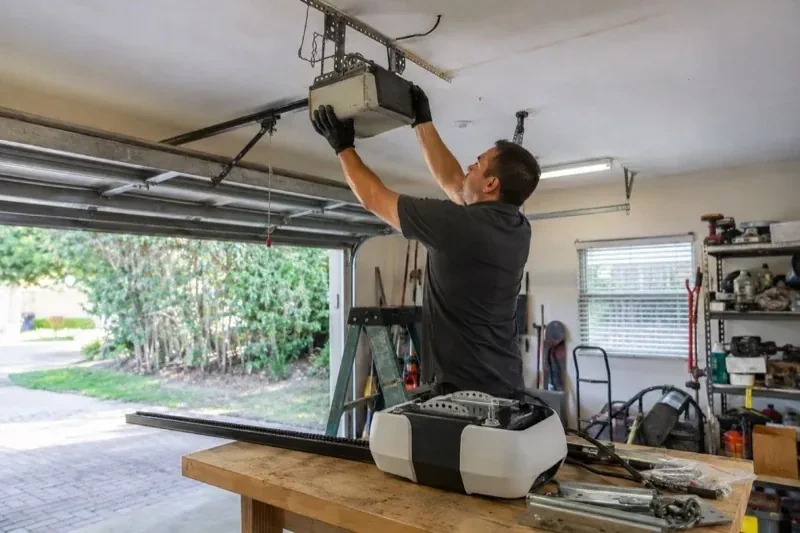
A broader operator plan may be considered when major drive or control parts are extensively worn, suitable components are no longer supported, the unit is mismatched to the door or duty, or the desired control arrangement requires a different system. The door's balance, size, cycle pattern, protection devices, power and manual operation all inform that decision.
Request a visit
Landlords and property managers in Elmira get a written summary after every visit: the address, what was found, what was replaced, and what is likely to need attention next. Tenants get a door that works and remotes that behave. Everyone knows where things stand without a second phone call.