New Doors · Woolwich
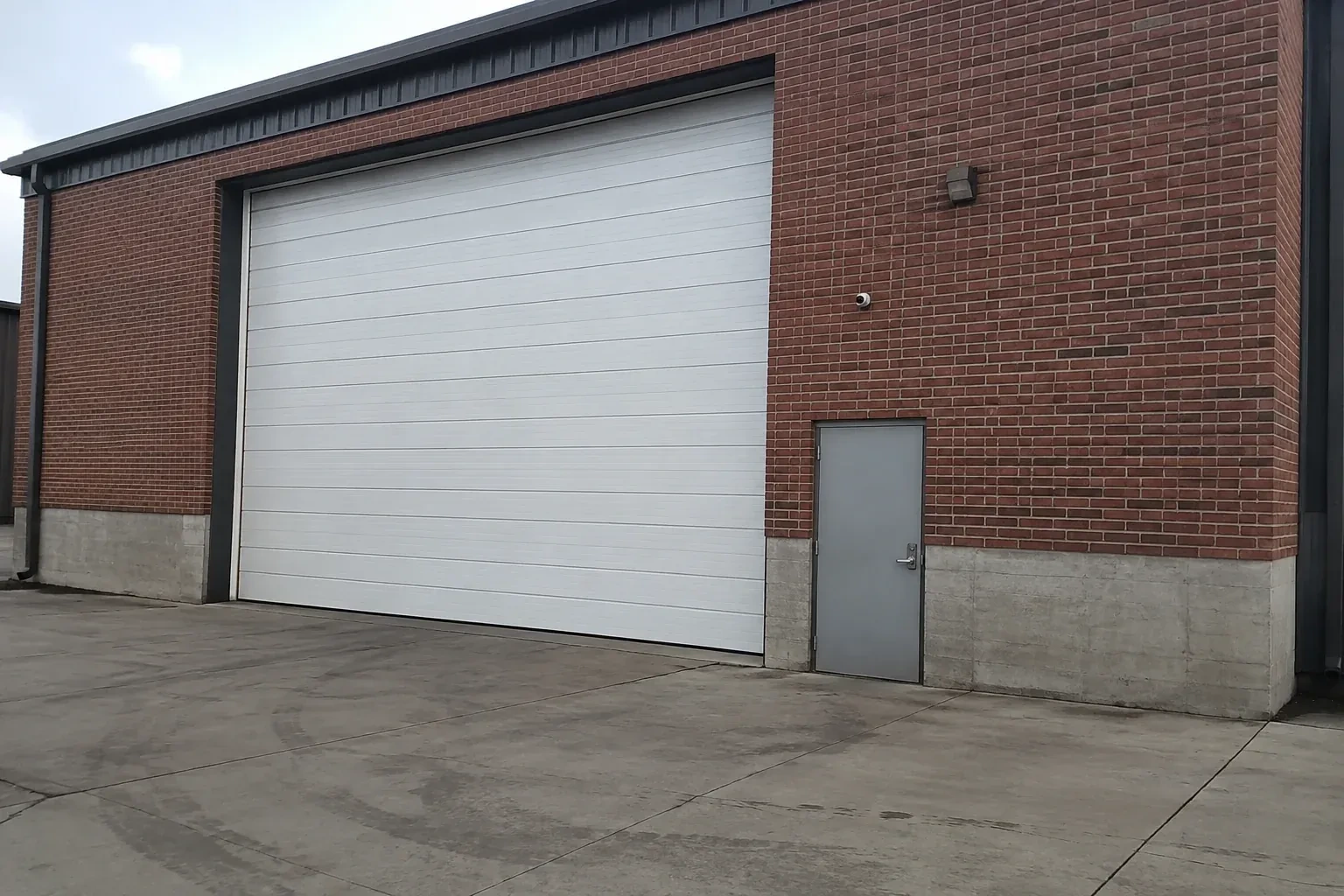
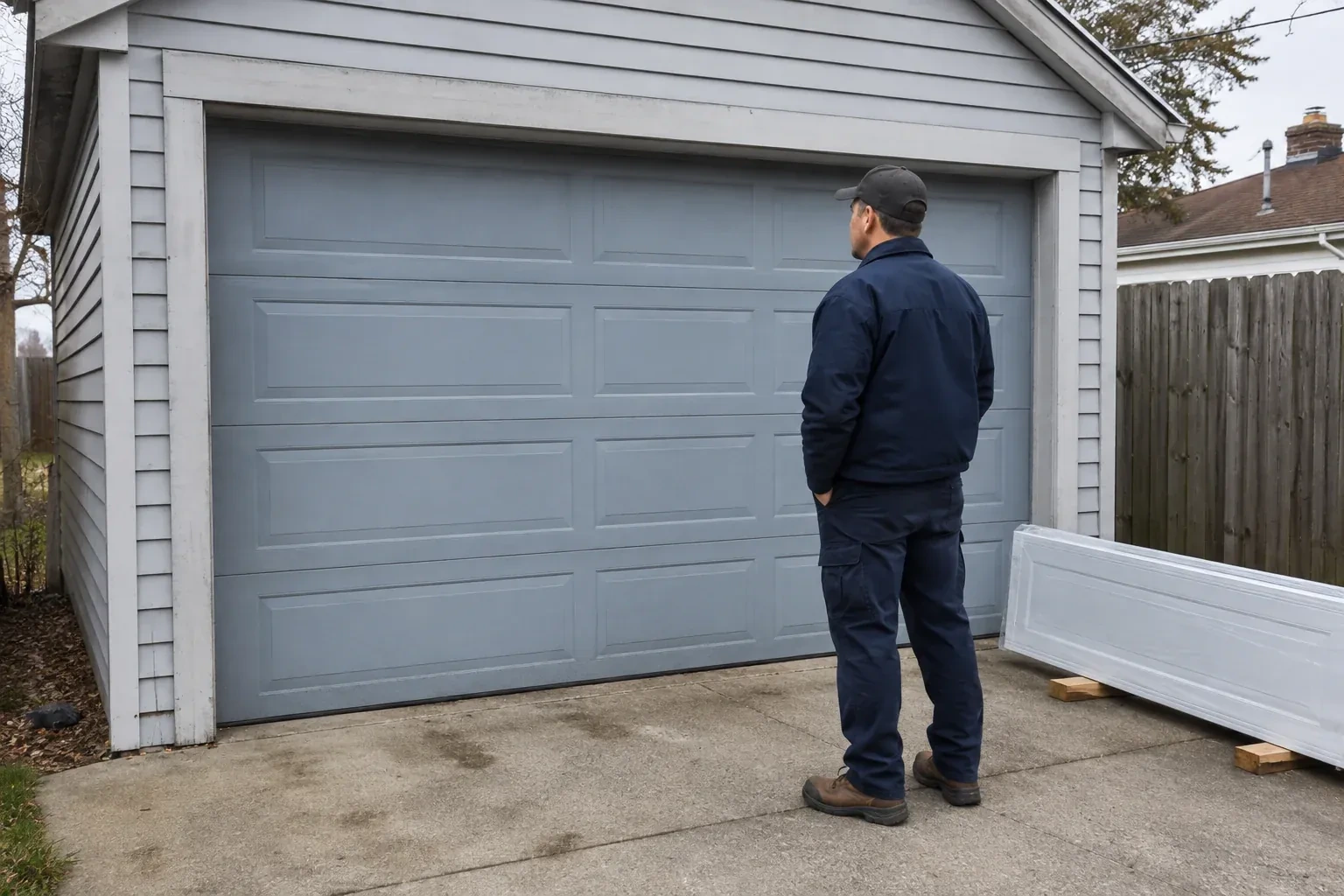
Commercial Sectional Door Repair in Woolwich
One busy service-bay door has become louder than the matching doors beside it.
In plain words
For a facility with several sectional doors, the repair visit can separate one isolated failure from wear shared across similar openings. Door identification, cycle demand and service history help explain why one bay developed loose hinges, tired rollers or spring imbalance first. The affected opening receives the defined repair, while comparable components on adjacent doors can be visually noted for planning. A clear service record then identifies what changed, which settings were tested and what routine observations facility staff can continue between visits.
How the visit goesA high-lift door begins smoothly, then a cable loses tension as the top sections change direction. The loose cable no longer follows its drum grooves evenly, leaving the door unreliable at the top of travel.
Commercial Sectional Door Repair
How the visit goes
Checking balance before the operator
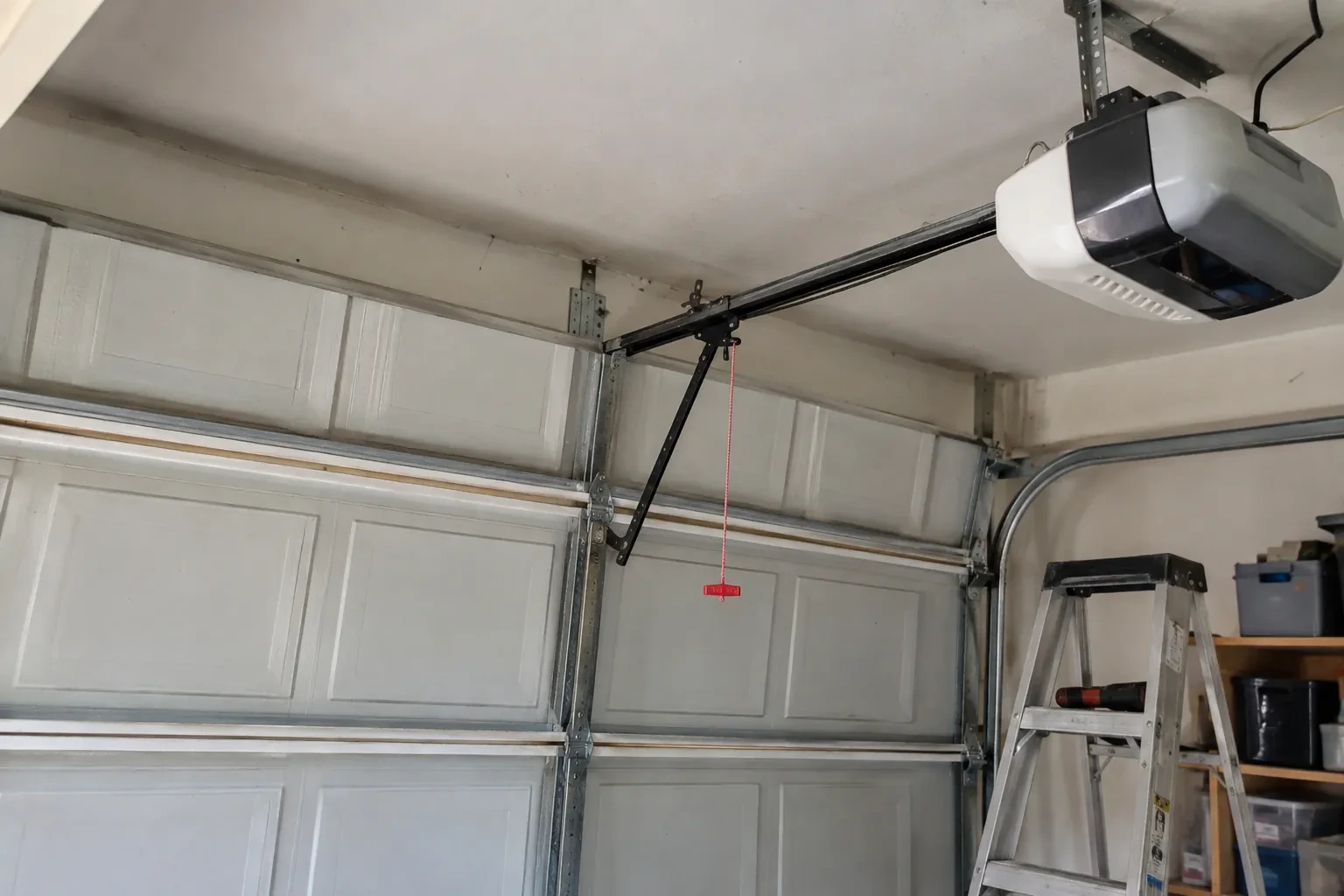
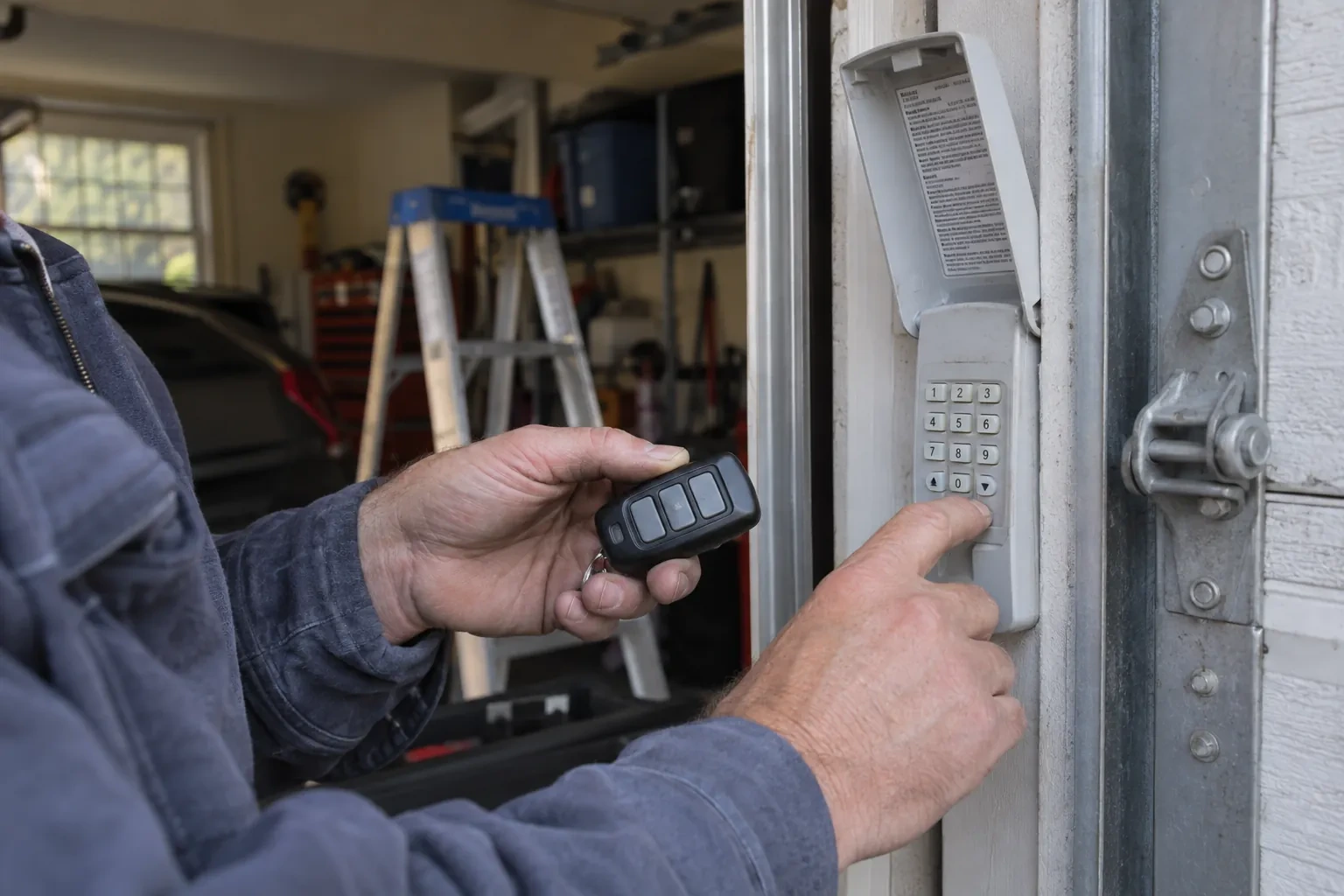
When the motor hums, stalls or strains, the door itself is assessed before settings are changed. With the system safely placed for manual evaluation, the technician checks whether the door moves freely and remains controlled through its range. Spring condition, cable wraps, rollers, track obstructions and any active lock are reviewed. Only after the mechanical load is understood does attention move to the drive chain, sprockets, clutch or brake, travel limits and controls. This sequence separates an operator issue from resistance created elsewhere in the assembly.
Re-establishing the weather seal
A damaged bottom seal is removed from its retainer, and the retainer is straightened or replaced when impact has distorted it. The new seal is sized for the door and floor condition, then fed evenly so it reaches both corners without stretching. Side and header weatherstrip are positioned for continuous contact while leaving the door free to move. If an uneven landing caused the original gap, cable level or track position is corrected first. The final fit is viewed from both sides with the door closed and checked again after cycling.
Quieter hardware with a care routine
New rollers, hinges or bearings reduce play at the points that previously knocked or vibrated. Ongoing care means using the lubricant and interval stated for the installed door, applying it to moving pivots and bearings rather than coating the track. Tracks stay clean so rollers can travel on a firm surface without collecting grit. A simple note in the facility log describing the former sound and repaired location gives staff a reference. If a distinct noise returns at the same travel point, that observation makes follow-up assessment more focused.
Commercial Sectional Door Repair
In the van
Commercial door sections
Lift cables and drums
Shafts and bearings
Vertical and horizontal track
Reinforcement struts
Commercial Sectional Door Repair
What affects the quote
Protective device condition
Misaligned photoelectric sensors may need adjustment, while damaged wiring, sensing edges, brackets or control modules require compatible components and additional function testing.
Position of the stopped door
A door resting closed, hanging partly open or displaced from its tracks requires a different stabilization plan before repair work and component removal can begin.
Access to overhead hardware
Ceiling height, loading equipment, storage, piping and the location of shafts or high-lift track influence the access equipment and work-zone setup required.
What to have ready
- Was there a vehicle, forklift or load impact?
- Where during travel does the sound or hesitation occur?
- Is the door closed, open or stopped between positions?
Commercial Sectional Door Repair: questions
QuestionsWhy are the hinges numbered along the sides?
Numbered end hinges position each roller progressively farther from the panel as the sections rise. That changing offset lets the stacked door follow the track curve while maintaining its shape. Installing a hinge in the wrong position can alter alignment and clearance. Centre hinges have a different role: they connect sections across the width without carrying track rollers.
Does a torn bottom seal always mean a seal-only repair?
Not always. The rubber may simply be worn, but a bent retainer, uneven floor, crooked door or impact-damaged bottom section can produce the same gap. The technician checks how the door lands before replacing material. Correcting level or retainer shape first allows the new seal to contact evenly without being stretched to compensate for another fault.
How does high-lift track change the repair?
High-lift doors keep travelling vertically above the opening before turning into horizontal track. That geometry changes cable length, drum type, track support and operator arrangement. Repairs therefore use the recorded lift dimensions and door weight, with cable tension observed through the transition and near the open position. Components from a standard-lift setup are not assumed to match.
Related services
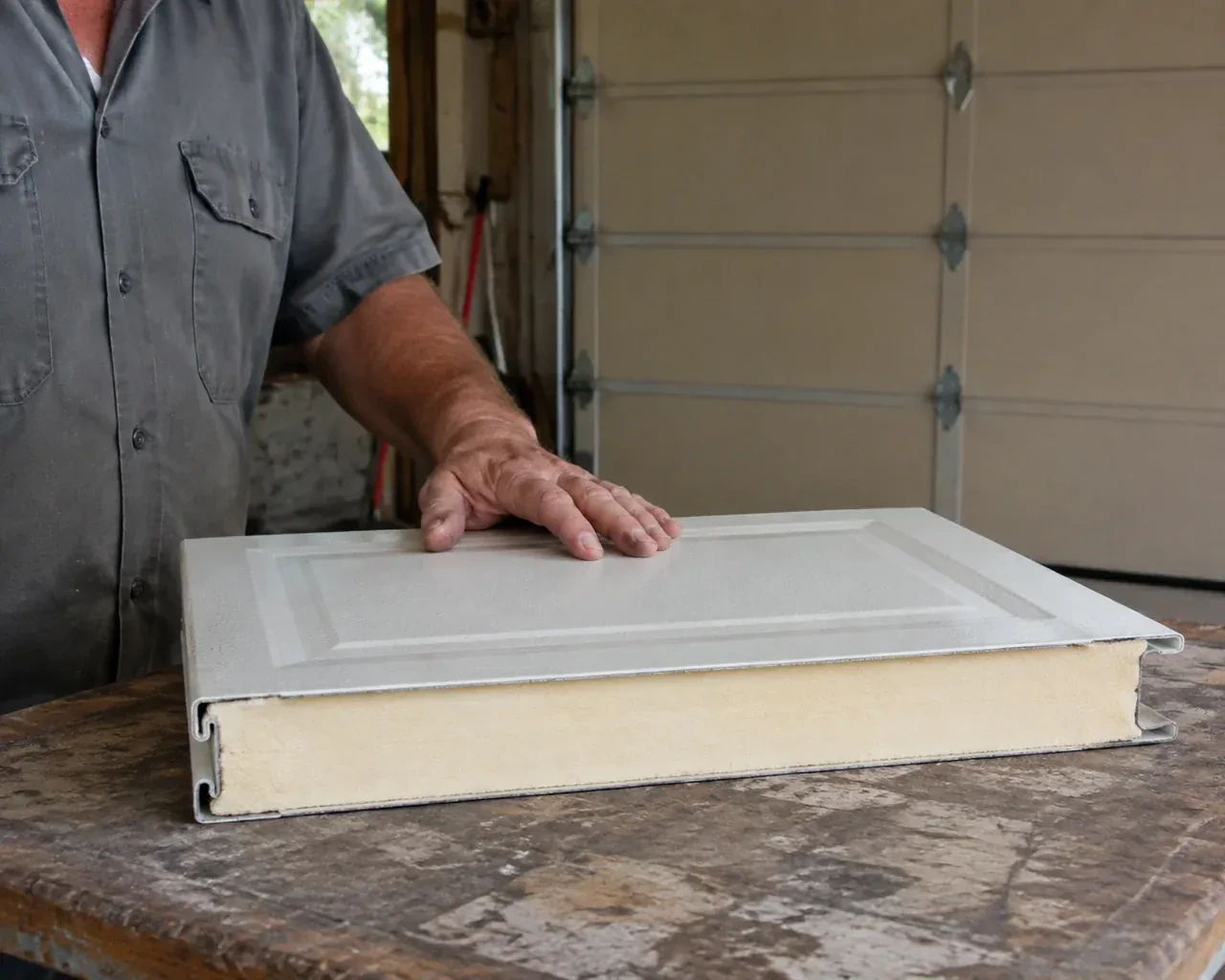
- Insulated Steel Garage Door InstallationThe existing door opens on old tracks that crowd storage near the ceiling.
- Wind-Rated Garage Door ReplacementNew windows would improve the door's appearance, but they also change the section layout and reinforcement pattern.
- Carriage-House Garage Door InstallationA front elevation update has brought new trim, lighting and a deeper colour palette, leaving the garage door as the remaining piece.