New Doors · Woolwich
Commercial Rolling Door Repair
The hand chain takes far more effort than it did last month.
In plain words
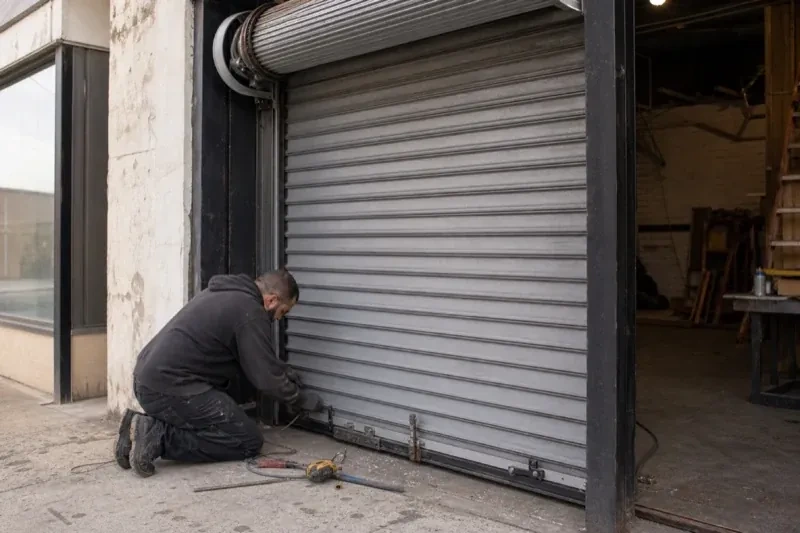
Commercial rolling door repair treats the opening as one connected machine rather than a loose collection of parts. A coiling curtain travels inside guides, wraps around a barrel and is assisted by a spring counterbalance; a hand chain or powered operator supplies movement. The technician identifies that system, controls the work area, secures the curtain and checks how each part affects the others. Bent slats, shifted guides, worn drive parts, balance problems or control faults are corrected within an agreed scope. Controlled cycles then confirm straight travel, proper limits, usable controls and a clear closing path.
How the visit goesAt closing time, the bottom bar reaches the floor on one end while daylight remains under the other. The slide bolts miss their keepers, leaving staff unable to secure the business opening in its usual way.
Commercial Rolling Door Repair
How the visit goes
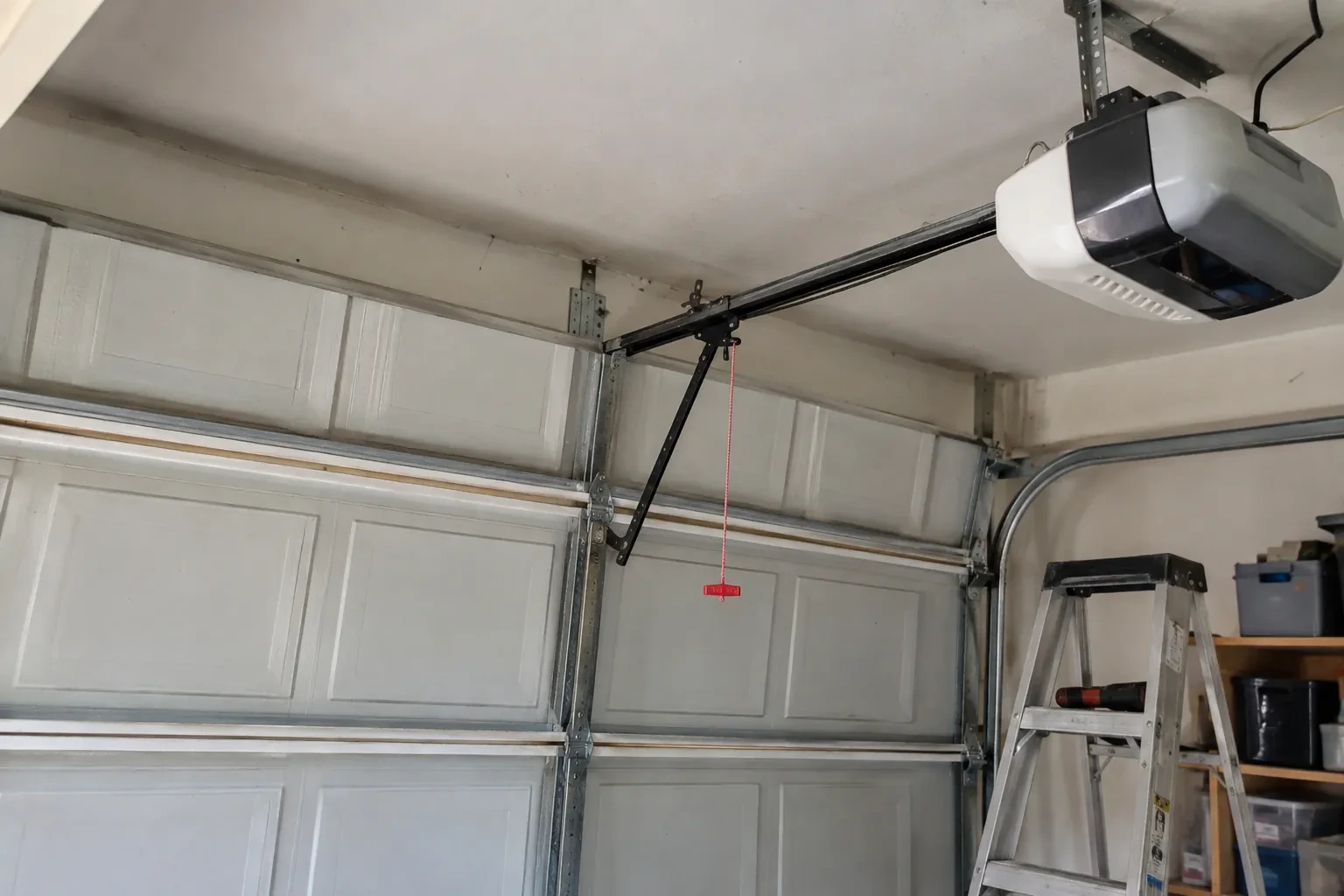
Assess barrel support and counterbalance
Above the opening, the barrel, headplate brackets, bearings and counterbalance carry the curtain and shape its operating effort. The technician looks for bracket movement, worn-bearing sounds, loose drive connections and signs that the curtain has walked sideways. Balance is evaluated only after the door is secured and the operating method is understood. A door that rises by itself, drops from a set position or feels heavy through part of its travel may need mechanical correction, while a consistent rough spot may trace to a bearing or distorted coil. This check keeps the operator from masking a mechanical load problem.
Cycle, observe and document the result
The repaired door is returned to service through a measured test sequence. Initial movement is slow and closely observed at the guides, coil, bottom bar, brackets and drive. Several full cycles follow, using the normal control and the manual method where applicable, while the technician listens for repeatable noise and checks stopping positions. Locks, interlocks and protective devices are tested at their proper stage. The handover record identifies parts changed, settings established, functional checks completed and any connected condition assigned to another scope, giving facility staff a practical baseline for future inspections.
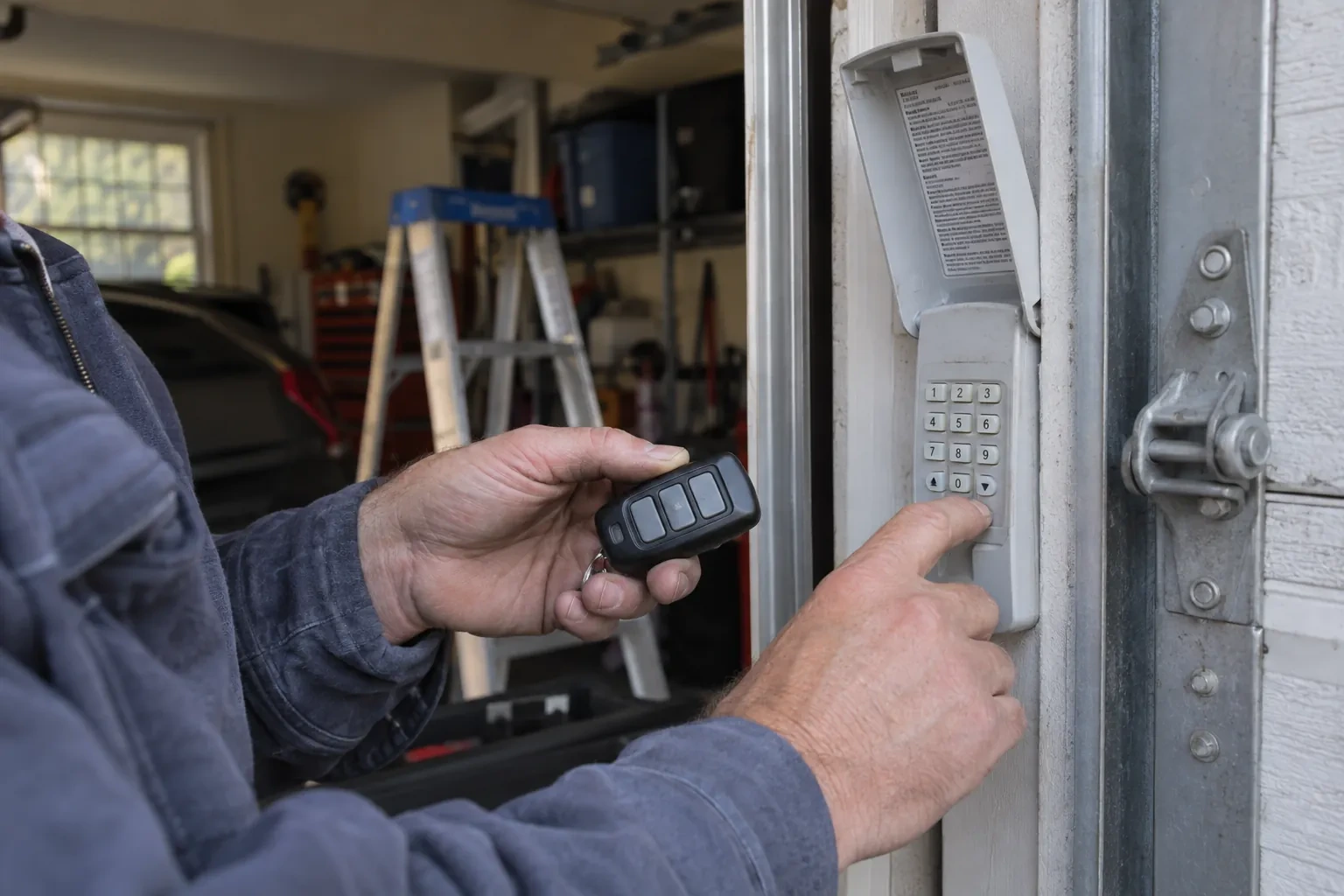
Controls with clear, separate functions
The handover distinguishes the wall station, key control, access input, photoelectric protection, sensing edge and any vehicle-detection accessory. Each device is demonstrated according to its role, and staff see the applicable response during a controlled test. Sensor lenses remain visible and clean, cables stay protected, and stored materials are kept outside the beam path. Private access codes are retained by the facility rather than written in a service record. With the functions separated clearly, a blocked beam can be handled as a housekeeping clue while an unusual operator response can be reported with useful detail.
Commercial Rolling Door Repair
In the van
Curtain slats and endlocks
Sensing edge and controls
Counterbalance spring assembly
Operator brake and limits
Bearings and tension wheel
Commercial Rolling Door Repair
What affects the quote
Cause of the failure
Impact, gradual wear, corrosion, freezing, building movement and a control fault can produce similar symptoms. The verified cause determines whether cleaning, adjustment, component renewal or wider coordination belongs in scope.
Traffic-control requirements
Loading schedules, pedestrian routes, lift-truck lanes and access to both faces determine how the work zone is maintained. Facility support and alternate routing form part of the service plan.
Testing and documentation
Normal cycles, manual operation, protective responses, fire-door procedures and facility records vary by assembly. The proposal can name the demonstrations, measurements and written results included at handover.
What to have ready
- Is the curtain fully open, closed or stopped between limits?
- What happens when staff use the normal control?
- Can both sides of the opening be cleared for work?
Commercial Rolling Door Repair: questions
QuestionsDoes a forklift strike always require a new curtain?
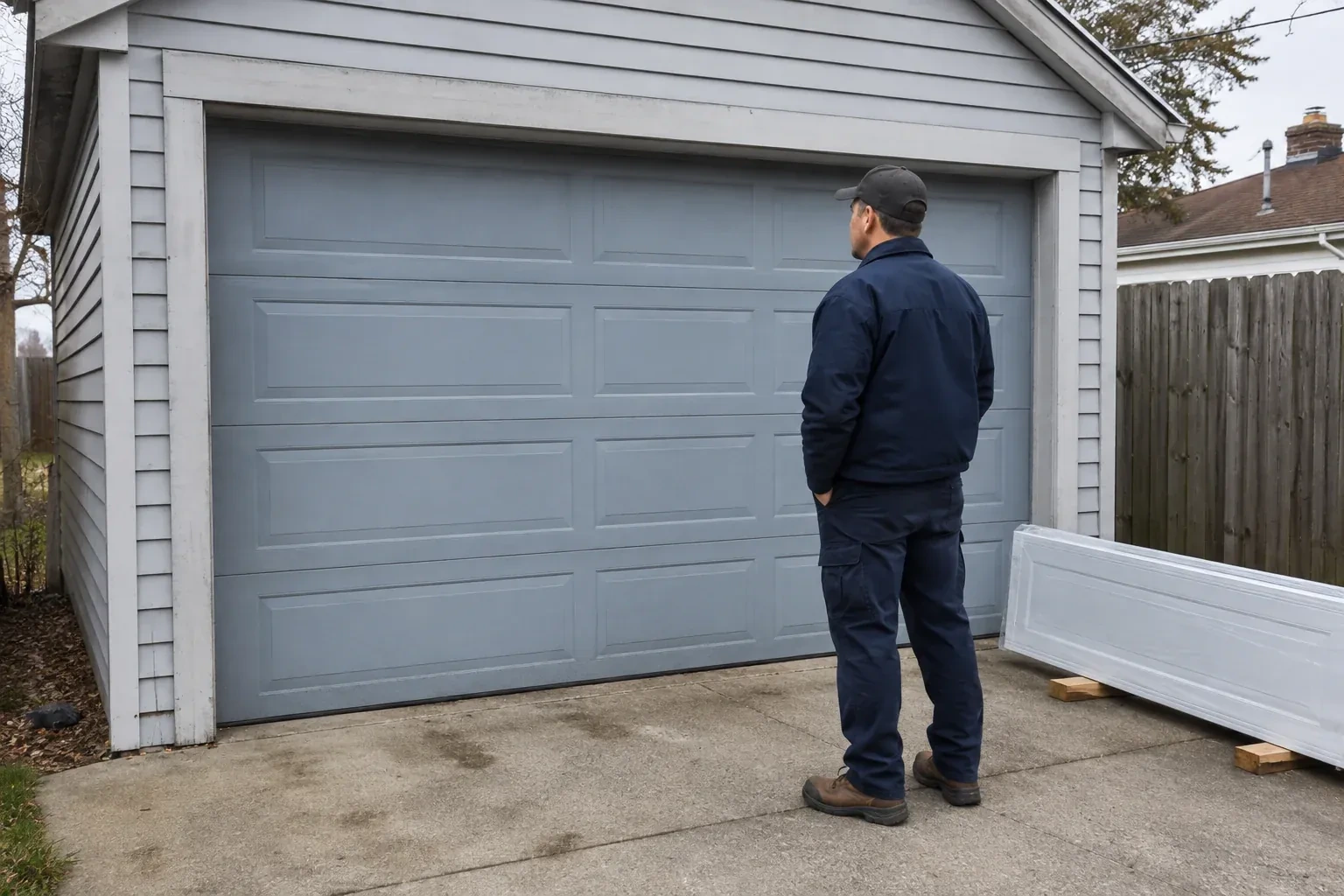
The decision follows measurements and the spread of damage. A localised group of serviceable slats, endlocks or a bottom bar may support component replacement, while extensive distortion can affect the coil, guides, brackets and reliable alignment. The jamb and anchors are checked too, since a straight-looking curtain can still bind in an opening moved by impact.
When is operator replacement considered?
A broader operator plan may be considered when major drive or control parts are extensively worn, suitable components are no longer supported, the unit is mismatched to the door or duty, or the desired control arrangement requires a different system. The door's balance, size, cycle pattern, protection devices, power and manual operation all inform that decision.
What gets tested before the door returns to use?
Testing follows the repaired system and can include full travel, curtain tracking, bottom-bar level, open and closed limits, manual effort, brake action, controls, locks, interlocks and protective-device response. Several controlled cycles help reveal repeated contact or noise. The completed record names the checks performed instead of relying on a general statement that the door operates.
Related services
- Insulated Steel Garage Door InstallationThe existing door opens on old tracks that crowd storage near the ceiling.
- Wind-Rated Garage Door ReplacementNew windows would improve the door's appearance, but they also change the section layout and reinforcement pattern.
- Carriage-House Garage Door InstallationA front elevation update has brought new trim, lighting and a deeper colour palette, leaving the garage door as the remaining piece.