Garage Doors
Between visits
Understanding the why behind a repair makes the fix easier to trust. Our advice pages explain how each part works, what happens when it wears, and how the repair restores it.
Things people wonder
What exactly gets looked at during the inspection?
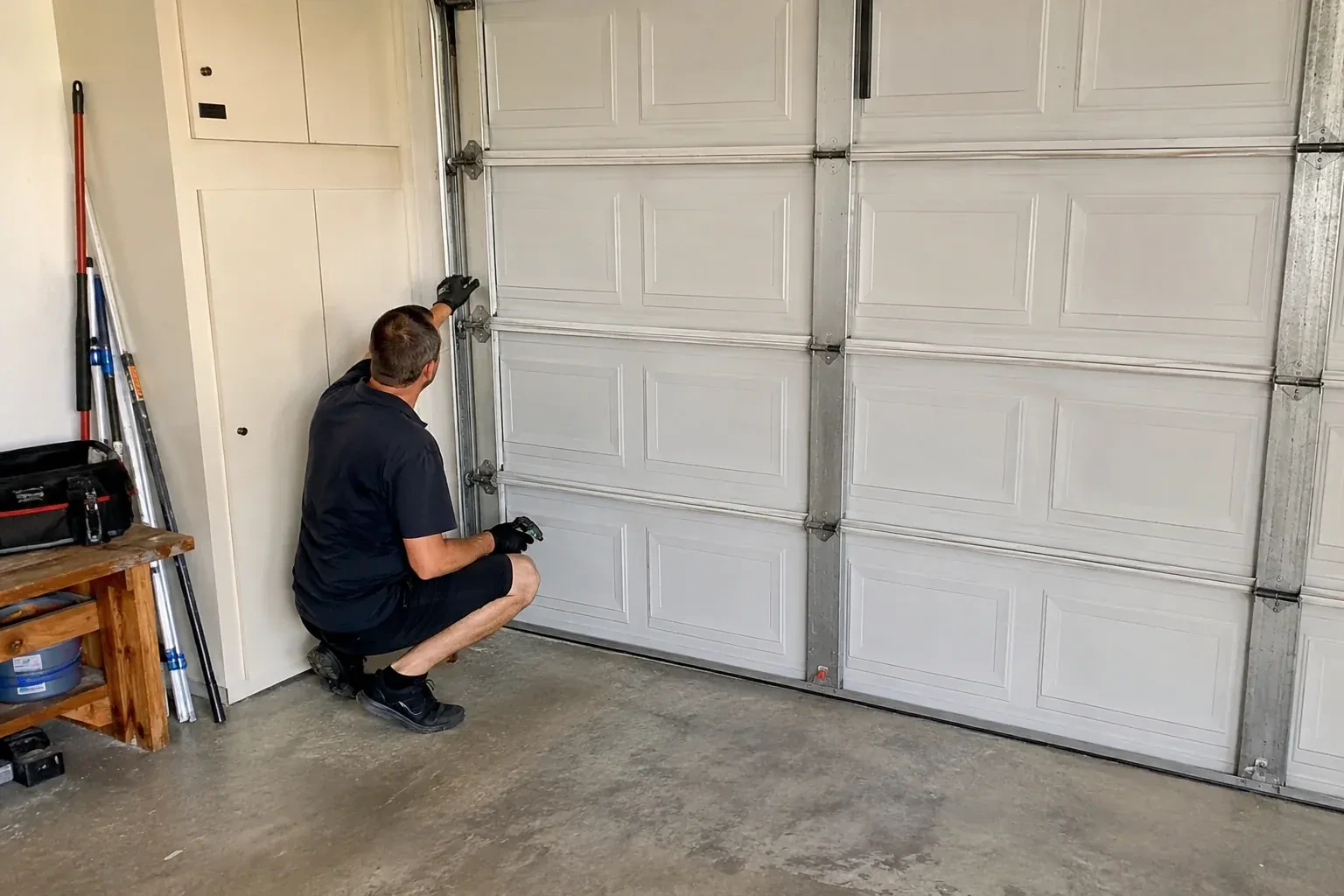
The whole system, not just the opener. Sections, hinges, rollers, tracks and their fasteners; springs, cables, drums and bottom brackets; the bottom seal and perimeter weatherstrip; the opener head, rail, arm and mounting; the photo eyes, contact reversal, wall control, remotes, keypad and manual release; and the warning labels. Each is examined, and the door is tested both by hand and under power.
Which lubricant is right for a garage door?
A silicone-based or white lithium garage door lubricant, sold for the purpose. Penetrating oils and general sprays are thin, attract dust and are gone in weeks; heavy grease traps grit. For the rubber bottom seal and weatherstrip, use only a silicone spray, since petroleum products attack rubber and make it brittle. Nylon rollers with sealed bearings need no lubricant, while ones with an exposed bearing can need a touch where their own maker calls for it. A small amount on each point, worked in by moving the door, is enough.
One side of my door hangs lower than the other. What does that mean?
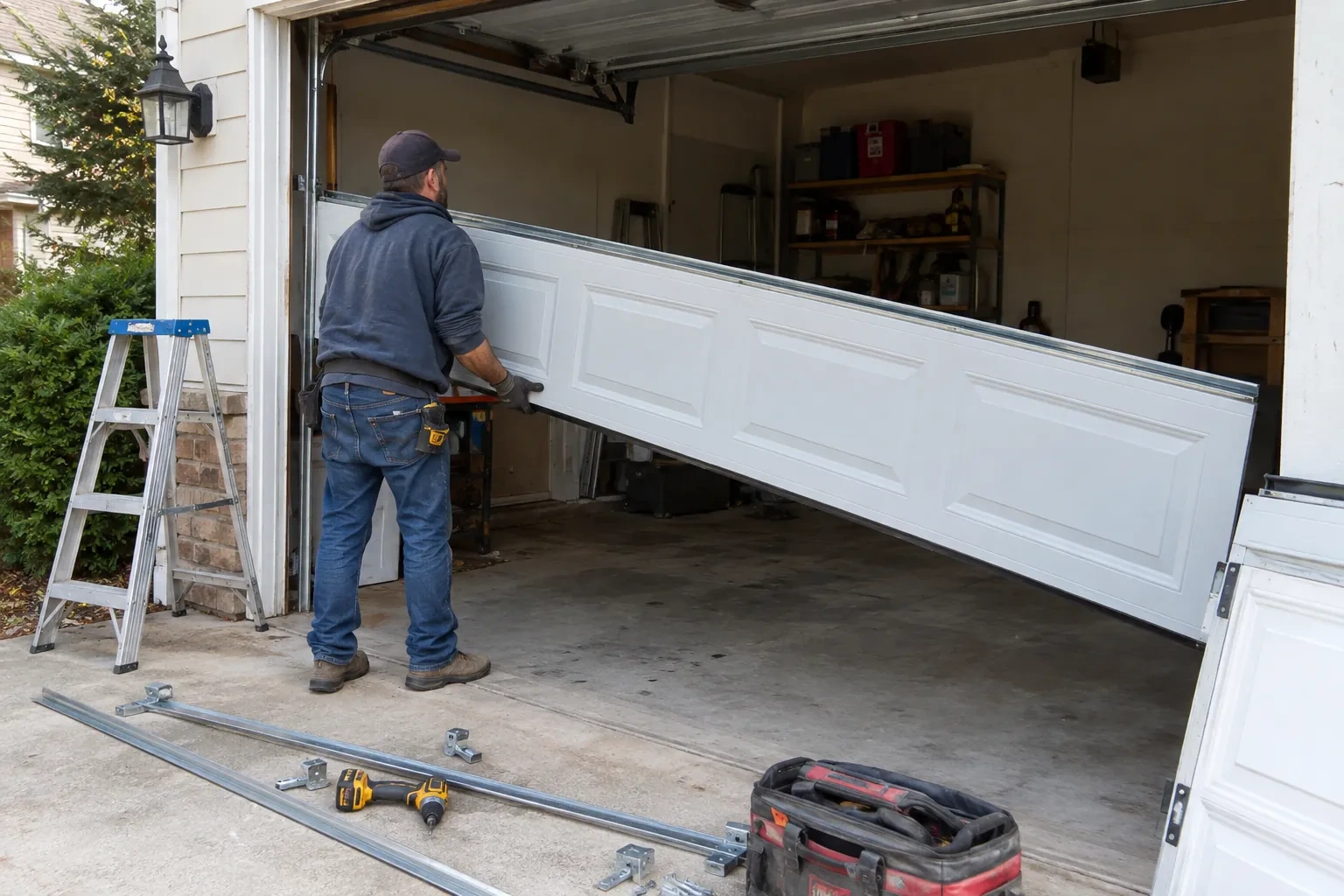
A door that sits tilted almost always has a lifting cable that has gone slack, unwound from its drum or broken on the low side. The springs are still pulling on the other side, which is why the door racks and the rollers escape. Leave it where it is; levelling it means handling the springs and rewinding both cables evenly, which is done with the door clamped and the tension controlled.
How do you work out which make and model my door is?
The manufacturer's label is the starting point. It is often a sticker on the end of a section, on the inside of the top section or on the vertical track, and it usually gives the model or series, a date and sometimes a colour code. Failing that, the panel design, section heights, thickness, joint profile and hinge spacing narrow it down, and the distributor can usually confirm the model from photographs and measurements.
Should the side and top weatherstripping be replaced at the same time?
It is worth having them looked at while the technician is there. The vinyl fin on the stop moulding around the jambs and header shrinks, tears and hardens on the same schedule as the bottom seal, and a draft that survives a new bottom seal usually comes from the sides. Doing the perimeter in the same visit saves a return trip and leaves the door sealed on all four edges.
How should I look after the new seal?
Four times a year, check for daylight from inside with the lights off and press the fin to feel that it is still soft. Wipe the seal with a damp cloth to clear grit and salt, keep paint off the fin, apply a silicone wipe before winter, and keep slush and bins away from the bottom of the jambs. Press any lifted corner back and call if a length has come loose.
What kinds of manual locks are found on garage doors?
Two are common on sectional doors. An inside slide bolt sits on the door's edge and shoots sideways into a slot in the vertical track; some are spring-loaded snap latches that lock on their own when the door closes. An outside keyed T-handle turns a centre mechanism that throws a bar into each track, though some models pull a cable to release a spring latch instead. Some doors add a keyed cylinder on the side to work the slide bolt from outside.
My door is heavy insulated steel. Which rollers suit it?
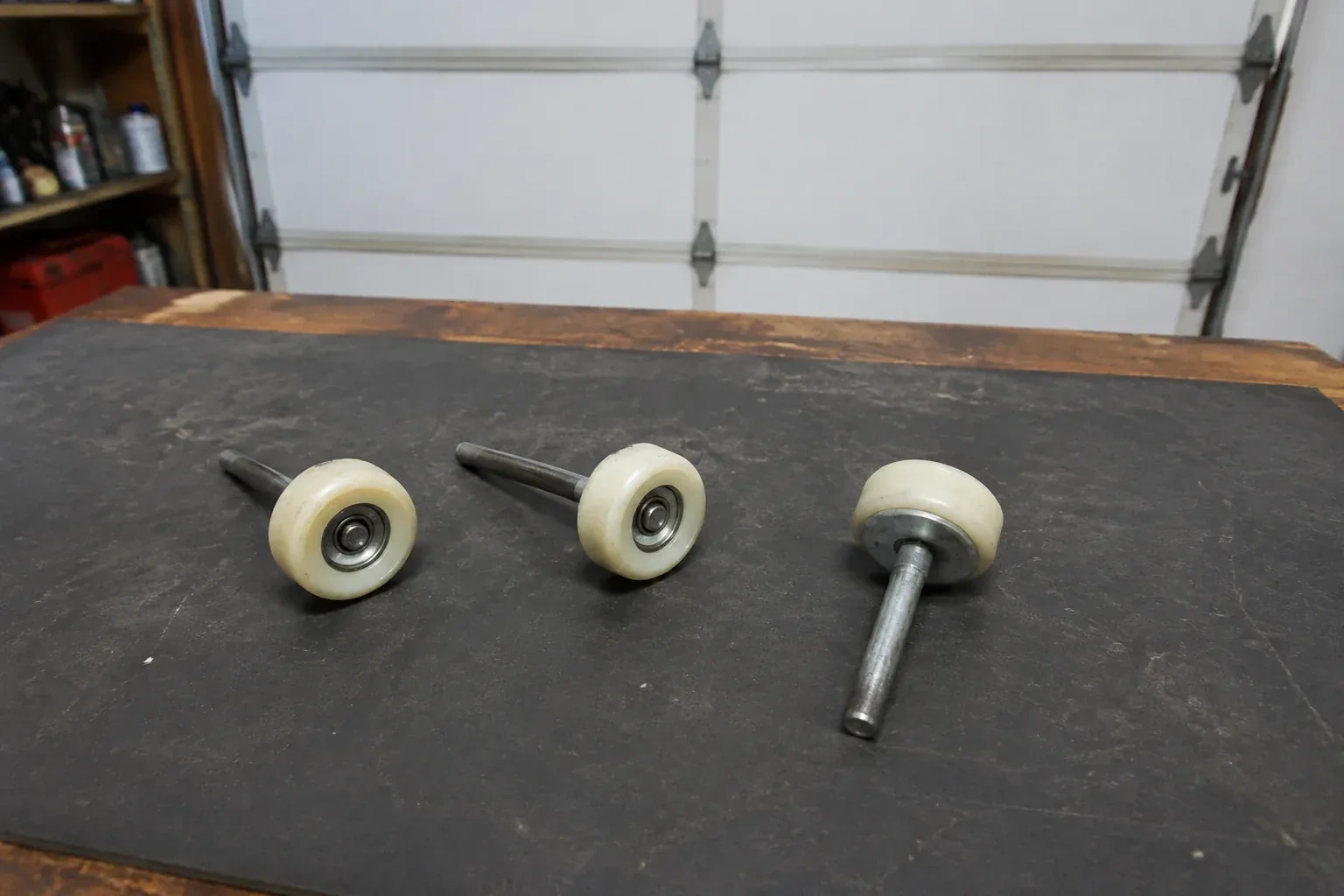
A heavier door needs rollers with a load rating to match, generally ball-bearing rollers rated around seventy-five to one hundred pounds each rather than the light plastic wheels many doors ship with. It often needs long-stem rollers at the double hinges on the end stiles, and the top rollers, which travel furthest under load, deserve the sturdiest in the set. Nylon with ten or more bearings suits most insulated residential doors; very heavy or commercial-weight doors may still call for steel.
Why do the lowest hinges rust before the others?
They live where the water is. Slush and road salt drip off the car onto the bottom two joints and pool along the floor, and the salt attacks the zinc coating where the hinge leaf meets the pin and around the screw heads. Higher hinges stay dry and often look new when the low ones are brown. Wiping the low hardware after a thaw and a light silicone film in autumn slow it down.
What does track radius mean, and does it matter for a replacement piece?
The radius is the size of the curve where the track turns from vertical to horizontal, typically 12 or 15 inches on two-inch residential track. It fixes how high the door climbs before it turns and how much headroom is needed, and the cable drums and spring setup are chosen around it. A replacement curve has to match the other side, otherwise the door meets the horizontal run at different heights and twists as it opens.
What stops the door from falling if a cable lets go?
It depends, and not reliably. The other cable and its spring may hold that corner so the door tips and wedges in the track rather than falling square, and the rollers binding can add some resistance, but neither is dependable: the door can still drop unexpectedly on the failed side. Some doors also carry a broken-cable device on the bottom bracket that grips the track if a cable fails. Because the door may not be held at all, the technician clamps and supports it before doing anything else.
What happens if the header wood or centre bracket is damaged?
The centre bracket anchors the spring's reaction force to the framing above the door, so it has to be solid. If the header has split or softened, or the lag bolts have pulled, the technician can refasten into sound wood, add a reinforcing plate or replace the bracket before the new spring is wound. Dealing with this first keeps the shaft level and the spring pulling straight, which protects the bearings and the door.
Will the lift cables be changed as well?
They are inspected every time and changed when they show fraying, rust at the bottom loop, or a kink from having jumped a pulley. Cables and springs are generally the same age, and with the door already open and the springs off, fitting new cables adds little to the visit. Bright, tight strands with clean loops can stay and are simply re-routed over the pulleys and set to the new springs.
Should I lubricate anything after the visit?
A little, twice a year. Use a product sold for garage doors on the spring coils, hinge pins, roller stems, bearings and bracket pins, and cycle the door a few times to work it in. The tracks want a wipe, not a spray, because a slick track lets the rollers skid and gathers grit. Skip thick grease. Low friction is what lets the springs' setting hold true.
There are white plastic shavings under the opener. What are they?
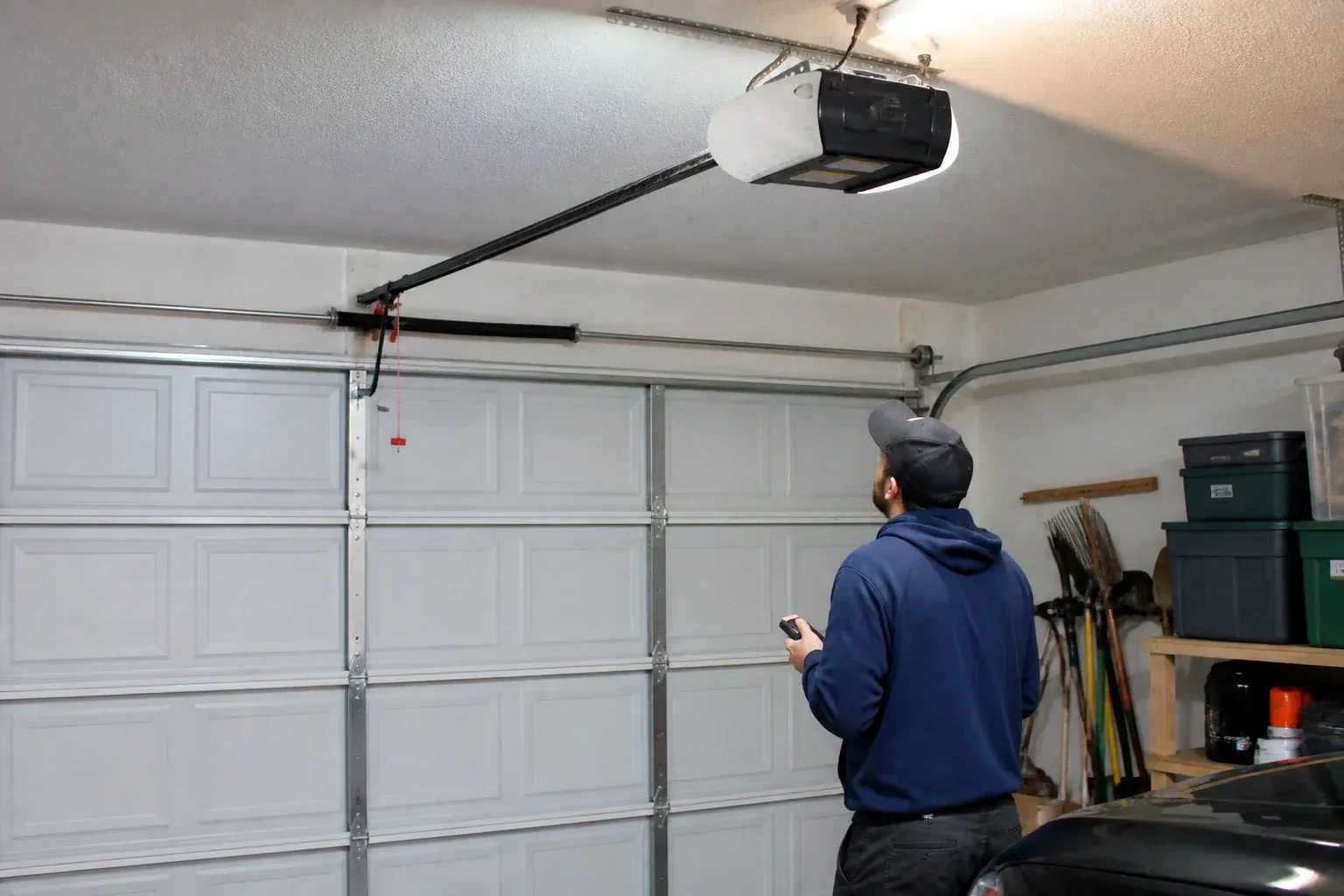
Teeth from the drive gear. Many chain-drive openers use a nylon gear between the motor and the sprocket, and after years of running, especially against a heavy or dry door, its teeth shear off and fall as fine white curls onto whatever is parked below. The motor then spins without moving the chain. The gear and sprocket are replaced as a kit, and the door balance is checked so the new gear is not asked to carry the same load.
Why does the door jerk or jump at the same spot every time?
A repeatable jolt at one point on the rail is usually a chain problem meeting a sprocket problem: a stiff link or a spread master link passing over worn sprocket teeth, so the chain rides up and drops a tooth. It can also be a burr or a splice plate on the rail where the trolley catches, or a roller on the door hanging up in the track at that height. The technician runs the door by hand first to tell the two apart.
The motor runs but the door stays still. What has happened?
Something between the motor and the door has let go. On a belt drive the usual suspects are a broken clip where the belt joins the trolley, a belt that has jumped off the sprocket or idler pulley, a trolley that failed to re-engage after the red cord was pulled, or a stripped drive gear inside the motor head, which leaves plastic shavings on the housing. Each is a specific repair.
How should I prepare the garage before the visit?
Move vehicles out onto the driveway, bring any car that needs its built-in buttons programmed, and clear the floor under the door's path and the area beneath the old opener and rail so ladders can stand safely. Take bikes and boxes off shelves that hang near the ceiling line. Know where the electrical panel is, and have the phones that will use the app on hand with your Wi-Fi password.
Could the wiring be the problem rather than the sensors?
Frequently. The sensors are fed by a thin two-conductor wire from the head unit that crosses the ceiling and drops down both sides of the door, and it is pierced by staples, cut by shelving screws, chewed by mice or pulled from its terminals more often than a sensor fails. Both sensor lights dark, or an opener code for an open or reversed circuit, points to the wire. The technician tests the run with a meter and repairs or replaces the damaged section.
Is the door tested for safety after programming?
Yes, every time. Each new control is operated while the technician watches the door's full travel, then a 2x4 is laid flat under the door and the door must climb back up on touching it, and a broom handle passed through the photo-eye beam during a second close must stop and reverse the door. A remote is a way of moving a heavy door, so the visit ends only when both tests pass.
My opener already has a wireless symbol on it. Do I still need a hub?
Probably not. An opener with a built-in radio needs only to be put into pairing mode, joined to your network and registered to your account; it reports door position from its own travel sensing, so no separate sensor is required either. The visit becomes configuration and testing rather than installation. The technician also checks that the unit has not been left tied to a previous owner and that its firmware is current.
Why are the reversal tests done after a release repair?
Because freeing a trolley, changing a trolley or re-tensioning a chain or belt disturbs the travel limits and force settings the opener relies on. The tests prove those settings are still safe: closed onto a 2x4 lying flat, the door must reverse on contact; with something passed through the photo-eye beam while closing, it must stop and rise. They take a minute and are the same checks the standard asks of any working opener.
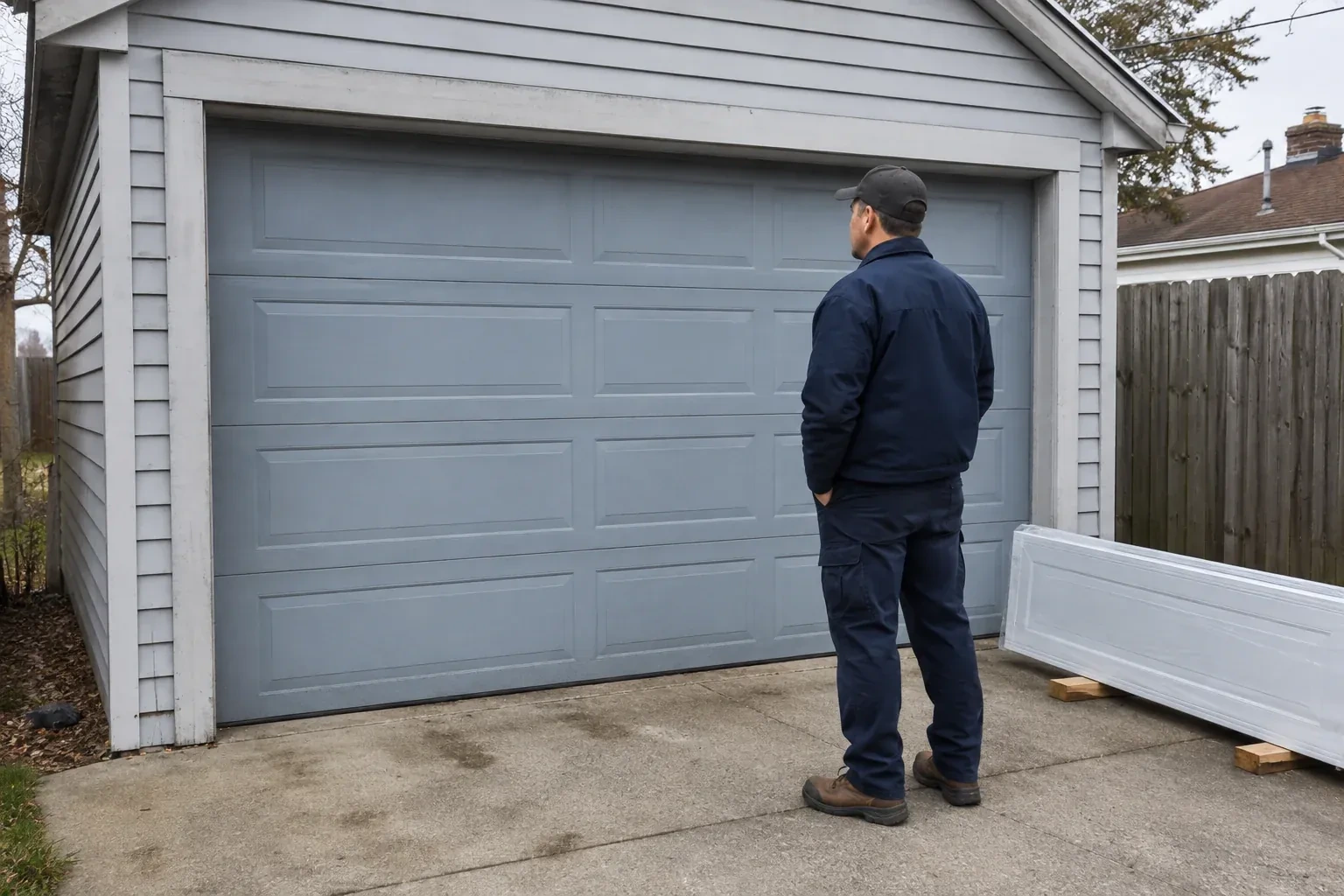
Which insulation details should I compare?
Look beyond a single thermal number. Compare section construction, insulation type and thickness, seals between panels, glazing and the perimeter weather seals included in the proposal. How often the door opens and how well it fits the floor also influence comfort. Product literature provides the appropriate performance information for the exact model.
Can I keep the garage door opener I already have?
Possibly, after its identity, condition and compatibility are checked against the new door. The installer reviews door height and weight, track layout, reinforcement, attachment geometry, travel limits, controls and safety sensors. The door is balanced and operated manually before any opener is connected. If the existing unit fits the documented requirements, it can be integrated and tested as part of the installation scope.
What makes one quote different from another?
Quotes vary with opening size, required pressure, section construction, insulation, glazing, reinforcement, track and hardware configuration, jamb condition, anchoring material, counterbalance design, operator compatibility, access, documentation, and coordinated structural work. A useful proposal identifies these assumptions clearly so the selected assembly and installation scope can be compared on matching project criteria.
How long does a carriage-house installation take?
The schedule depends on the number and size of openings, removal conditions, track layout, decorative assembly, opener work and whether the jambs or threshold need preparation. Custom materials and glazing also affect the ordering stage before site work. A useful proposal separates product lead time from installation activities and identifies any structural, electrical or finishing work that must be completed in sequence.
Can I open the new door manually during a power outage?
Yes, once the door has been confirmed balanced and is fully closed, the operator's emergency release allows manual movement. The installer demonstrates the exact release and re-engagement sequence at handover. Use the provided handle or designated gripping points, keeping fingers away from joints and tracks. A door that feels unusually heavy or drifts provides useful information for service.
How is the perimeter of a new garage door sealed?
A compressible bottom seal meets the finished floor, and flexible stop moulding closes the exterior gaps at the jambs and header. Some door constructions also include seals between sections or around glazing. These materials are positioned after the sections and tracks are aligned so they contact the door without restricting movement. Floor variation, trim details and later caulking by another trade are noted during project closeout.
Why are the hinges numbered along the sides?
Numbered end hinges position each roller progressively farther from the panel as the sections rise. That changing offset lets the stacked door follow the track curve while maintaining its shape. Installing a hinge in the wrong position can alter alignment and clearance. Centre hinges have a different role: they connect sections across the width without carrying track rollers.
Does a forklift strike always require a new curtain?
The decision follows measurements and the spread of damage. A localised group of serviceable slats, endlocks or a bottom bar may support component replacement, while extensive distortion can affect the coil, guides, brackets and reliable alignment. The jamb and anchors are checked too, since a straight-looking curtain can still bind in an opening moved by impact.
Will the doorway opening become taller?
The conversion changes how the existing sectional door travels inside the garage; it does not enlarge the framed vehicle opening by itself. Its benefit appears when the door is open, because the panels can sit higher above the floor. If the project also needs a taller entrance, that is a separate building and door-sizing scope requiring its own design.