Repairs · Woolwich
Off-Track Garage Door Reset
Your car is inside and the door is stuck crooked across the opening.
In plain words
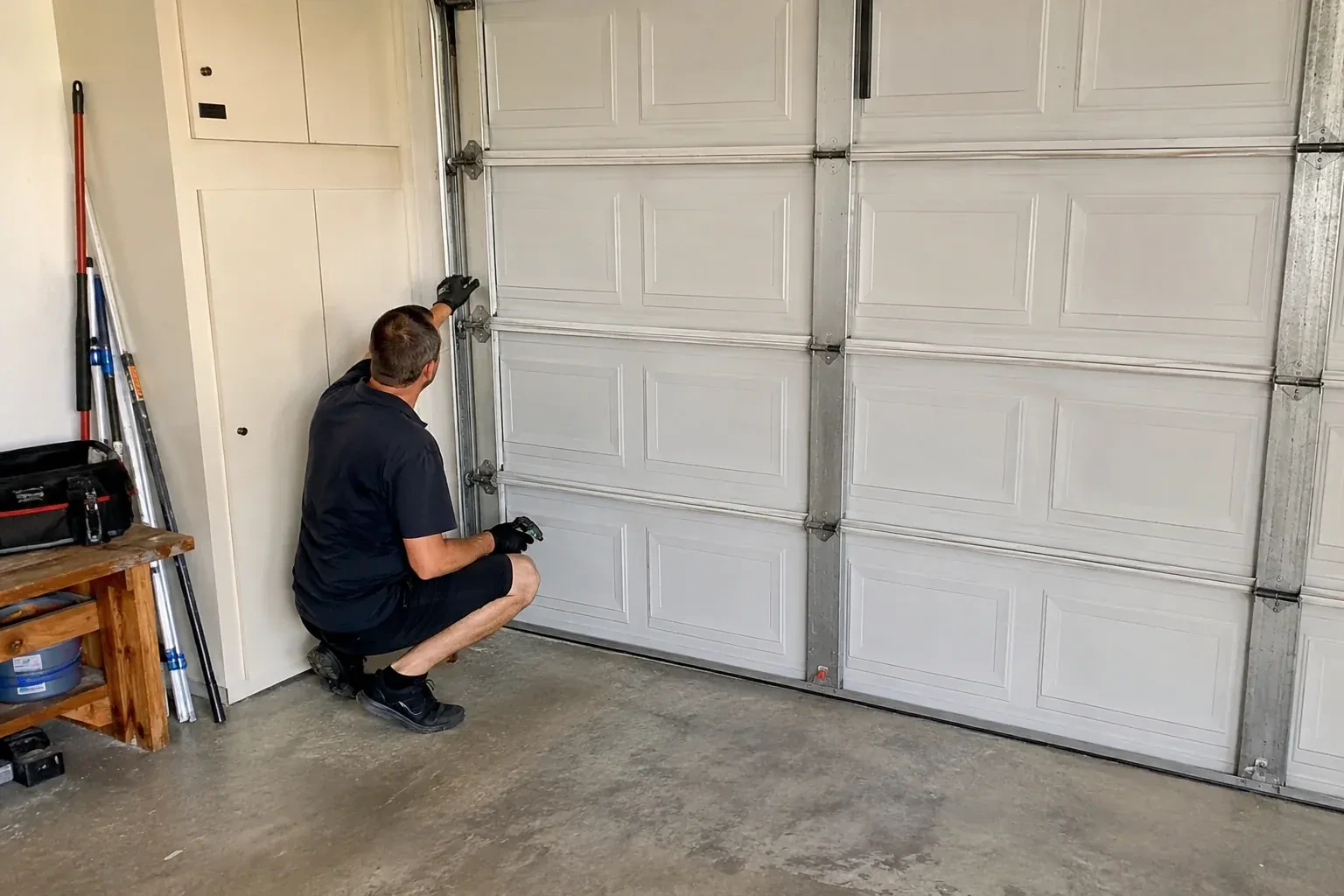
An off-track reset is the visit that puts a crooked, jammed or hanging garage door back onto its rails. Sectional doors ride on rollers inside a pair of curved steel tracks, and when a roller escapes, the door racks sideways and jams. The technician first makes the door safe by disconnecting the opener and clamping the sections so nothing can slide, then works out what let the roller go. The rollers are guided back into the track, any cable that jumped its drum is re-seated, the track is trued against the wall, and the door is run by hand and then by opener to confirm it travels straight.
How the visit goesThe morning after a thaw the opener groaned, the door stayed stuck to the icy floor for a second, then lurched up crooked. It stopped halfway with a grinding scrape and has not moved since.
Off-Track Garage Door Reset
How the visit goes
Springs and balance, read before the reset
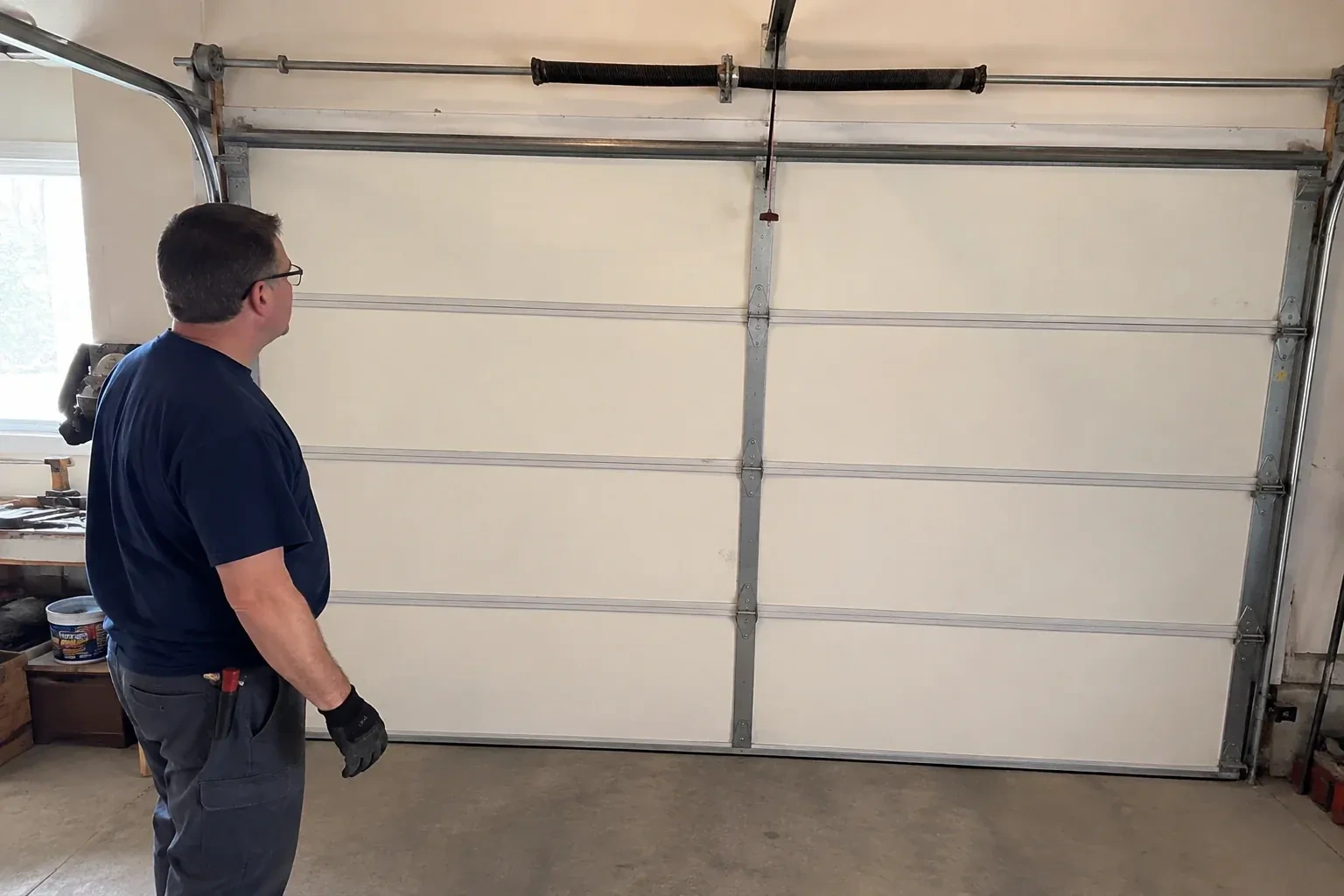
The counterbalance is what will carry the door once it is back on its rails, so its condition is assessed at the start. Torsion springs above the header are checked for a break in the coil, a gap between coils and a loose stationary cone; extension springs beside the horizontal track are checked for stretch and for the containment cable running through them. The technician also looks at whether the springs match the door's weight, because a door that was already heavy for its springs makes the opener drag the sections and is a common background cause of a roller working loose.
Reconnecting the opener and re-teaching it the door
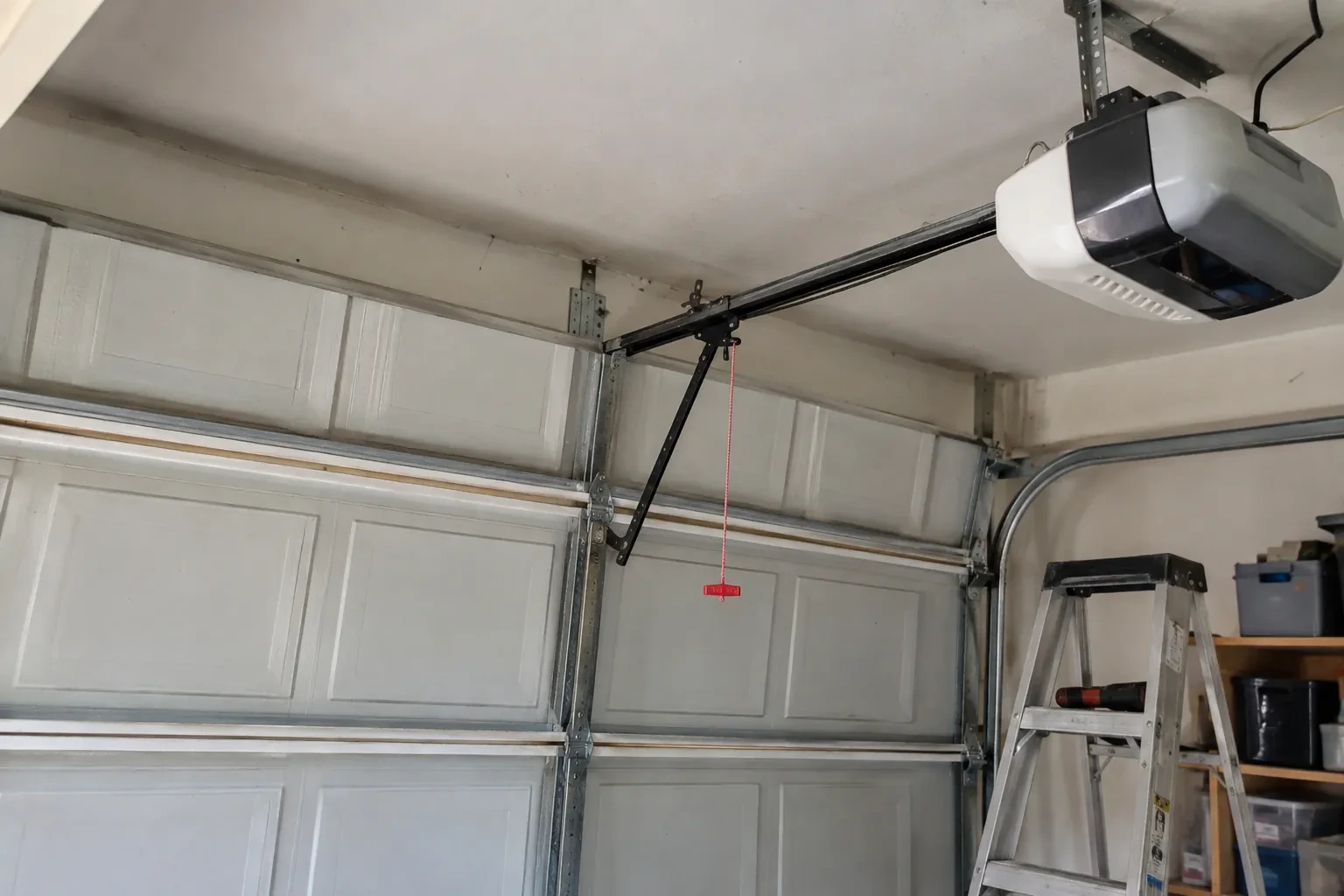
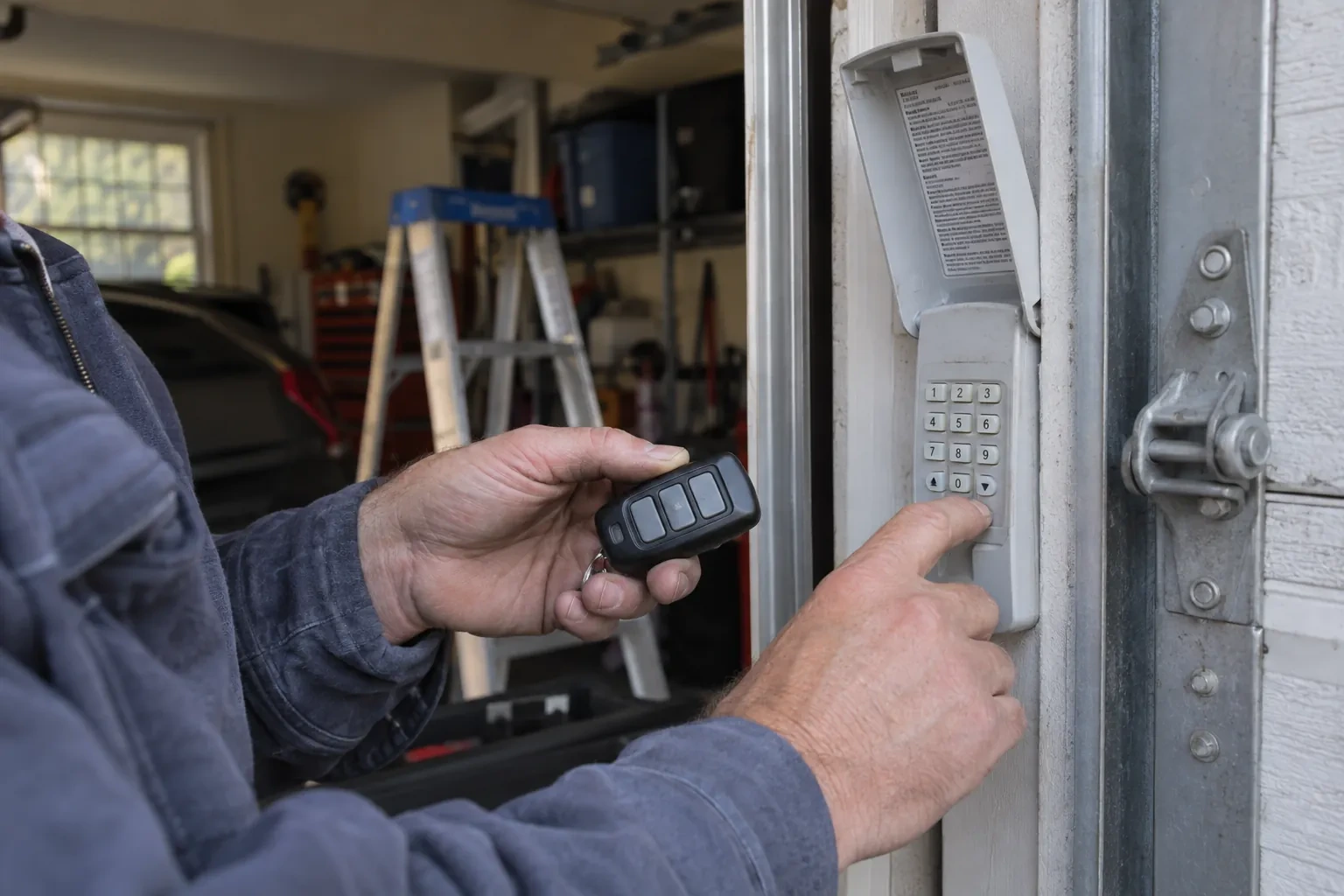
The last stage returns automatic operation. The trolley is reconnected, the manual slide lock disabled or removed, and the door run through several cycles from the wall control. Travel limits are reset so the door seats on the floor without pressing into it, and the force settings are brought back to the minimum the door needs, which on a balanced door is not much. Then the safety systems are exercised: the door must reverse off a 1.5 inch block laid in its path and must refuse to close when the photo-eye beam is broken. The remotes and keypad are checked, and the door is left cycling as smoothly as its hardware allows.
A monthly look at the rollers and cables
Once a month, with the door closed, stand inside and look along both tracks with a flashlight. Rollers should turn as the door moves and sit fully inside the rail; a wheel that wobbles, squeals or shows a worn flat is asking to be replaced before it drops out. Both cables should run taut from the bottom brackets to the drums with no fraying near the bottom, where salt and water collect. Hinges and jamb brackets should have no loose or missing screws. This two-minute walk catches almost every off-track event while it is still a small hardware job.
Off-Track Garage Door Reset
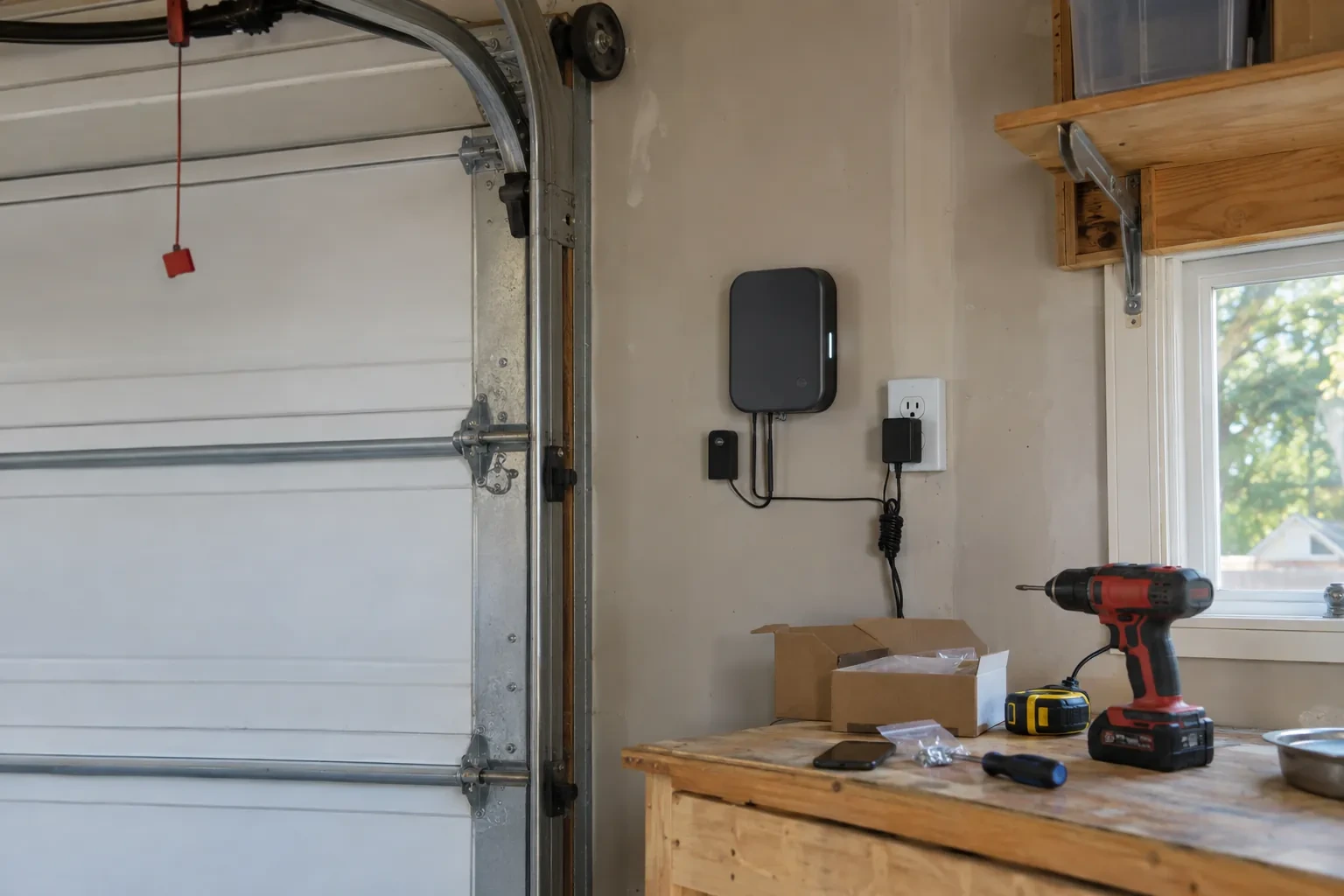
In the van
Level and plumb line
Locking pliers and track clamps
Bottom brackets
Torsion spring winding bars
Replacement rollers, steel or nylon
Off-Track Garage Door Reset
What affects the quote
Torsion or extension springs
Doors with springs above the header and doors with springs along the tracks are reset by different methods, and extension-spring doors sometimes gain containment cables during the visit, which appear as their own line.
Condition of the jamb and fasteners
Lag screws that spin in dry or split wood are moved to sound framing or replaced with longer fasteners or through-bolts. If the jamb itself needs a repair or a sister piece, that is named as an extra item.
Hinges, brackets and fixtures bent in the event
A twisted bottom bracket, a bent graduated hinge or a distorted top fixture is replaced rather than straightened. Each one is a small part but is priced and listed on its own so you see what was changed.
What to have ready
- Have you unplugged the opener or pulled the red release cord?
- Roughly how old is the door, and when was it last serviced?
- Was the door frozen to the floor or was something under it when the opener ran?
Off-Track Garage Door Reset: questions
QuestionsOne side of my door hangs lower than the other. What does that mean?
A door that sits tilted almost always has a lifting cable that has gone slack, unwound from its drum or broken on the low side. The springs are still pulling on the other side, which is why the door racks and the rollers escape. Leave it where it is; levelling it means handling the springs and rewinding both cables evenly, which is done with the door clamped and the tension controlled.
I only tapped the door with the bumper. Why is it off its track?
A sectional door is strong in the direction it travels and surprisingly easy to push sideways at a single roller. A light nudge on the bottom section can flex the track lip enough for the roller to slip out, after which the section twists and the rollers above follow. The good news is that this kind of event usually leaves the cables and springs alone, so the reset is often rollers, a re-formed track lip and a hinge check.
Will the track have to be replaced?
Often not. A track that is simply out of plumb, spread at the lip or loose on its brackets is re-formed and re-fixed. Replacement is for rail that has been crushed, kinked or torn by an impact, because a roller passing a tight spot will pop out again. The technician measures the damaged length against the door's roller size and tells you which case you have before any track is ordered or cut.
Related services
- Garage Door Tune-UpThe door lands with a thud you can feel through the kitchen floor, and sometimes it bounces back up a few centimetres before settling.
- Garage Door Panel ReplacementA stray ball went through one of the window panes in the top section.
- Garage Door Bottom Seal ReplacementEvery mild afternoon the snow melts off the car, runs to the door, and by morning the rubber strip along the bottom is frozen to the concrete.