Garage Doors in St. Jacobs, OntarioFor landlordsand property managers.
If you look after rental homes or a row of townhouses in St. Jacobs, one call covers every door. We keep notes on each address, replace like with like so tenants are not learning a new remote, and send a clear written summary of what was done so your records stay in order.
If you look after rental homes or a row of townhouses in St. Jacobs, one call covers every door. We keep notes on each address, replace like with like so tenants are not learning a new remote, and send a clear written summary of what was done so your records stay in order.
Careful work on heavy doors.
People in St. Jacobs tend to remember two things about a visit from us: the technician showed them the worn part rather than just naming it, and the number he gave on site was the number on the invoice. That is how every job runs, from a single roller to a full new door.
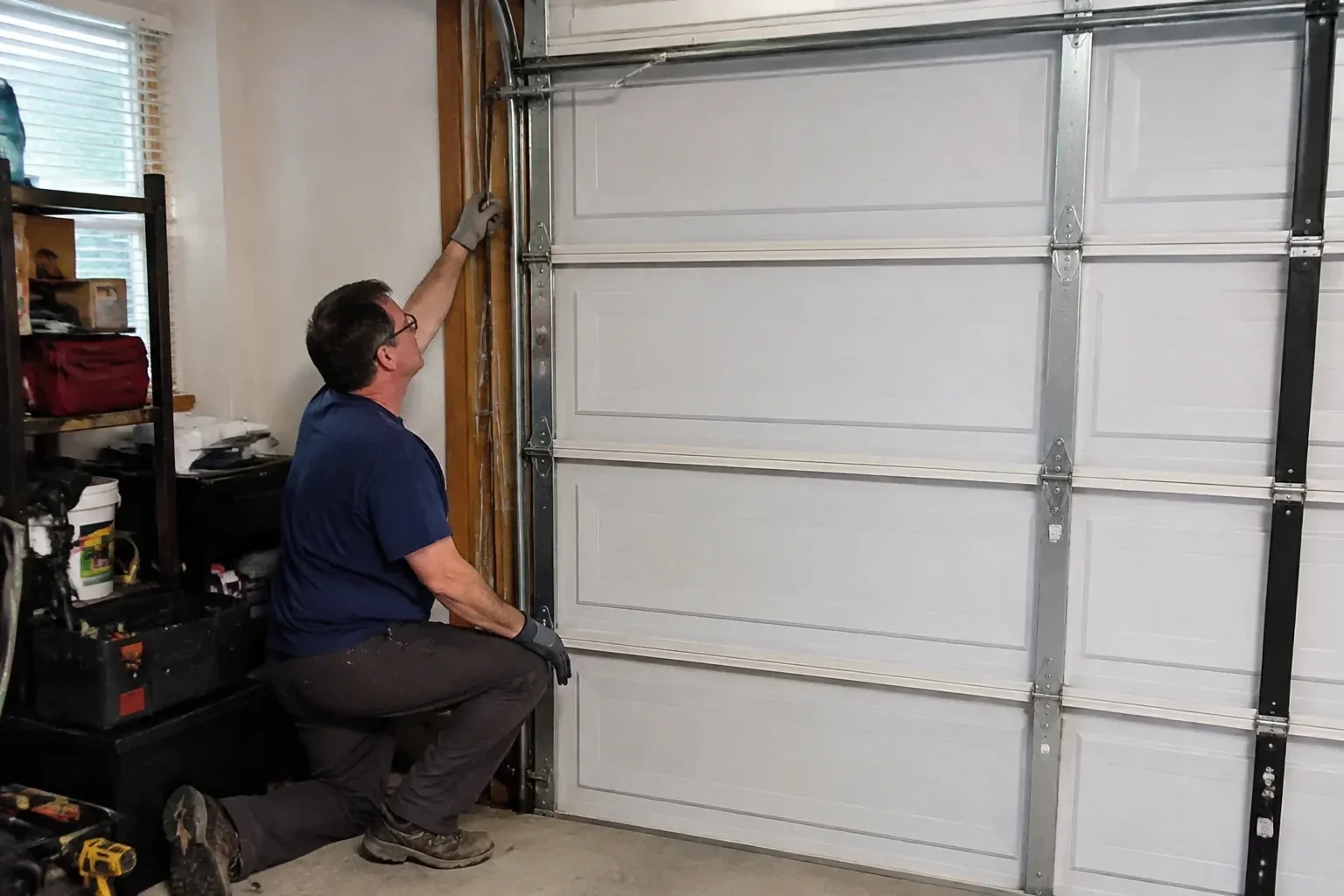
We treat every garage in St. Jacobs as someone's space. Shoes stay clean, tools stay on a mat, and the car is moved only with permission. The technician explains what is about to happen, especially where springs are involved, so nobody is surprised by a sound or a moment of tension. The door is run through full cycles with you watching before we call the job finished.
20years in business
24/7open every day
Understanding first. We explain the fault in plain terms and check that it makes sense to you before moving on to the repair.
Respect for the space. Drop sheets, careful handling of stored items, and a full clean-up. We are guests in your garage and act like it.
Choices laid out plainly. Each option comes with what it involves, how long it tends to last and what it means for the opener and the rest of the door.
Garage doors in St. Jacobs go through the same cycle: hardware wears, springs tire, openers age, and eventually the door itself is due. We offer a service for each stage, so you can maintain what you have, repair what has failed, or replace the door when that is the sensible choice.
About 47% of homes in Woolwich were built in 1980 or earlier, according to the 2021 Census.
Streets with a mix of older and newer homes tend to show a mix of door styles too, from flush wood panels to raised-panel steel and carriage designs. When a replacement is chosen, it can either match the house's period or the neighbouring doors, and we help weigh both.
Single-detached houses make up about 76% of homes in Woolwich (2021 Census).
Mostly houses
Single-detached homes give a technician room to work: a driveway for the van, side room beside the tracks and a clear header. That means spring replacement, opener installation and full door replacement can each be finished in one visit with the door properly secured throughout.
Lifting hardware fails in sequence: a dry bearing loads a cable, the cable frays at the drum, the drum groove wears, the spring works harder than it should. Catching the first link in that chain saves the rest.
Every morning the door announces itself: a rattle on the way up, a grinding squeal on the way down, loud enough that the neighbours know when you leave.
Sectional doors, carriage-house styles, full-view glass and insulated steel all sit in this group, along with the conversions and hardware upgrades that change how a door performs.
The door opens about a third of the way and stops. Turning the limit screw on the head has made no difference, and the trolley seems to sit in the wrong place along the rail when the door is fully closed.
It is minus twenty in the detached garage and the door climbs in jerks, the belt stiff as a board. By the afternoon, when the sun has been on the door, it runs almost normally again.
The bedroom above the garage shakes every morning at six when the chain drive fires up. Everyone in the house knows the moment someone leaves for work.
After a cold night the door stays open until the garage warms up. There is frost on the sensor lenses and a ridge of salty slush piled against the brackets where the snow blower was parked.
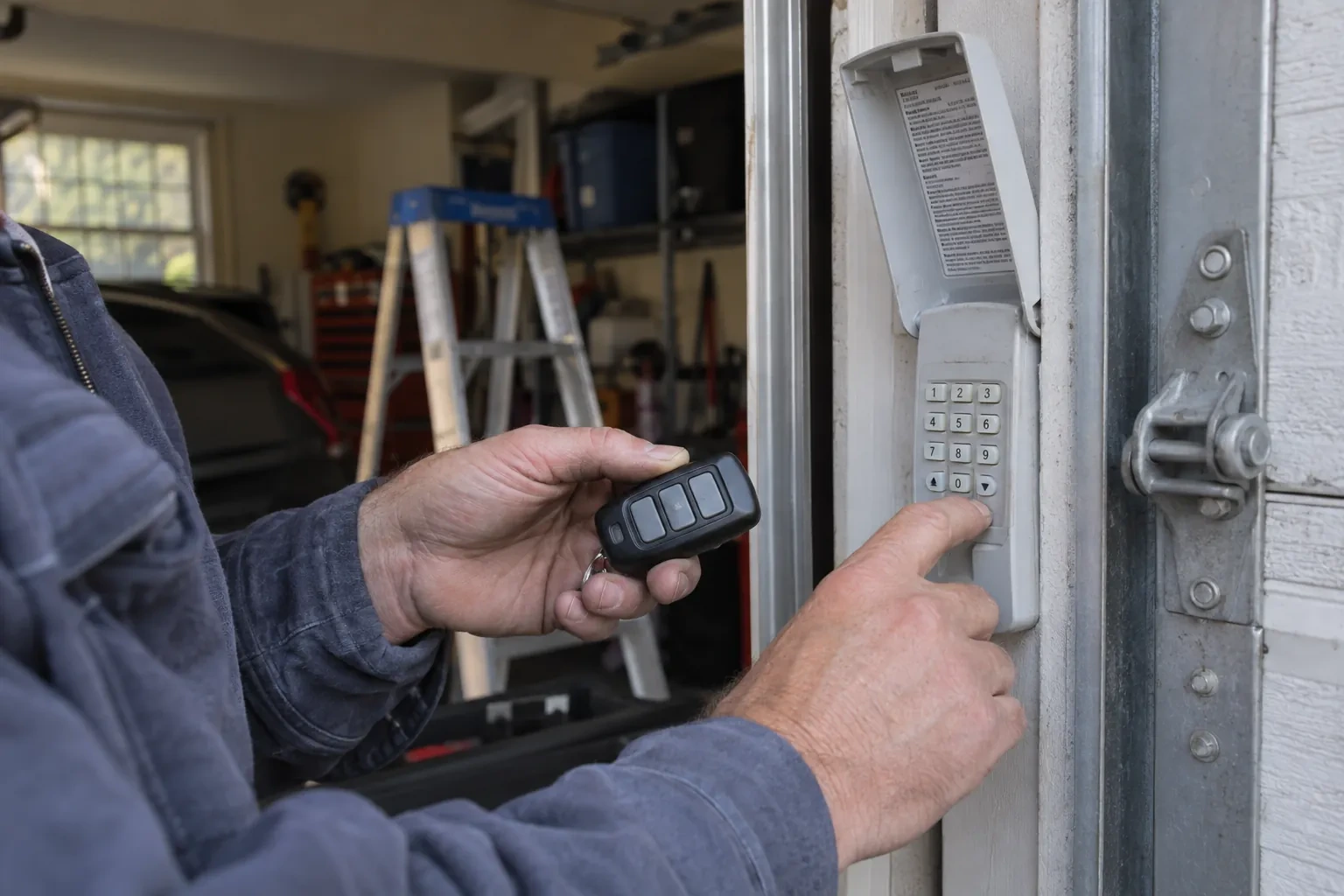
There is a wireless symbol printed on the opener above the car, and the manual mentions an app, but the head unit has never been connected to anything. You downloaded the app once, it asked for a serial number and a network, and the moment passed.
It is the coldest morning of the year. A week of slush and road salt has crusted over the outside release lock, the key will not seat, and the opener inside is silent after the overnight outage.
Which fix fits?
Twice this week the door started closing, stopped a metre from the floor and reopened on its own.
WhyWhat you get back is a door that runs its full height without a catch, hesitation or bang, with every roller seated in its channel and both sides rising together.
A bang like a dropped toolbox came from the garage last night.
WhyExtension springs are common on the detached garages behind older houses, where a low ceiling left no room for a torsion shaft, and those garages are rarely heated.
The motor runs, you can hear it working, but the door never moves.
WhyA carriage look can be created with several constructions, including embossed steel, insulated steel with composite overlays, or wood components intended for sectional-door use.
Your renovation has given the house clean modern lines, but the old raised-panel garage door now looks out of place.
WhyWhen a bay door hangs crooked, the visible angle is often only the starting clue.
An entrance. Not an afterthought.
1/10Garage Door Tune-Up
Twice this week the door started closing, stopped a metre from the floor and reopened on its own. One of the little sensor lights near the floor blinks instead of glowing steady, and the wall button has to be held to close it.
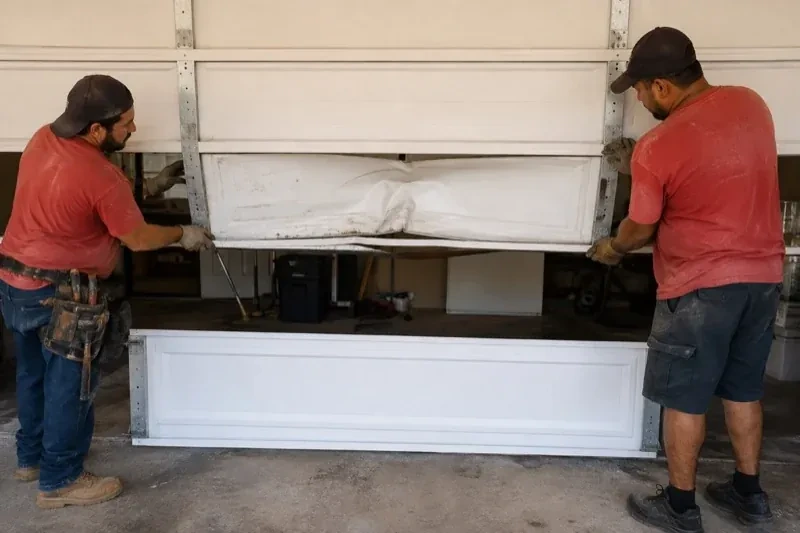
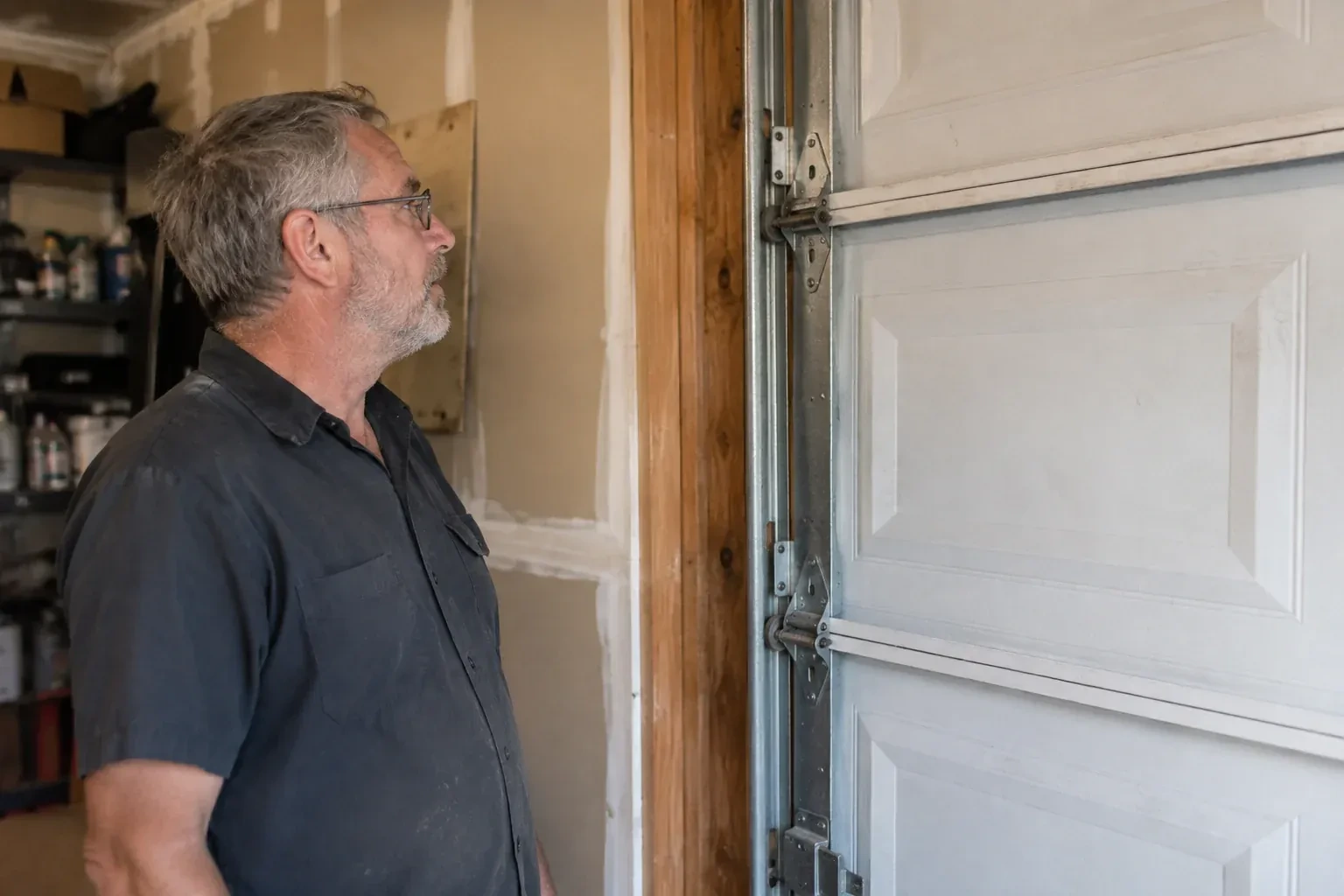
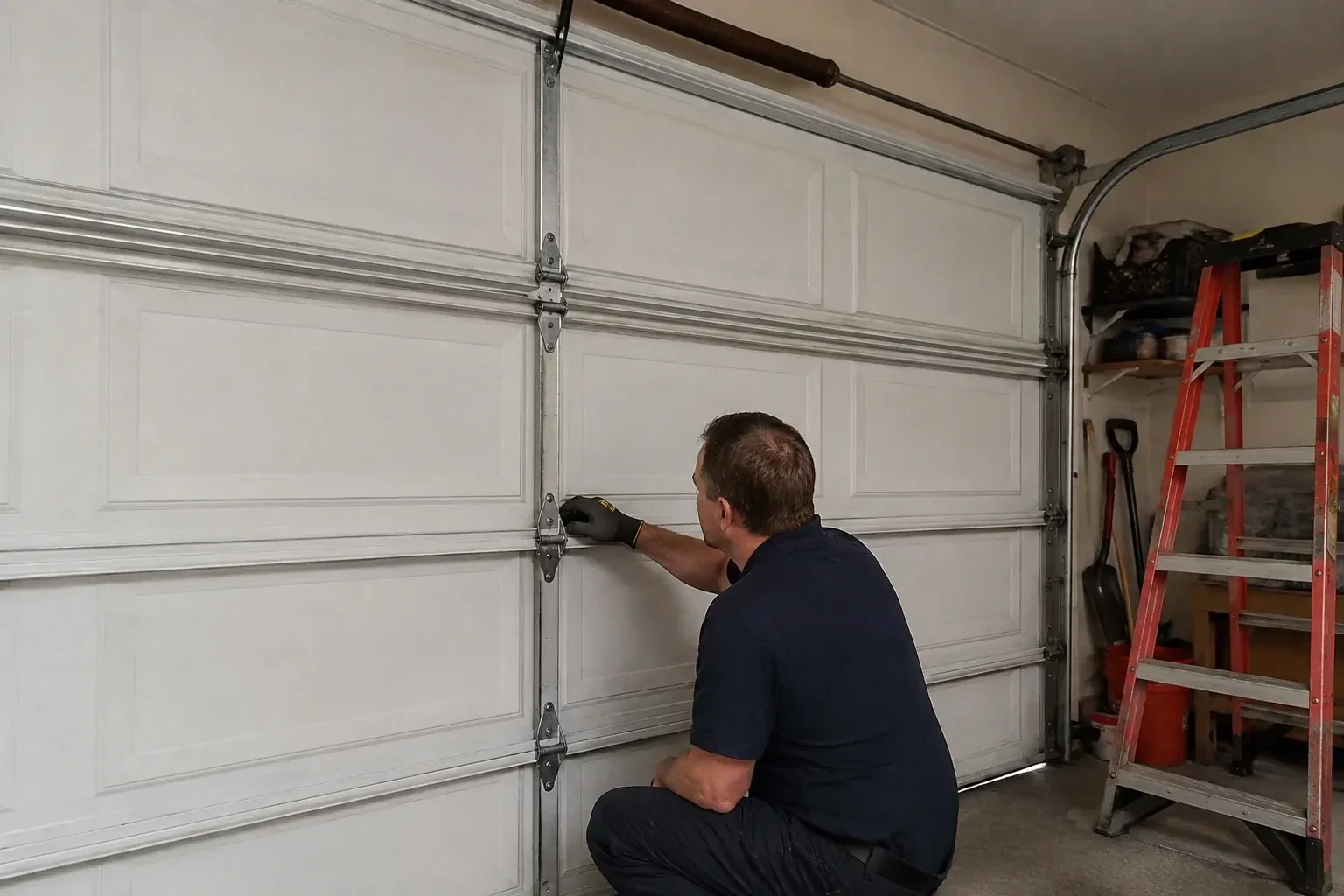
From outside, the horizontal groove between two sections now steps sideways by a centimetre. One section has shifted on its hinges after a roller jumped the track, and on the way down the door catches at exactly that point.
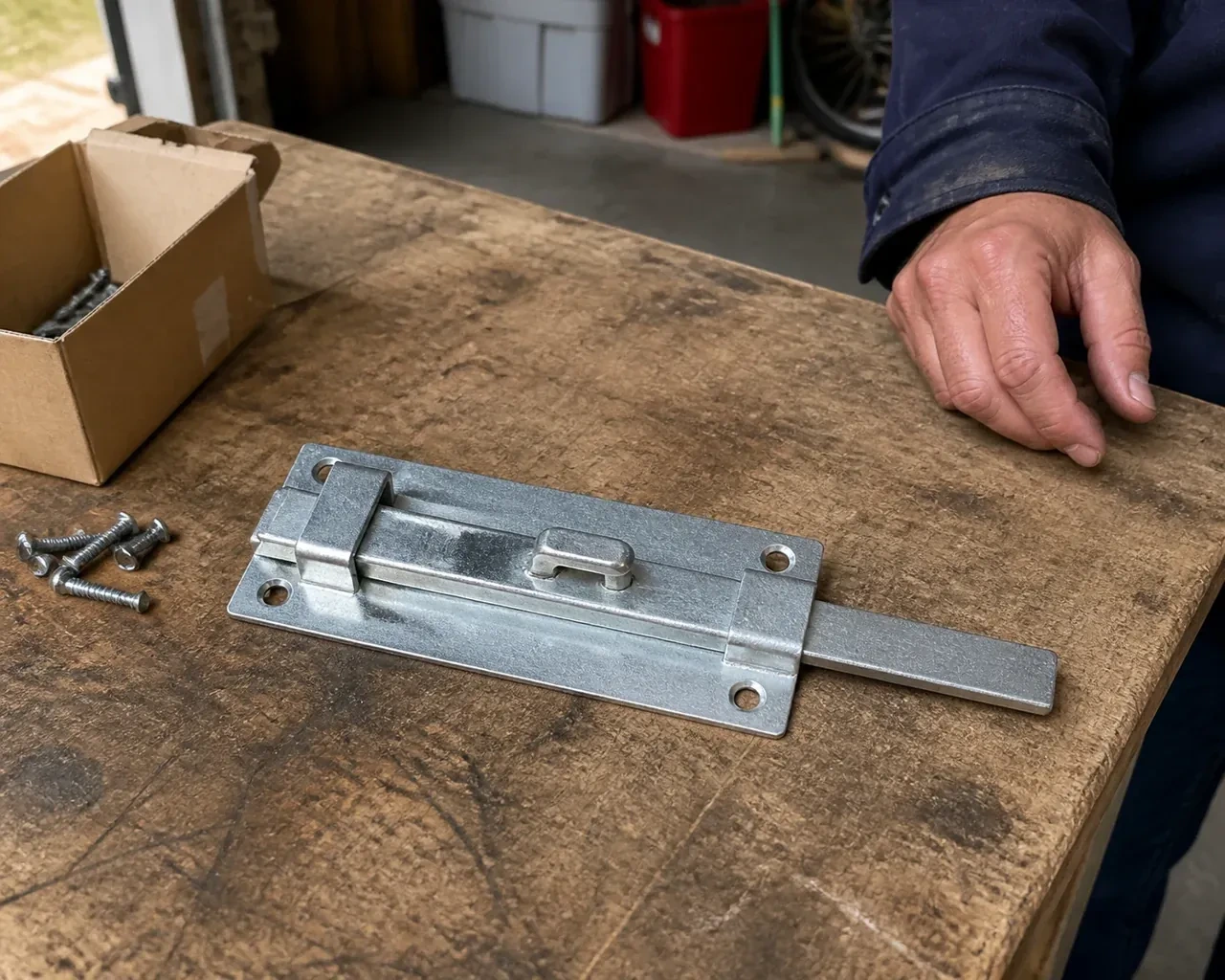
Someone slid the inside lock across before bed, and in the morning someone else pressed the remote. The opener groaned, the door jumped and shuddered, and now the lock bar is bent, the section is creased and the door hangs crooked at the top.
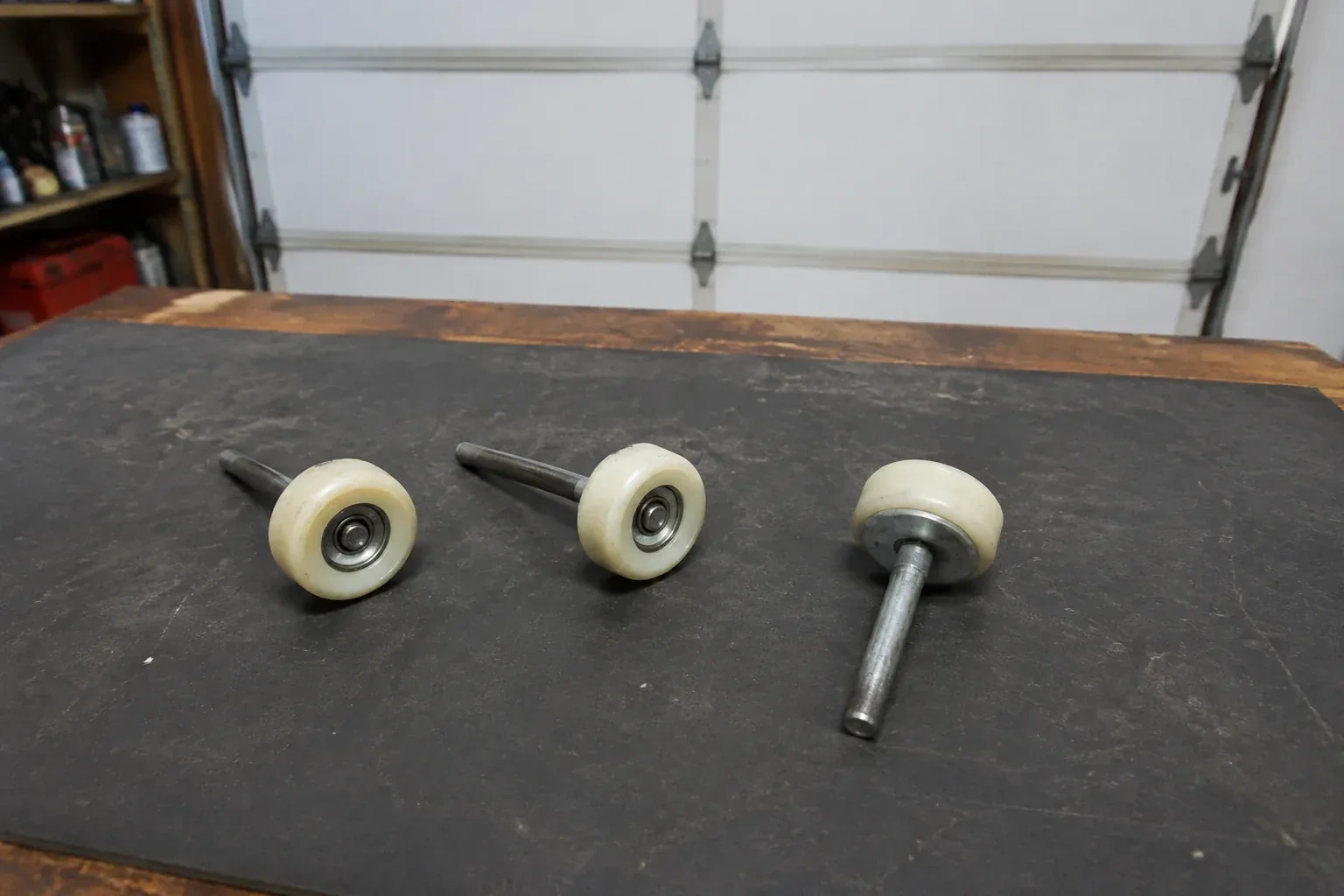
After a decade of slushy winters the bottom foot of the track is flaking rust. A roller squeals as it passes, and the channel edge has gone rough and thin where the salt collects.
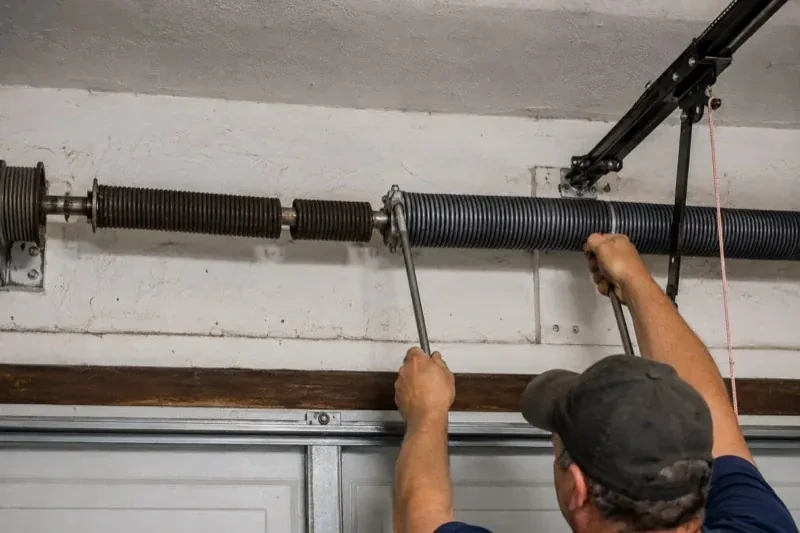
A bang like a dropped toolbox came from the garage last night. This morning one of the long springs beside the track hangs in two pieces, and the door will only rise a few inches before the opener gives up and stops.
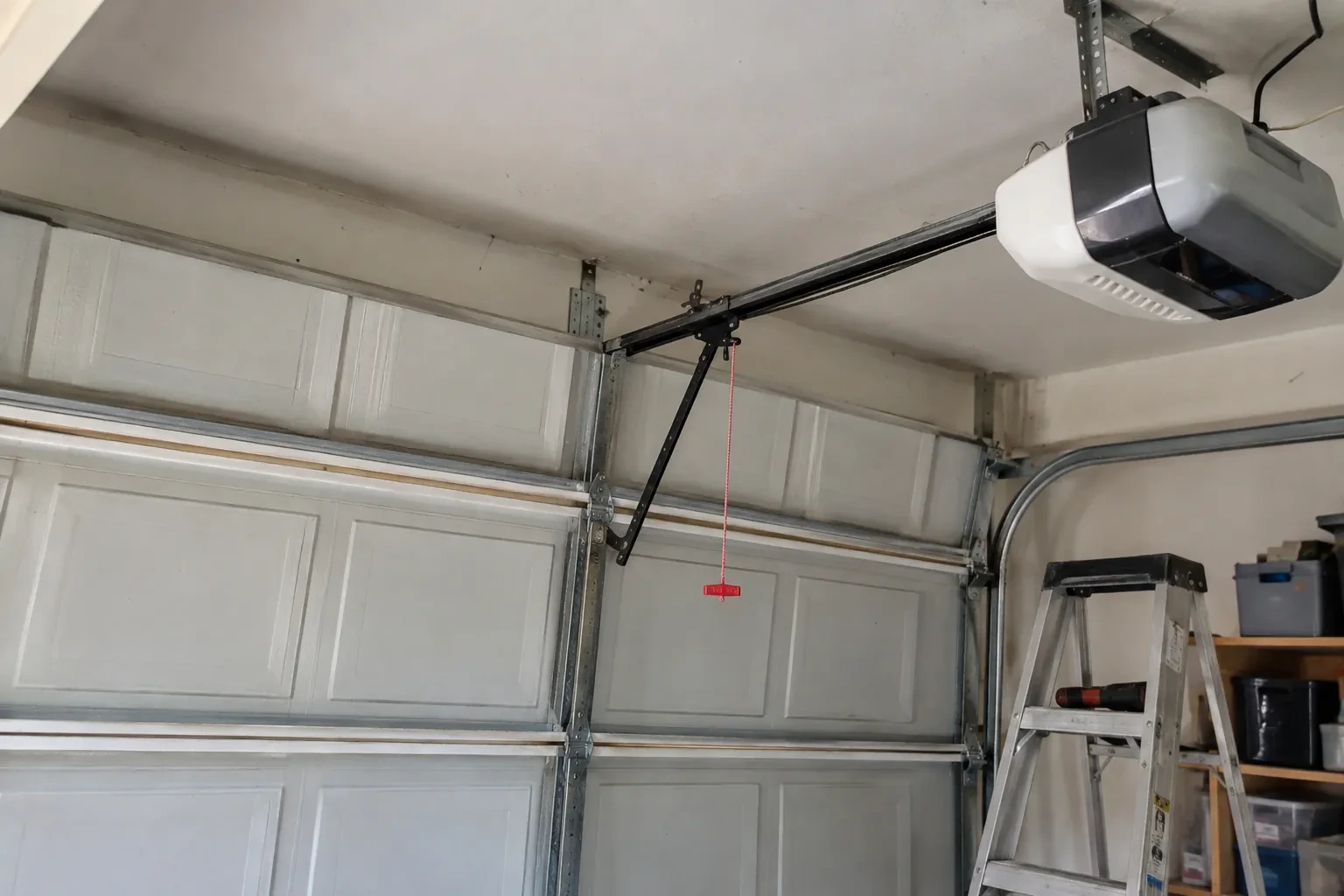
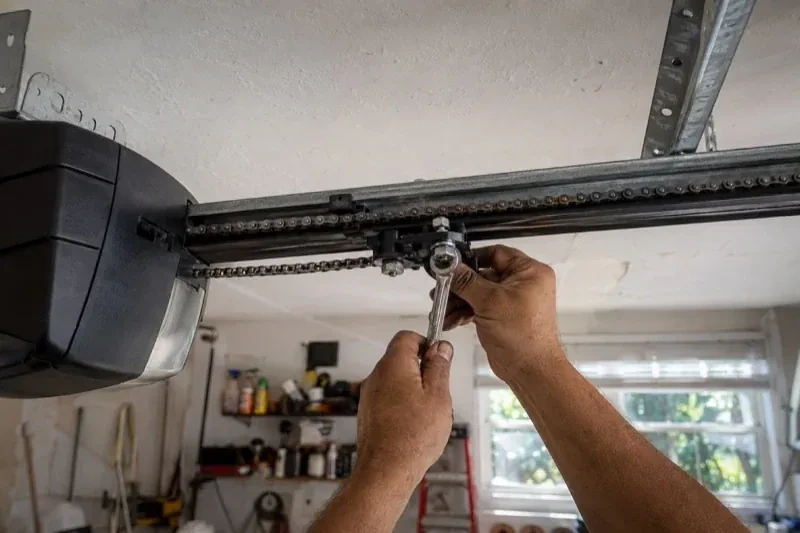
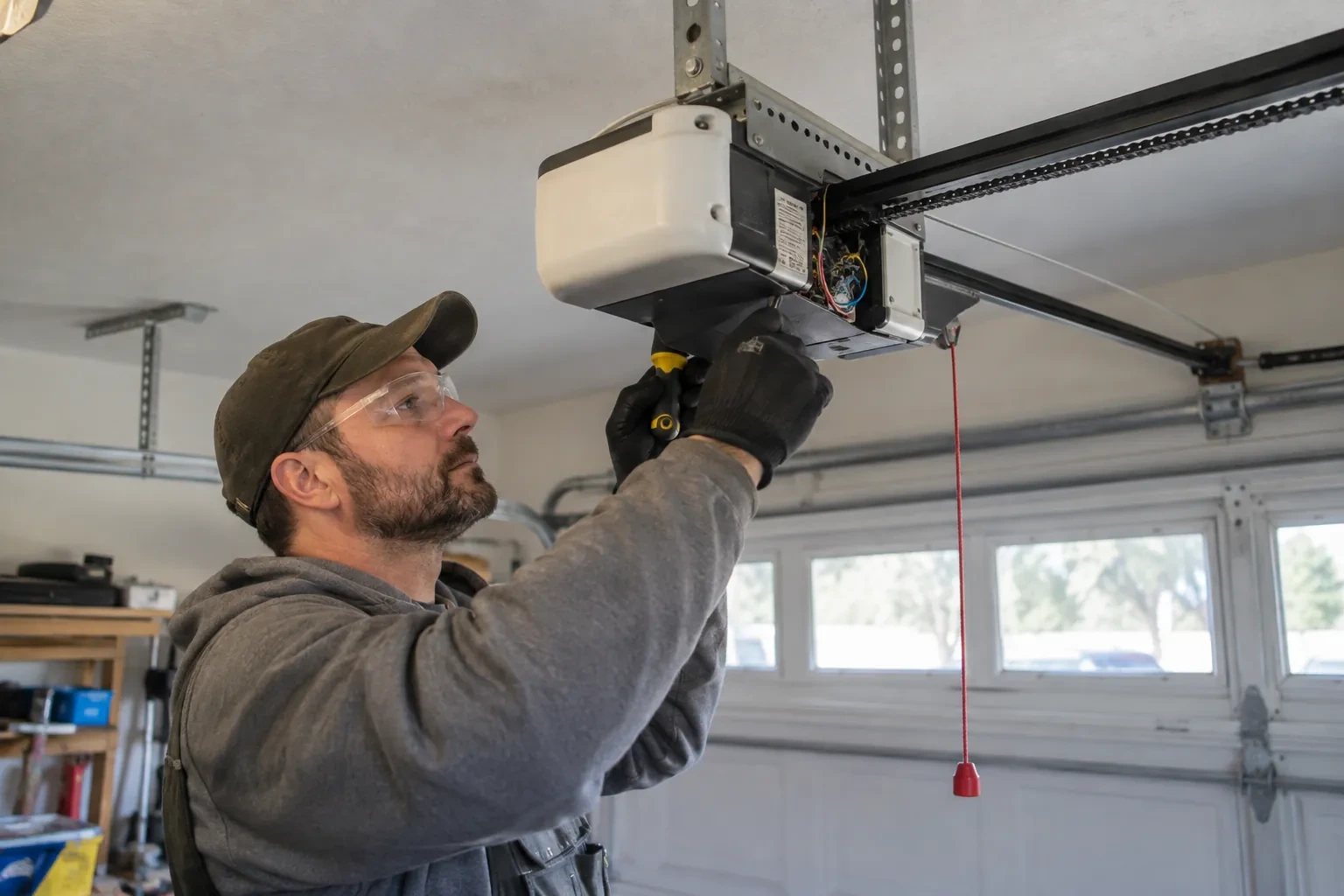
The motor runs, you can hear it working, but the door never moves. When you look up, the sprocket on top of the head is barely turning, and there is a little drift of pale plastic dust on the cover.
Your building designer has supplied positive and negative pressure values for the garage opening. The old door was selected years ago without that documentation, so the next step is a replacement whose full configuration can be matched to those criteria.
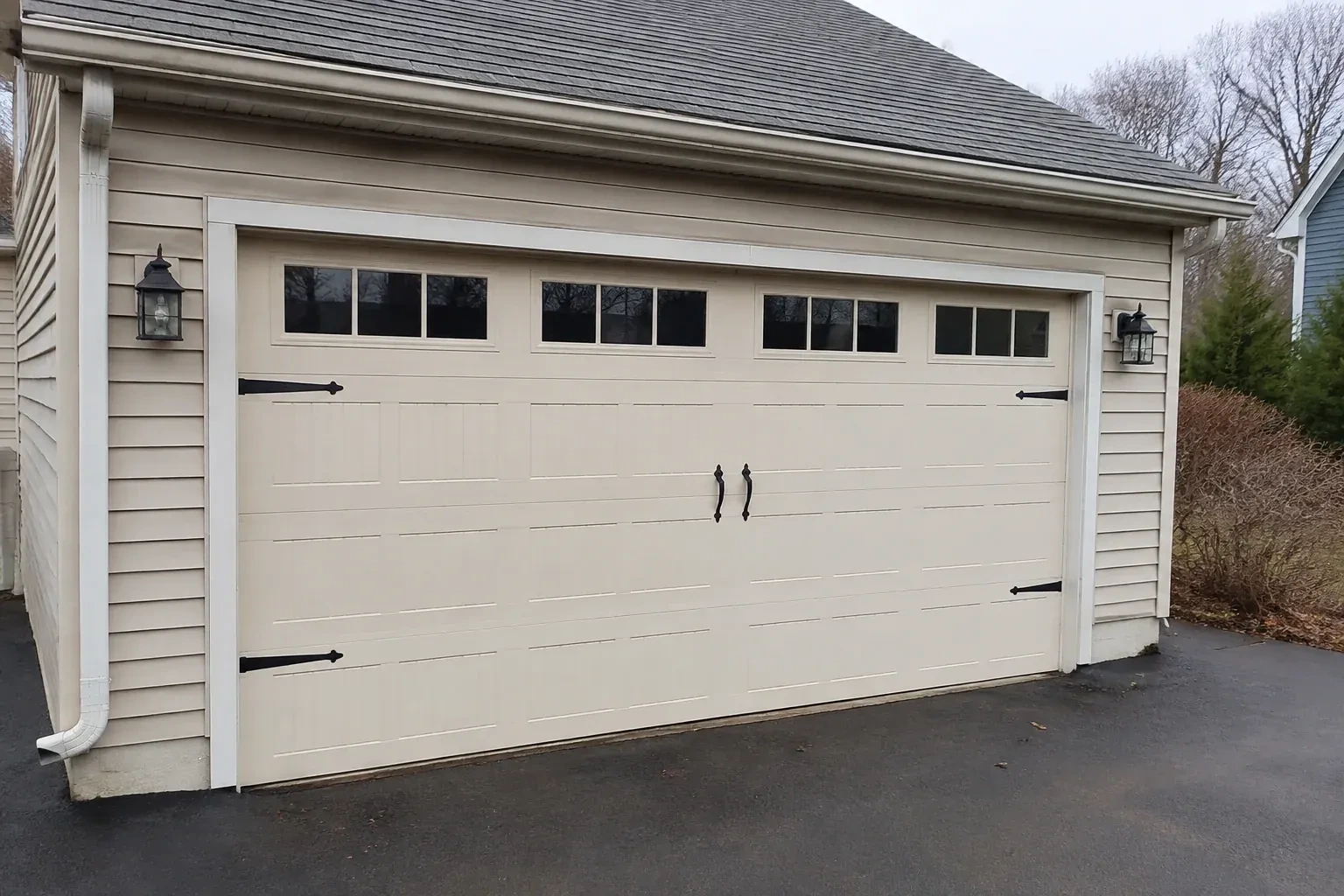
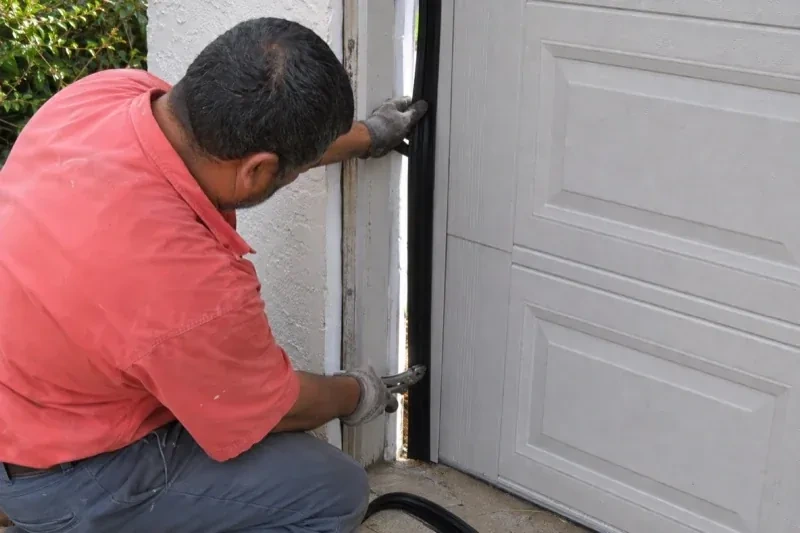
Cold air is noticeable around the current door, especially near the floor and section joints. This replacement is an opportunity to combine carriage-house styling with insulation and properly fitted perimeter seals.
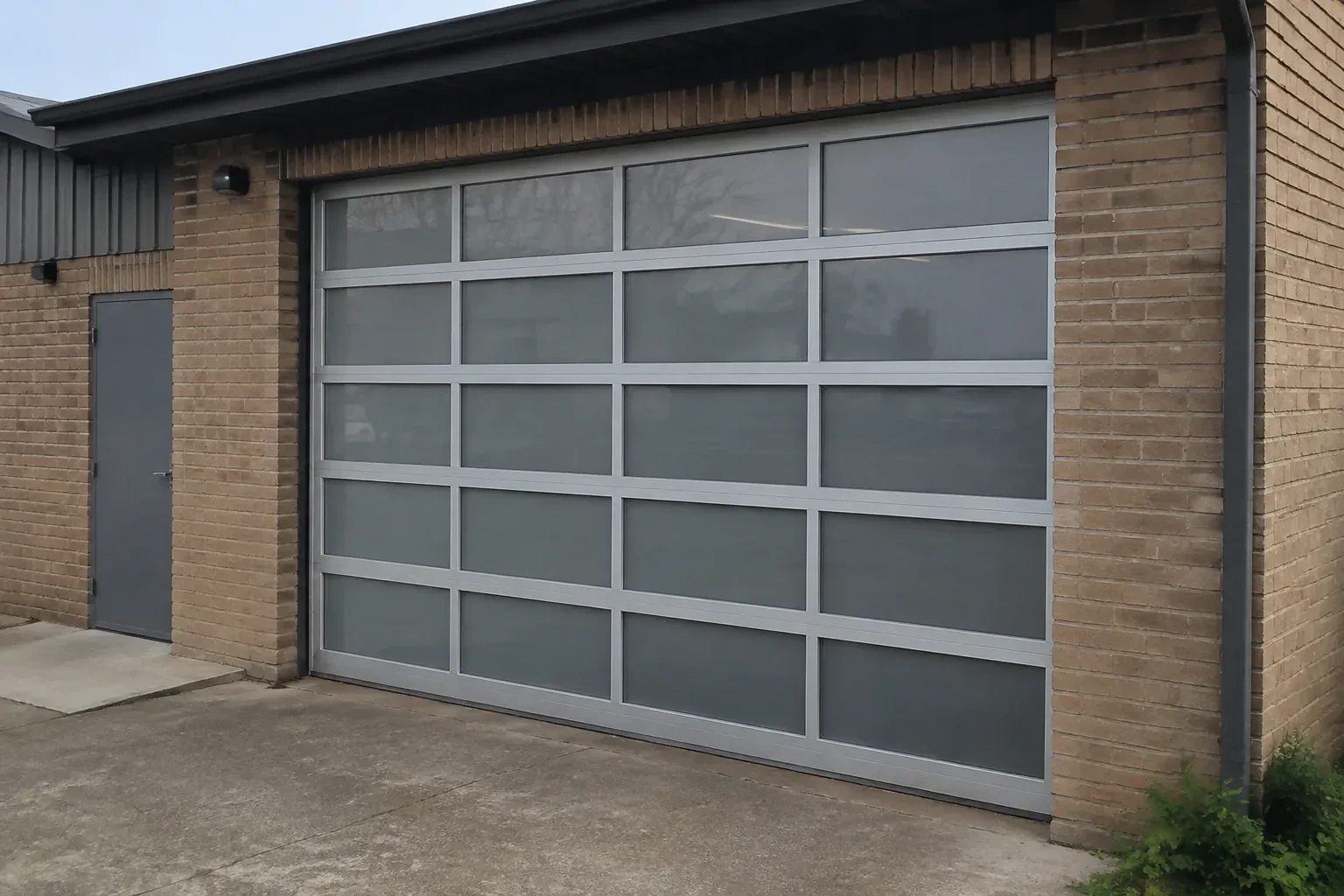
Your renovation has given the house clean modern lines, but the old raised-panel garage door now looks out of place. You want broad glass panels and a slim dark frame to complete the exterior.
The operator runs and the drive chain moves, yet the sectional door hesitates near the floor. It feels unusually heavy during manual operation, pointing to a counterbalance problem rather than a simple control-station fault.
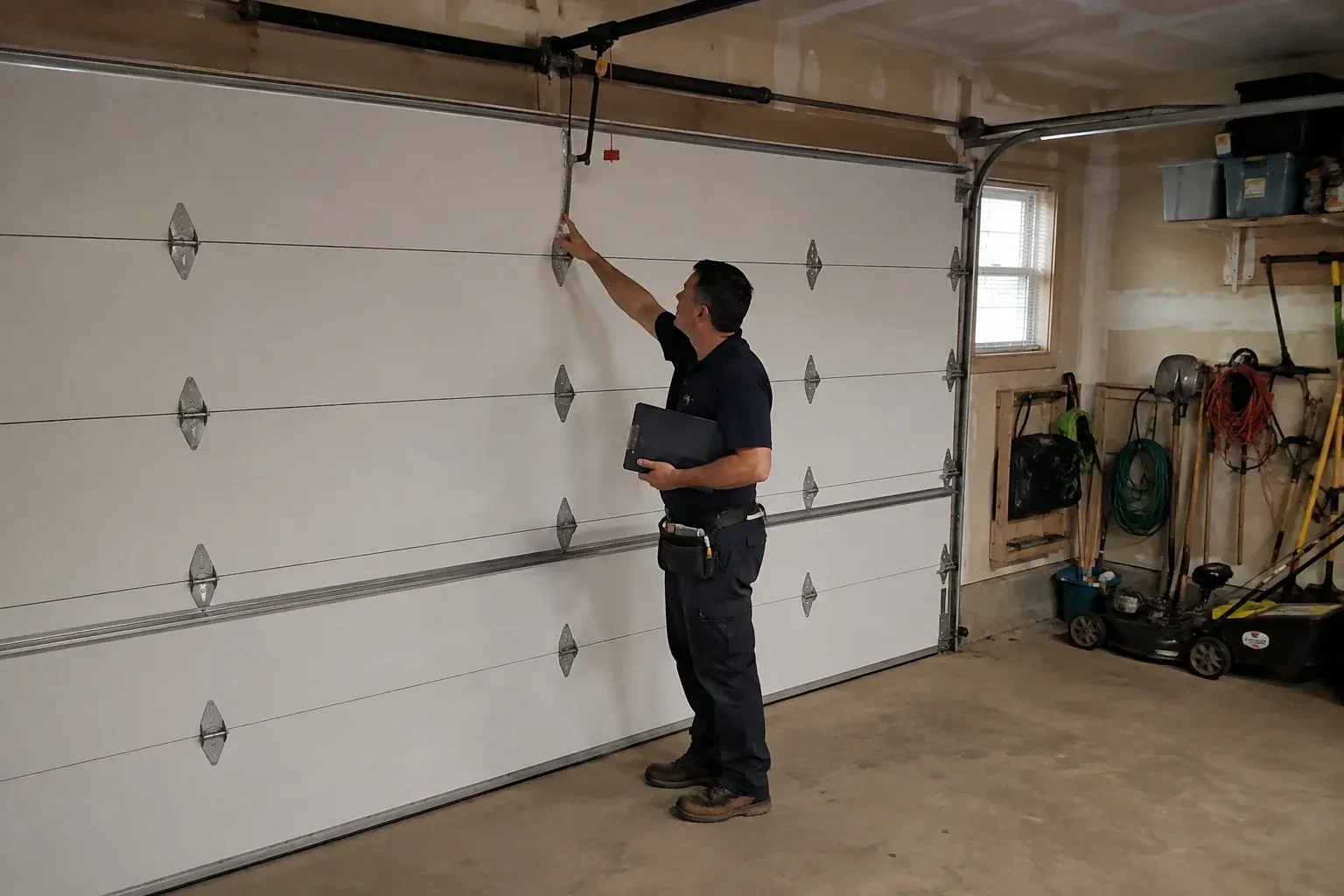
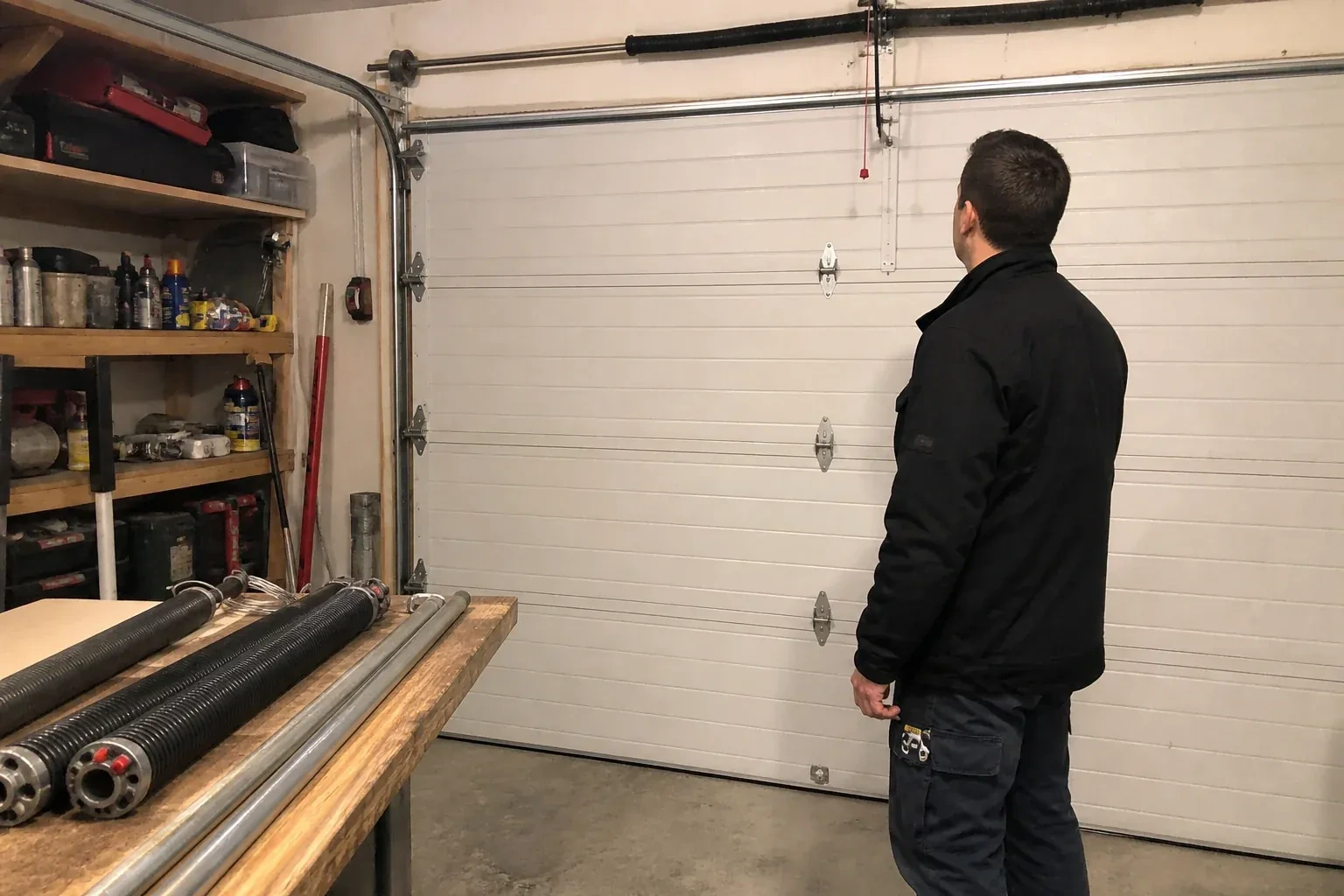
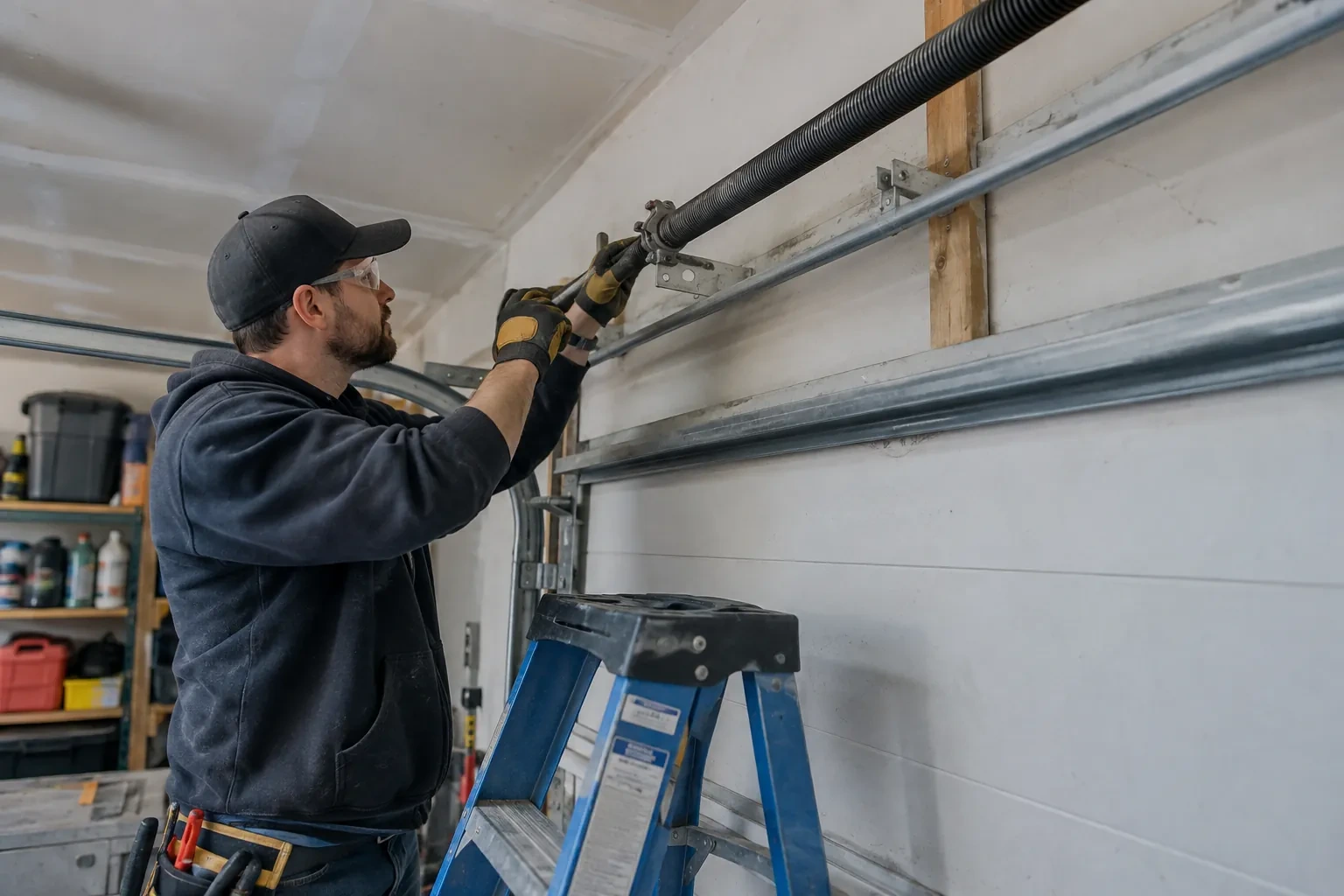
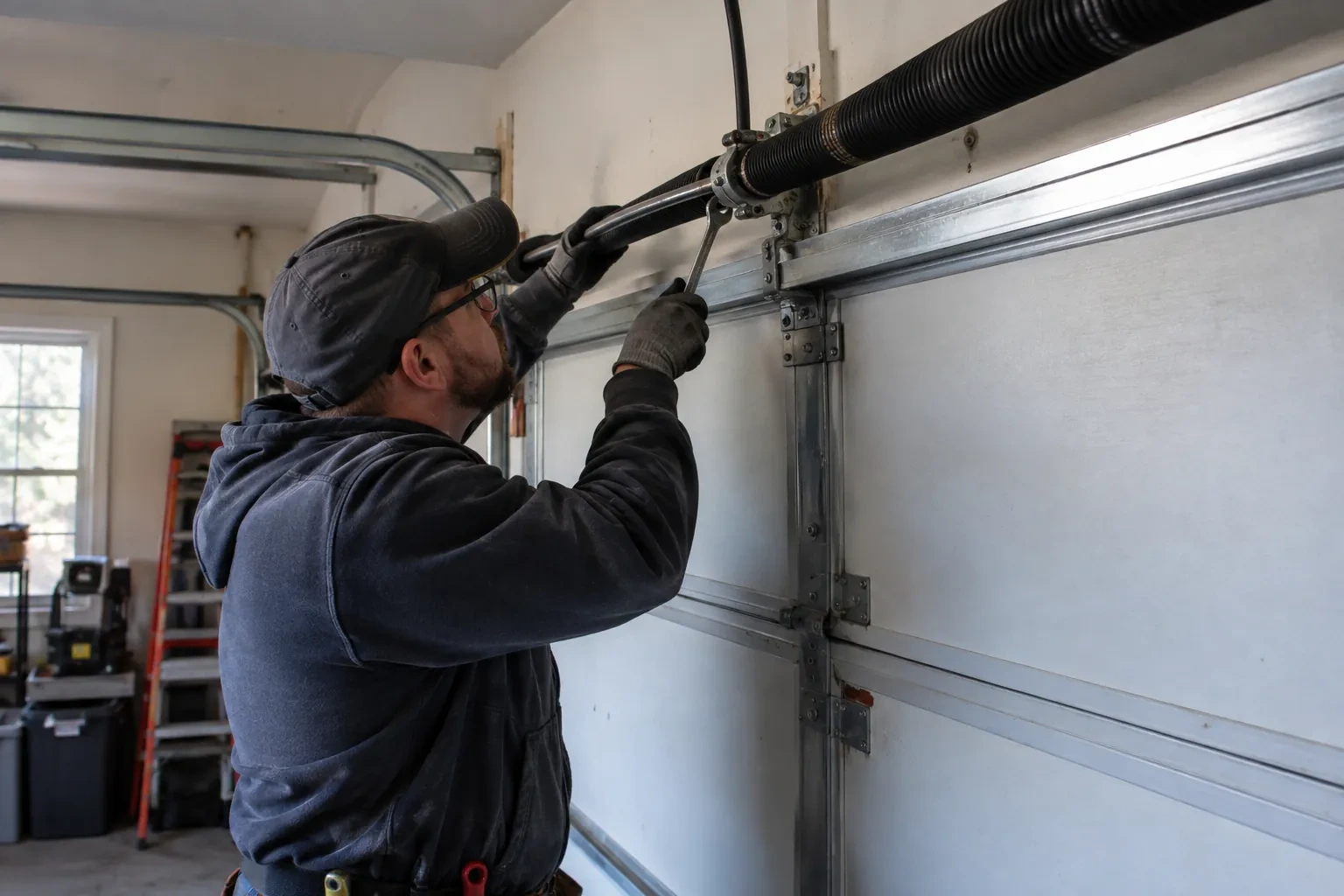
Springs are inspected and lubricated during a tune-up, and the balance test tells us whether they are carrying the door's weight properly. Changing their tension is a separate, deliberate job: the door is clamped to the track, winding bars are used on a torsion spring, and the technician works from a stable position. If the balance check shows the springs need adjustment or replacement, you receive that as its own recommendation with its own quote.
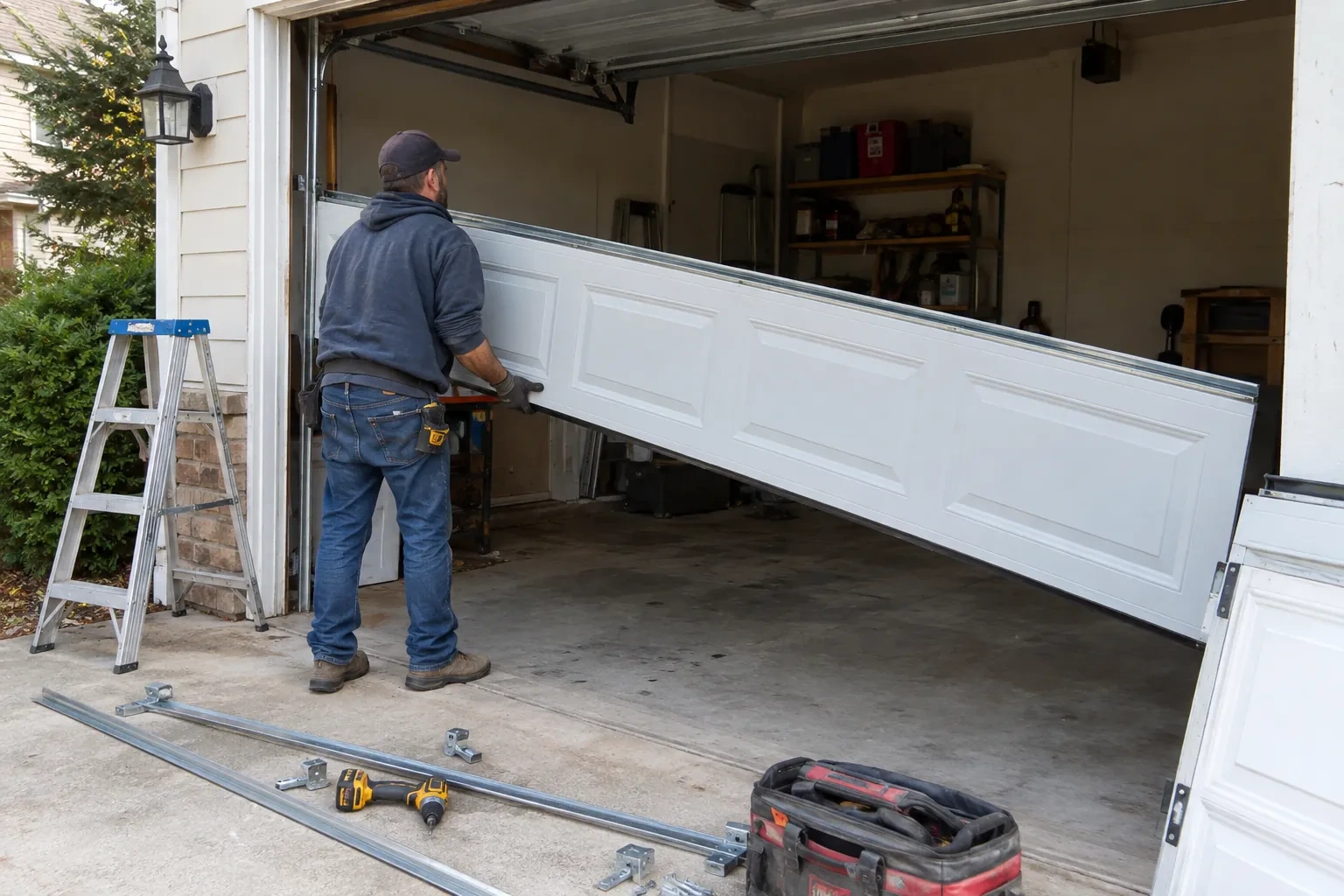
Can one damaged section be replaced without replacing the whole door?
Usually, yes. A sectional door is built from separate sections joined by hinges, so a single creased, rusted or cracked section can be unhinged and exchanged while the others stay in place. The conditions are that a section for your make, model and size is still available and that the rest of the door and its hardware are in good order. When damage spans several sections or the design is discontinued, a full door is compared alongside.
What lubricant belongs on a garage door lock?
Dry graphite or a PTFE lock lubricant for the key cylinder, because oil traps grit and moisture in the pins. A light silicone film for the bars and their guides, wiped rather than dripping, so salt spray and slush have less to cling to. Grease is avoided everywhere on the lock, as it thickens in the cold and collects dirt that gums the action.
Can I hammer the track back myself?
A track is under load from the door resting in it and, at the top, from the spring shaft on the flag bracket, so working on it means securing the door and sometimes unloading the springs first. Freehand hammering also tends to push a dent into a ripple that a roller feels even more. The technician clamps the door, shapes the steel in small steps with a block or track pliers, and gauges the result with a roller.
What does the paint colour on the end of the spring mean?
Manufacturers dab a colour on the end coil to indicate the spring's weight rating, which is a handy starting point. It is not the final word: a faded or repainted end coil tells you little, and the pair on an older door may have been a near match rather than the right one. The technician treats the colour as a hint and confirms the rating from the door's measured weight and the spring's own dimensions.
My opener is decades old. Can the chain drive still be repaired?
Often, yes. Gear kits, sprockets, chains and trolleys are still made for many older heads, and tension, phase and limits can be set on almost any unit. The limit is parts: some makers no longer support units made before the mid-1990s, and those also lack the photo-eye protection expected today. The technician checks parts availability for your model and lays out repair beside renewal so you can decide with the facts.
Can a wind-rated door include windows?
Yes, when glazing is part of the selected configuration. Window size, position, retainers, and the surrounding section construction may affect the reinforcement layout, so the desired design is chosen before ordering. Factory-prepared glazed sections keep appearance, strength, sealing, and documentation aligned rather than turning windows into an alteration after installation.
Which opener safety checks are completed after installation?
The technician confirms that photo eyes are aligned and respond when their beam is interrupted during closing. Contact reversal is tested according to the opener instructions, and open and closed travel limits are reviewed. Wall controls, remotes and the manual release are also operated. These checks connect the automatic equipment to the new door's actual movement instead of carrying forward former settings.
Is the glazing always made from glass?
No. Depending on the selected door system, infill choices may include tempered or laminated glass, acrylic, polycarbonate and solid aluminium panels. Each has its own weight, appearance, privacy, impact and cleaning characteristics. Availability also changes with door size, insulation and frame construction, so the material is confirmed as part of the complete ordered configuration.
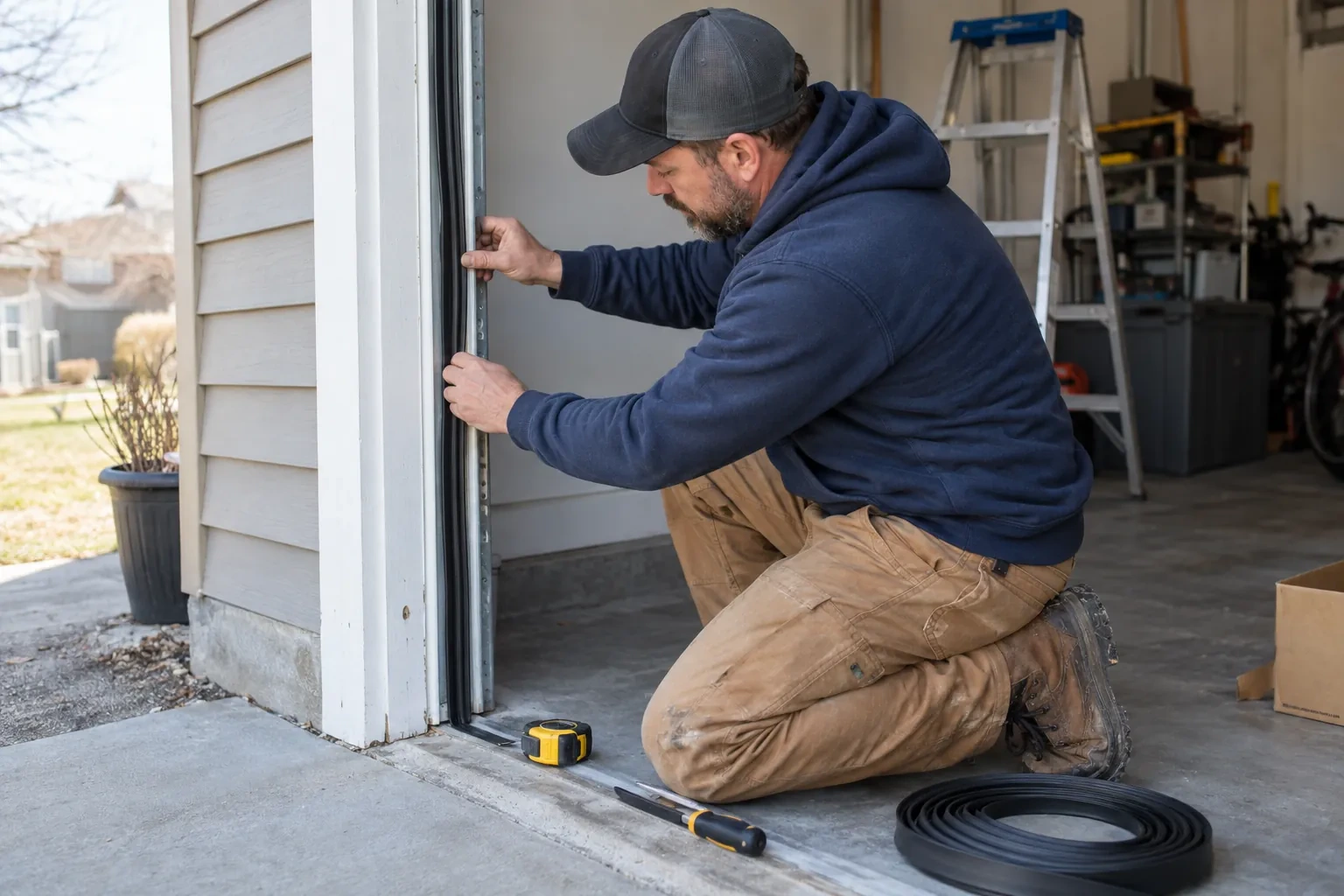
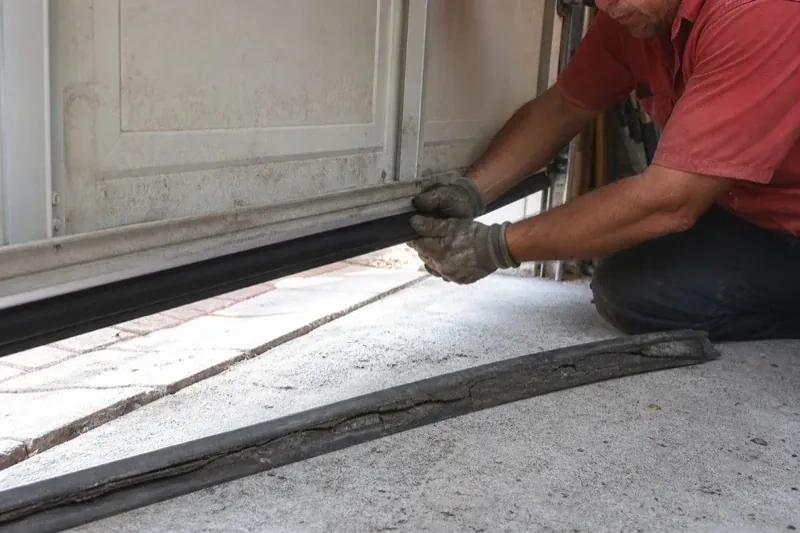
Does a torn bottom seal always mean a seal-only repair?
Not always. The rubber may simply be worn, but a bent retainer, uneven floor, crooked door or impact-damaged bottom section can produce the same gap. The technician checks how the door lands before replacing material. Correcting level or retainer shape first allows the new seal to contact evenly without being stretched to compensate for another fault.
Request a visit
People in St. Jacobs tend to remember two things about a visit from us: the technician showed them the worn part rather than just naming it, and the number he gave on site was the number on the invoice. That is how every job runs, from a single roller to a full new door.