Springs · St. Jacobs
Garage Door Track Repair or Replacement in St. Jacobs
After a decade of slushy winters the bottom foot of the track is flaking rust.
In plain words
What you get back is a door that runs its full height without a catch, hesitation or bang, with every roller seated in its channel and both sides rising together. The track sits plumb and firm on the jambs, the horizontal runs hold level from solid hangers, and the door seals along the stop when closed. Because the track was set to the door and the springs re-tensioned to it, the door balances by hand and the opener works lightly. You also leave with a note of the track profile, radius and lift type, which makes any later part a simple match.
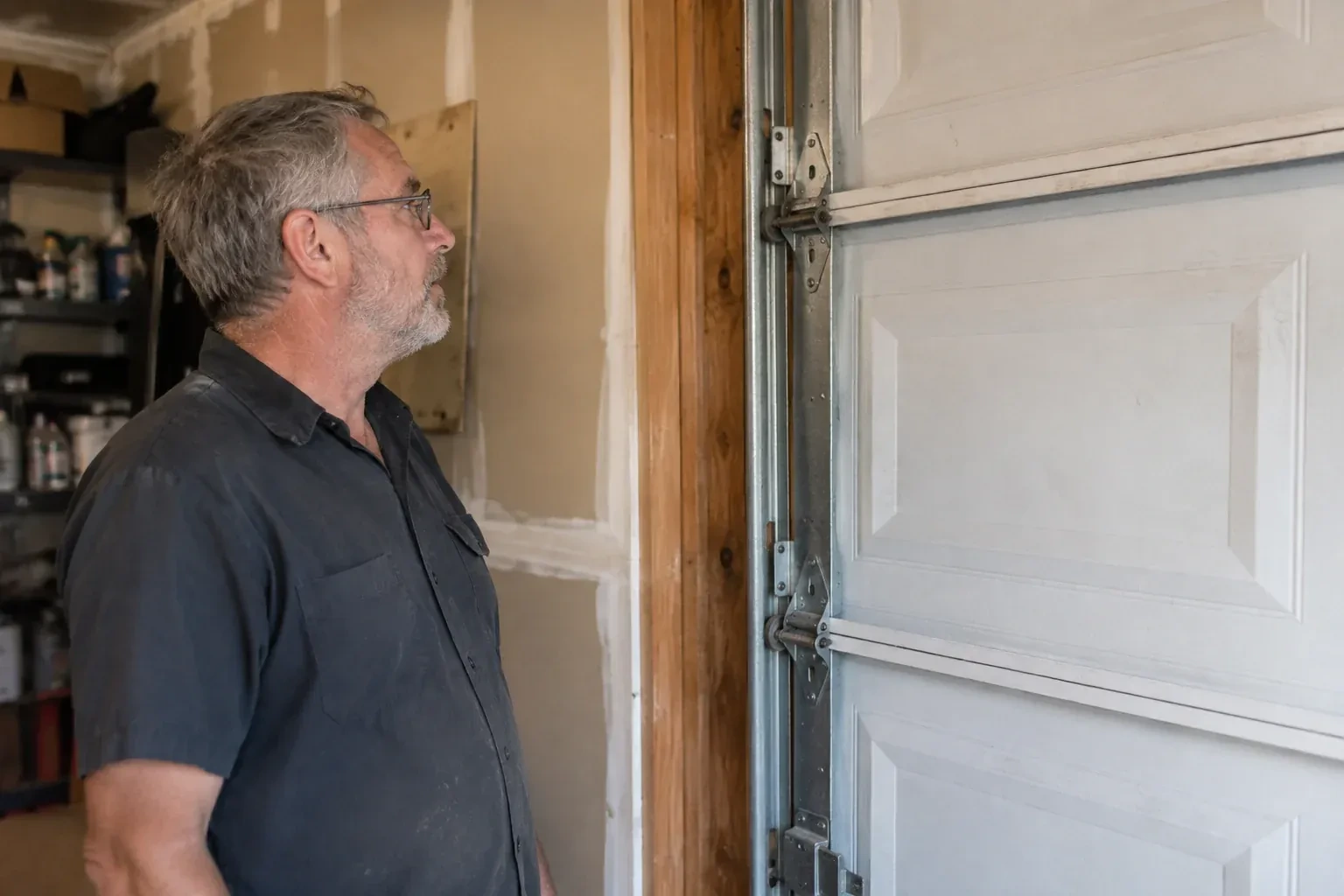
How the visit goesAfter a decade of slushy winters the bottom foot of the track is flaking rust. A roller squeals as it passes, and the channel edge has gone rough and thin where the salt collects.
Garage Door Track Repair or Replacement
How the visit goes
What bent it
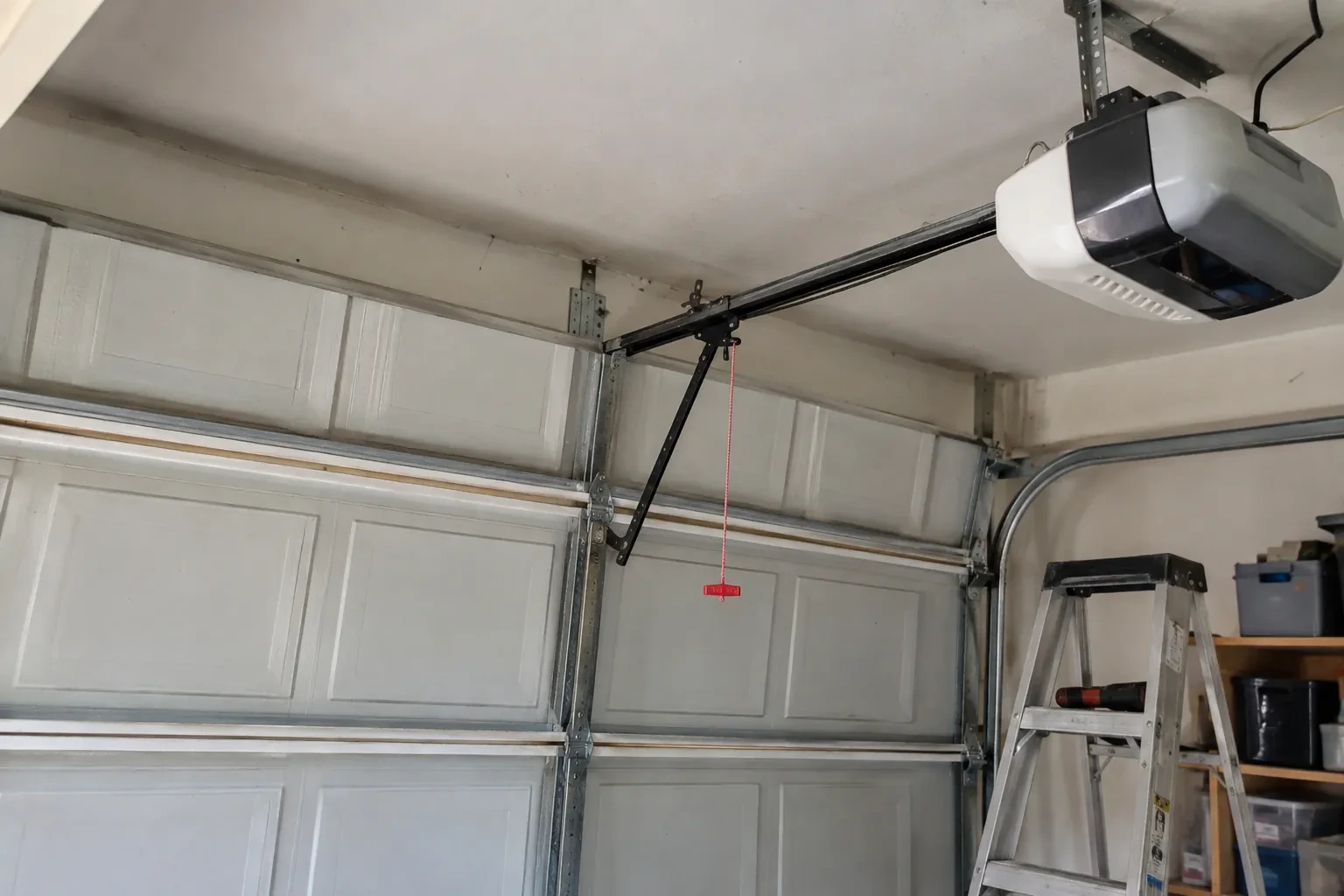
The last question is why the track moved, because the answer shapes the repair. A crease at bumper height with paint transfer is impact. A track that has crept off the jamb with screws backed out is vibration and time. Rust at the floor is winter. A twisted section on one side with a slack cable beside it usually follows a cable or spring failure that tipped the door. Overhead damage tends to trace back to storage, a ladder or a hanger that gave way. You will be asked what happened before the symptom, since a shovel in the opening or a nudge from the car is a fact only you can supply.
Setting the geometry
With the pieces in place, the technician sets the track to the door rather than to the wall. Each vertical run is plumbed, the gap to the door edge is matched side to side, and the top of each run is eased away from the jamb by the small amount that lets the door seal at the stop when closed and release on opening. The horizontal runs are levelled to each other and squared to the verticals, and the distance between the two tracks is checked at the floor, at the curve and at the rear so the door is neither pinched nor loose anywhere in its travel. Every bracket is then tightened in that position.
Jamb wood that will hold a screw again
If the visit included repairing the jamb, you now have sound timber behind every bracket, and the small habits that keep it that way are simple. Keep the bottom of the jamb dry: slush pushed clear, a bead of exterior caulk where the trim meets the slab, and paint or stain kept up on the exposed face. Look once a year for the tell-tale dark, soft patch at floor level and for screws that seem to have moved. A jamb that stays dry holds lag screws for decades, and with the track now fixed into good wood, the alignment set today has something solid to rest on.
Garage Door Track Repair or Replacement
In the van
Lag screws and track bolts
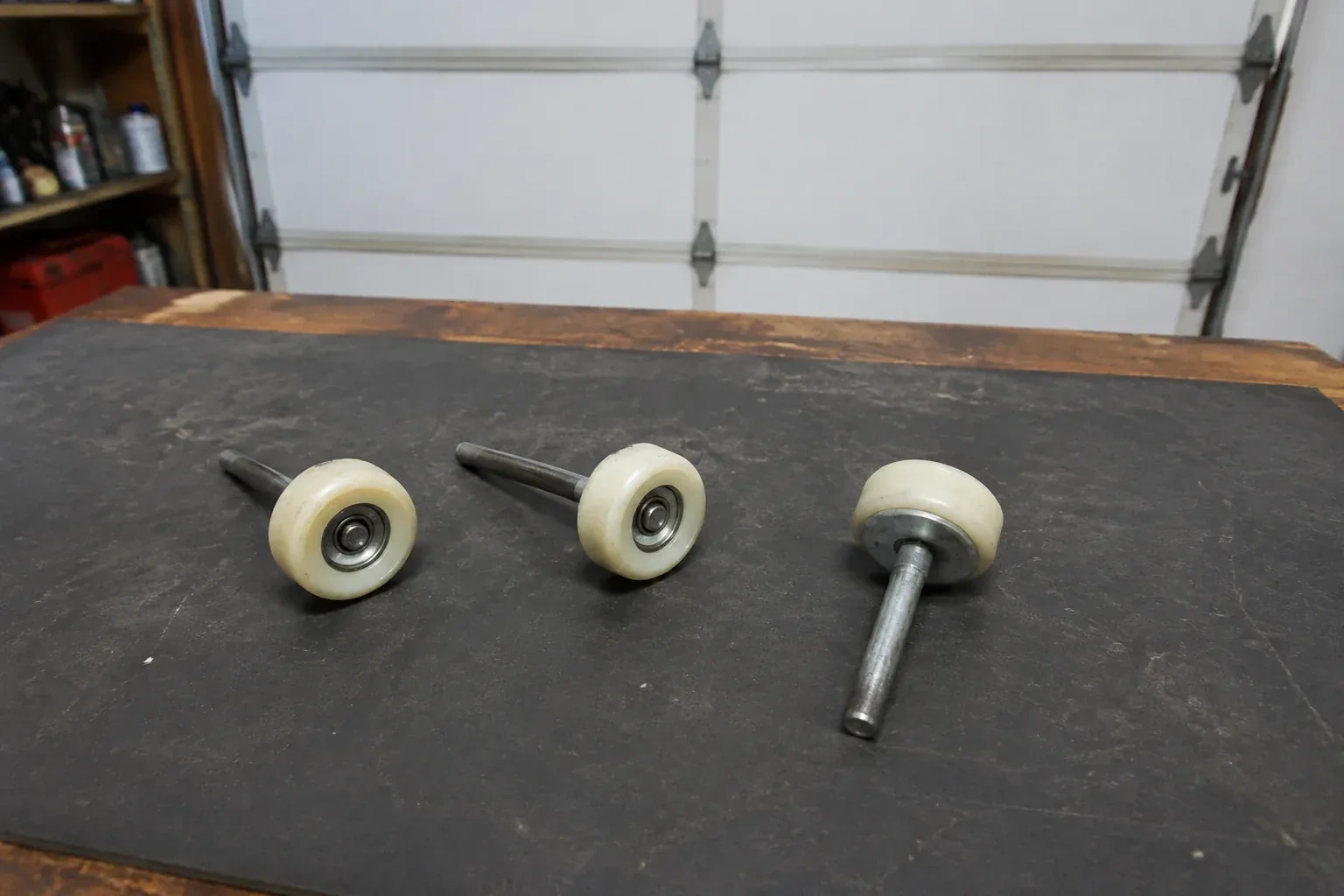
Replacement rollers and hinges
Track pliers and dead-blow hammer
Level, plumb line and square
Perforated angle back hangs
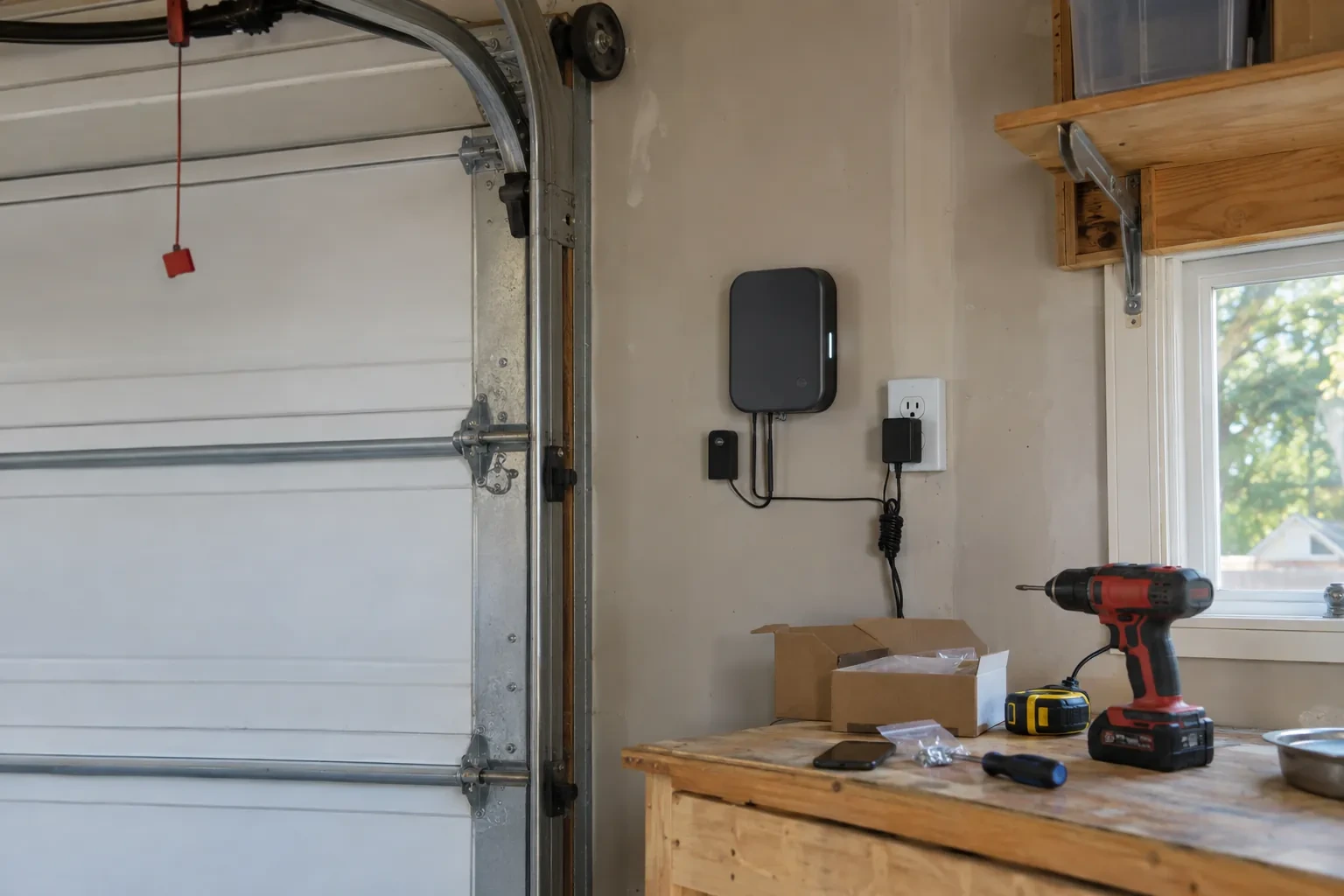
Garage Door Track Repair or Replacement
What affects the quote
Rollers, hinges and top fixtures damaged alongside
Parts that suffered while the door was catching, such as flat-spotted rollers, split hinges or bent top fixtures, are offered as their own items so the new track is not chewed by the old damage.
Springs that have to be unloaded
Work at the flag bracket or on the curve means winding the torsion springs down and back up. That adds time, and the quote says whether it applies to your repair.
How the door is sitting
A door resting closed is straightforward. One jammed partway on a bent section, or with rollers out of the channel, has to be supported and freed before the track can be measured.
What to have ready
- Is it a single or a double door, and roughly how tall?
- Can you see a bracket standing away from the wood or screws backing out?
- Is the door closed, fully open, or stuck partway?
Garage Door Track Repair or Replacement: questions
QuestionsWhat does track radius mean, and does it matter for a replacement piece?
The radius is the size of the curve where the track turns from vertical to horizontal, typically 12 or 15 inches on two-inch residential track. It fixes how high the door climbs before it turns and how much headroom is needed, and the cable drums and spring setup are chosen around it. A replacement curve has to match the other side, otherwise the door meets the horizontal run at different heights and twists as it opens.
Can I hammer the track back myself?
A track is under load from the door resting in it and, at the top, from the spring shaft on the flag bracket, so working on it means securing the door and sometimes unloading the springs first. Freehand hammering also tends to push a dent into a ripple that a roller feels even more. The technician clamps the door, shapes the steel in small steps with a block or track pliers, and gauges the result with a roller.
My door came off its track last month. Is this the same service?
It is the follow-on. Putting a door back on its track deals with the rollers and gets the door running again; track repair deals with the reason it left. If the reset showed a spread channel, a bent section or loose brackets, those are corrected now so the rollers stay put. Where nothing on the track was at fault and the cause was a cable or an obstruction, the track is simply checked and confirmed.
Related services
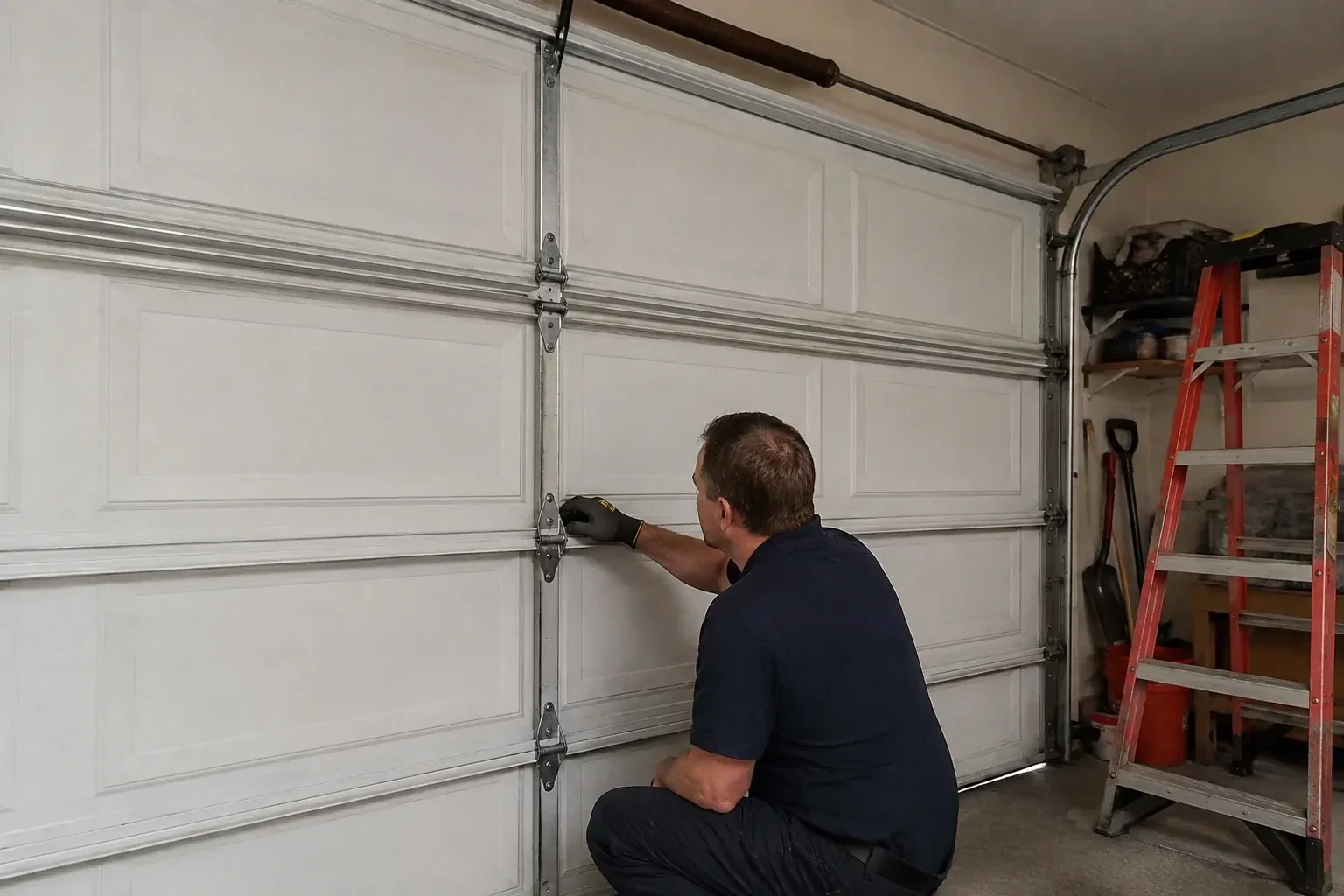
- Garage Door Hinge ReplacementOn the old wood door, one hinge has pulled away from the panel, dragging a screw and a chunk of soft timber with it.
- Garage Door Cable ReplacementThere was a sharp crack from the garage, and when you went to look the door had dropped on one side and jammed.
- Torsion Spring ReplacementNothing broke outright, but the door has grown heavier each winter, opens more slowly and squeals as it moves.