Springs · Woolwich
Garage Door Hinge Replacement
On the old wood door, one hinge has pulled away from the panel, dragging a screw and a chunk of soft timber with it.
In plain words
What comes back is a door that moves as a single piece. The panels fold around the curve without a gap opening on one side, the rollers ride flat in the track instead of leaning, and the pop a metre off the floor is gone. With the opener released, the door lifts by hand with light effort and holds at waist height, which shows the hinge work has left the balance undisturbed. You also get a note of the hinge numbers, gauge and any backer plates fitted, plus a look at the small routine of tightening and lubricating that keeps hinges working for many years.
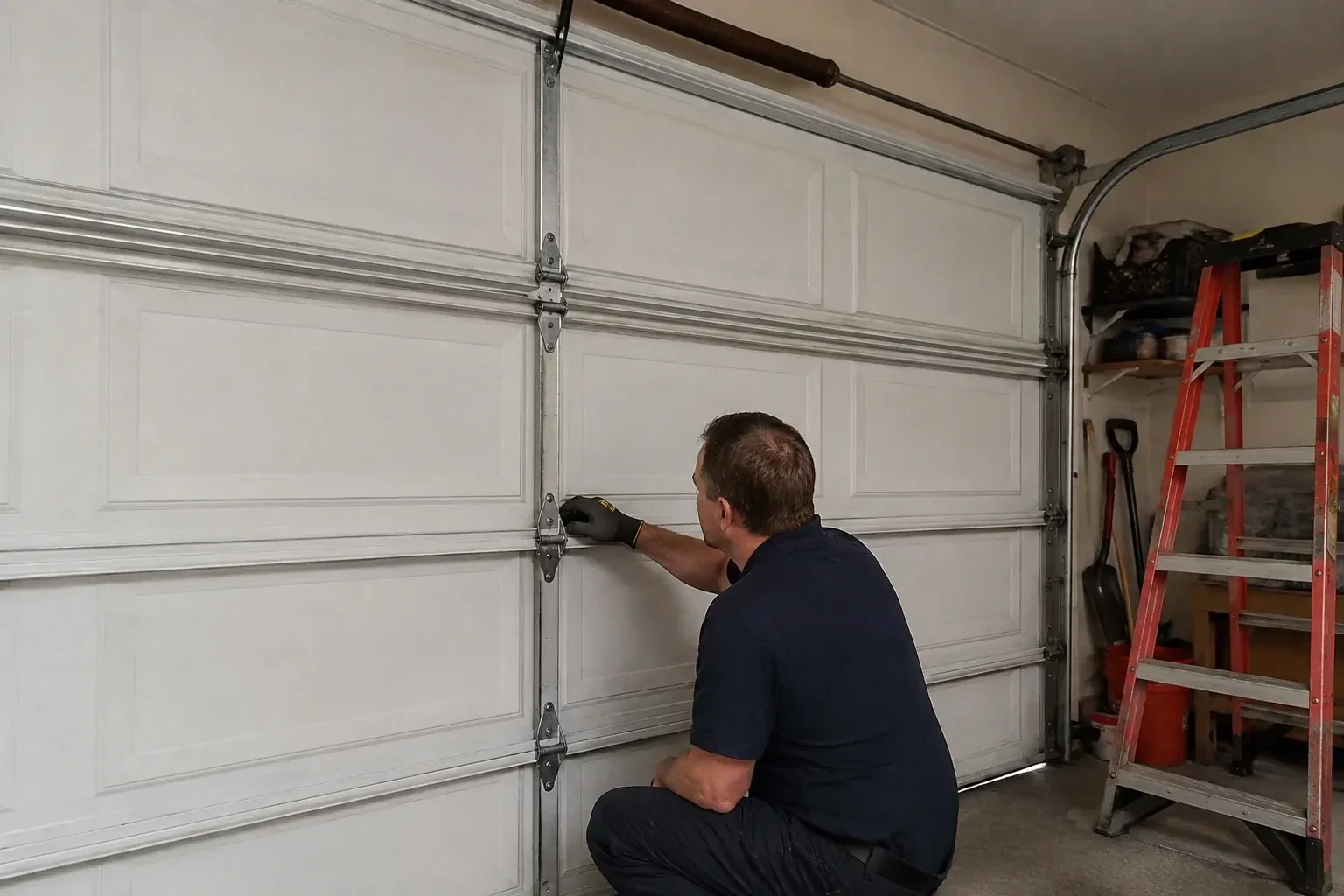
How the visit goesWith the door closed and a flashlight on the inside face, one of the hinges near the edge has a crack running from the screw hole to the knuckle. The steel around it is brown with rust, and the pin looks loose in its barrel.
Garage Door Hinge Replacement
How the visit goes
How the door meets the jambs
With the door still closed, the technician checks how it sits against the opening: does the door press evenly against the jambs on both sides, is there daylight at one edge, and do the panels line up flush with each other? Then the vertical tracks are checked for plumb, spacing from the door face and secure brackets, and the curve is examined for a smooth run. This matters because hinge numbers and track angle work together; a hinge of the wrong number, or a track that has crept, shows up here before the door moves. It also gives a baseline to compare against once the new hinges are on.
Swapping a centre hinge
A centre hinge carries no roller, so its exchange is the simplest part of the day. The screws into the upper and lower panels are backed out, the old hinge lifted off, and the stile checked for damage around the holes. The new hinge, a 1 in most cases since centre hinges share that geometry, is placed on the same hole pattern, and new hex-head self-drilling screws are driven into the stile or the support plate behind it. If the old holes are tired, the technician moves the hinge slightly to fresh metal within the stile or bolts through with a nut and washer, then confirms the joint closes tight with no gap.
A monthly look from the inside
The maintenance checklist the door industry publishes asks homeowners to check hinges, brackets and fasteners visually from inside with the door closed, once a month. Stand where you can see both ends of the door and follow each joint with a flashlight: a screw head that stands proud, a hinge leaf lifted off the panel, a fresh crack spreading from a hole, or a rust stain running down from a knuckle. Then watch the door open and confirm the rollers stay in the track. Anything you spot is a small job at that stage. The whole check takes about a minute.
Garage Door Hinge Replacement
In the van
Centre hinges
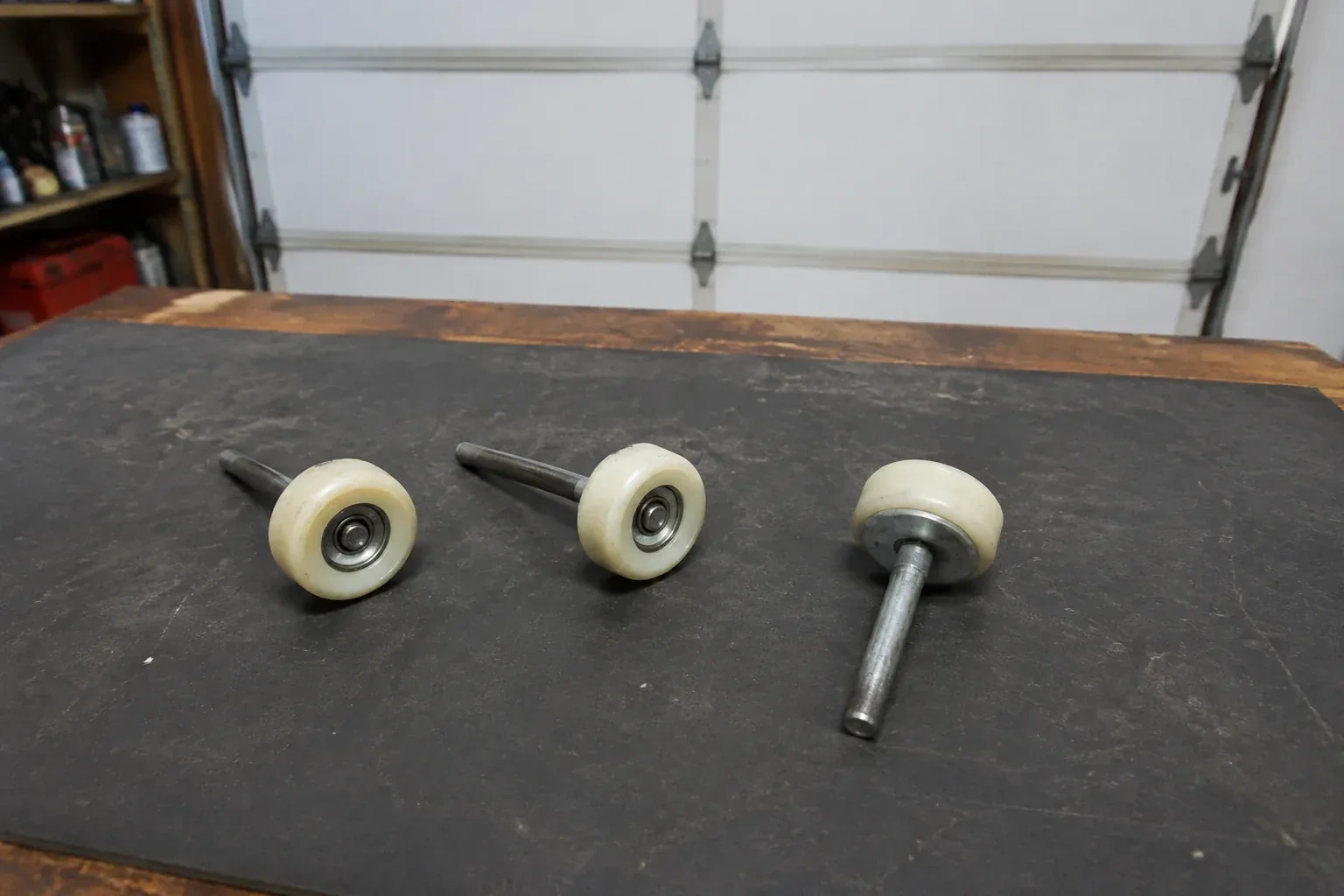
Replacement rollers
Heavy-gauge hinges for heavy doors
Silicone or lithium hinge lubricant
Panel strut
Garage Door Hinge Replacement
What affects the quote
Edge hinge or centre hinge
A centre hinge unscrews and refits in a few minutes. An edge hinge carries the roller and has to be worked out of the track, so it takes longer and is often paired with a roller.
Access to the door
Shelving against the door, a car that has to stay inside, or a tall door that needs a stepladder for the upper joints all affect the time quoted.
Manufacturer-specific hinge patterns
Hinge width and hole spacing differ between door makers. A door that needs a maker-specific hinge rather than a standard one may involve ordering, which the quote notes.
What to have ready
- Is anything stored against the door or under the track we should know about?
- Is the door closed, open or stuck partway right now?
- Has a car, bin or anything else bumped the door recently?
Garage Door Hinge Replacement: questions
QuestionsWhy do the lowest hinges rust before the others?
They live where the water is. Slush and road salt drip off the car onto the bottom two joints and pool along the floor, and the salt attacks the zinc coating where the hinge leaf meets the pin and around the screw heads. Higher hinges stay dry and often look new when the low ones are brown. Wiping the low hardware after a thaw and a light silicone film in autumn slow it down.
Will new hinges make the door quieter?
Often noticeably. A cracked or loose hinge is the source of many pops, clicks and rattles, and a hinge that holds its roller square lets the wheel run flat instead of scraping the track lip. Combined with fresh lubricant on the knuckles and rollers, the door settles into a steady rumble. Any noise that remains usually points to the rollers, the opener chain or the springs, which the technician can identify for you.
Should every hinge be replaced, or only the broken one?
It depends on what the inspection finds. Hinges age at similar rates, so a cracked one is often the first of several, especially on the lower joints where salt and moisture collect. The technician checks each hinge and tells you which are cracked, worn at the pin or bent, which are loose and only need tightening, and which are sound. Replacing the worn group in one visit saves the door a run of separate call-outs.
Related services
- Garage Door Track Repair or ReplacementAfter a decade of slushy winters the bottom foot of the track is flaking rust.
- Garage Door Cable ReplacementThere was a sharp crack from the garage, and when you went to look the door had dropped on one side and jammed.
- Torsion Spring ReplacementNothing broke outright, but the door has grown heavier each winter, opens more slowly and squeals as it moves.