Springs · Woolwich
Garage Door Roller Replacement
Every morning the door announces itself: a rattle on the way up, a grinding squeal on the way down, loud enough that the neighbours know when you leave.
In plain words
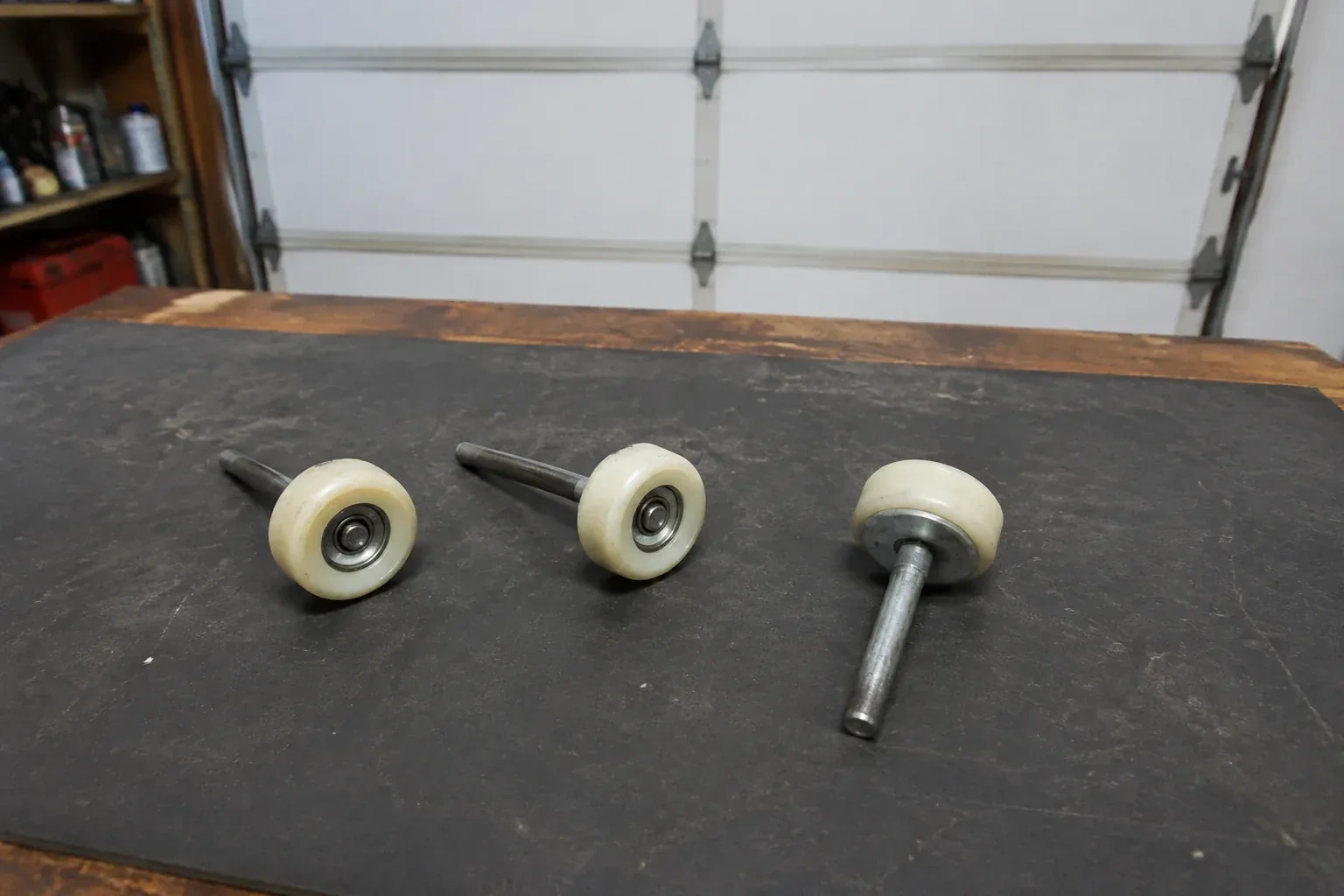
Roller replacement changes the small wheels that guide each section of your garage door along its track. A four-section residential door usually has ten of them: one at each end of the three hinge lines, one in each top fixture and one in each bottom bracket. Each is a wheel on a steel stem, commonly on ball bearings though some nylon rollers run bearingless, carrying a share of the door's weight more than a thousand times a year. When they wear, the door turns loud and rough. Fitting a matched set of new rollers, then checking the track and hinges they run in, brings back smooth and even travel.
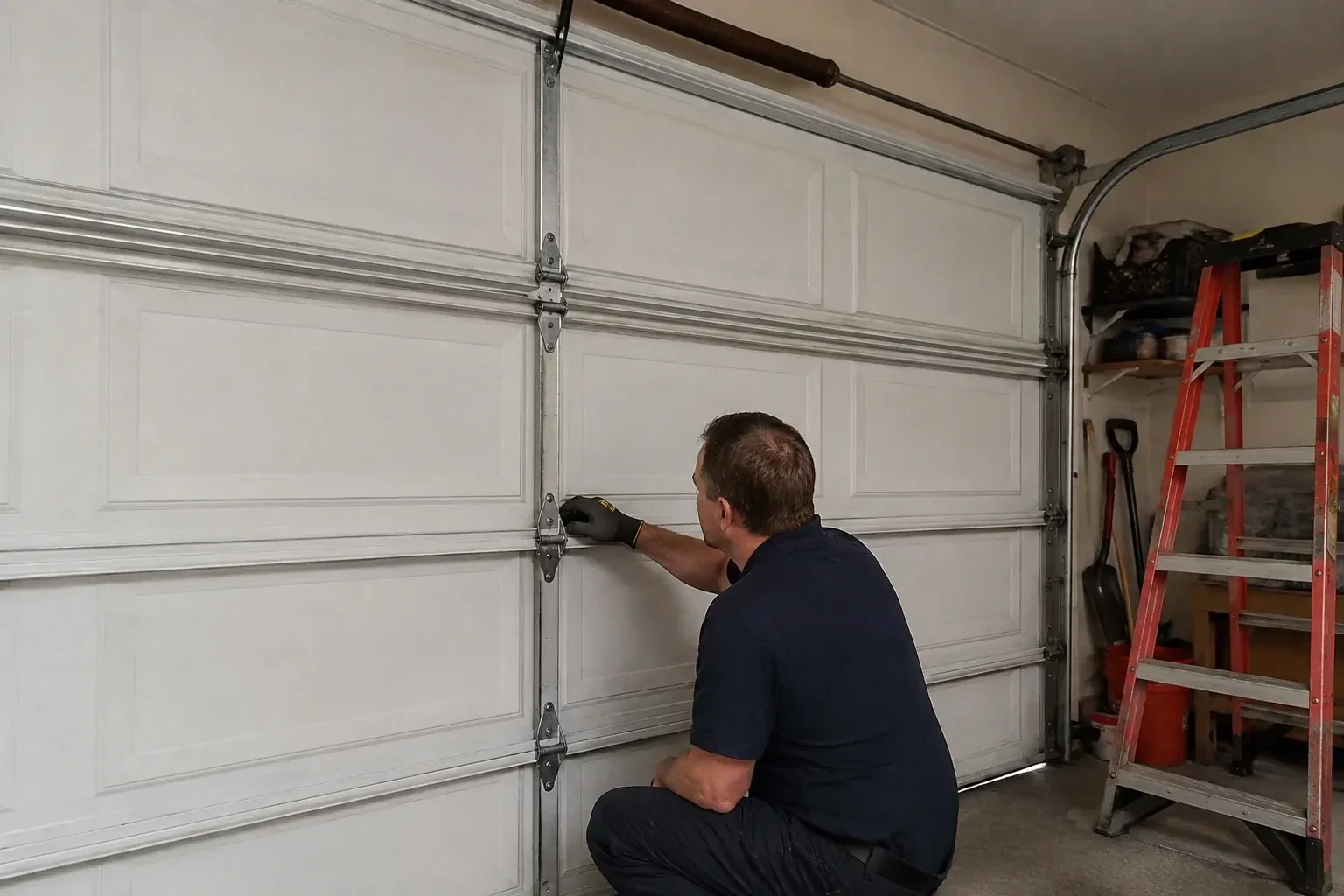
How the visit goesHalfway up, the door hesitates and the opener strains before it carries on. Pulled by hand with the opener released, you feel the same catch at the same height, as if a wheel is dragging instead of turning.
Garage Door Roller Replacement
How the visit goes
What the winter left behind
In this climate the foot of the track is where trouble collects. Slush and salt carried in on the tires settle in the bottom few inches, freeze overnight into ridges and leave a brine that attacks steel. The technician looks for corrosion on the bottom rollers and their stems, rust on the bottom brackets, ice damage or flat spots on wheels that have been skidding rather than turning, and the state of the lifting cables that share that wet corner. Finding salt damage here steers the recommendation toward sealed-bearing rollers and a thorough track cleaning, and occasionally toward new bottom brackets as well.
The bottom rollers and the cable brackets
The lowest rollers live in the bottom brackets, and those brackets also anchor the lifting cables, which means they carry the counterbalance load whenever the door is closed. This is the one roller position that is never approached casually. Depending on the door, the technician either exchanges the roller while the bracket stays fastened and the cable stays put, or first takes the spring tension off with winding bars so the bracket can be unbolted and inspected. Either way the bracket, the cable end and the fastening into the section are examined, and a corroded or bent bracket is replaced while the door is already secured.
Keeping salt and slush out of the track
Winter is where roller care pays off. Knock snow and slush off the car before pulling in when you can, and sweep or wipe the foot of the tracks after a heavy salt spell so brine and grit do not sit against the bottom rollers and brackets. If ice forms in the lower track, clear it by hand with warm water and a cloth rather than running the door through it, since wheels that skid across ice ridges wear flat spots. The bottom weather seal should sit fully on the floor; a gap lets meltwater run under the door and into the track.
Garage Door Roller Replacement
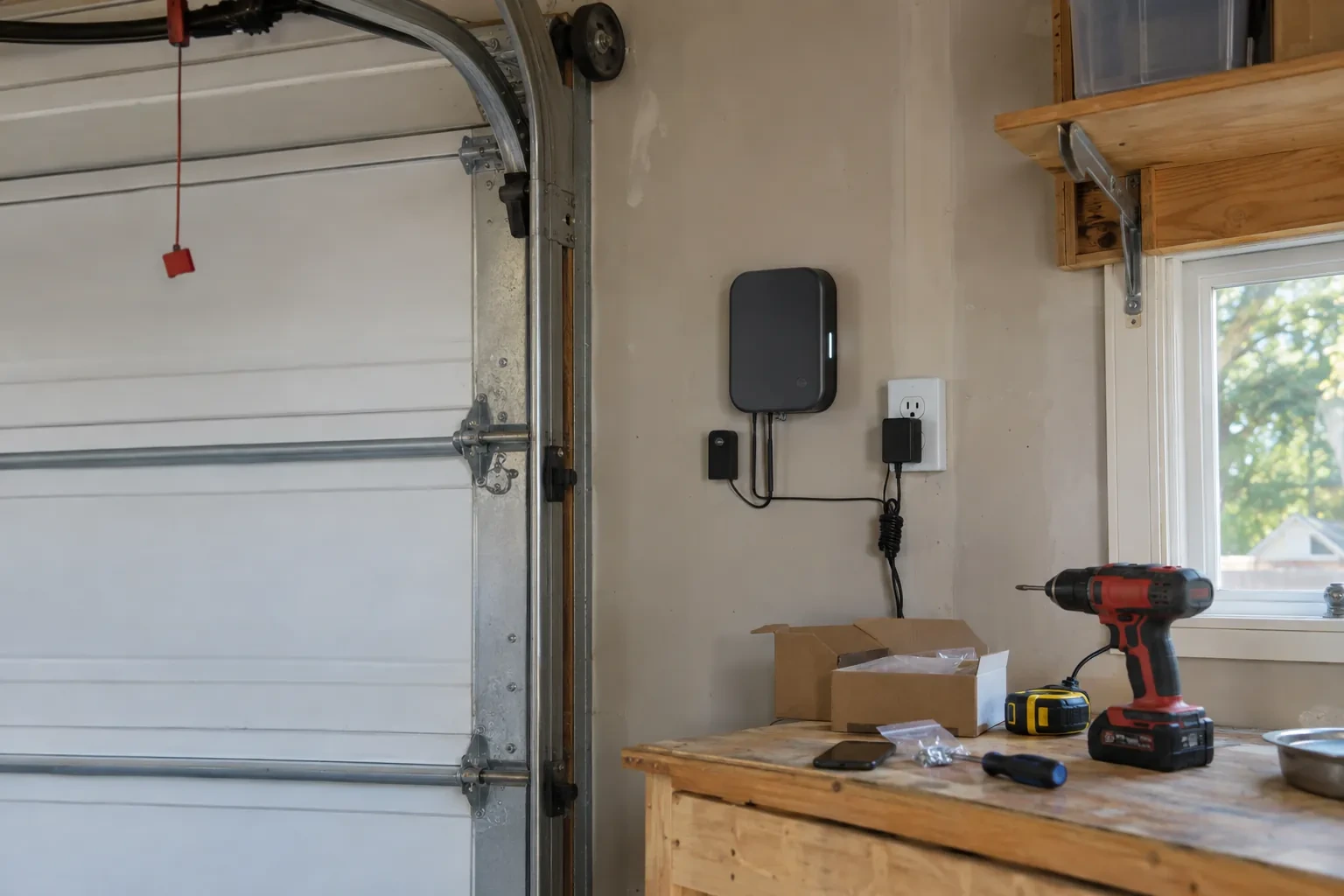
In the van
Steel ball-bearing rollers
Adjustable top fixtures
Jamb bracket fasteners
Long-stem rollers for double hinges
1-1/2 inch reversal test block
Garage Door Roller Replacement
What affects the quote
Access around the tracks
Shelving, stored items or a vehicle that must stay in place slow the work along both tracks; clear access from floor to ceiling means less time on site.
Hinges that need replacing
Cracked, elongated or rusted hinges found during the inspection are replaced with the correct numbered hinge, each priced as its own item alongside the rollers.
Weight and construction of the door
A heavy insulated steel or solid wood door needs higher-rated rollers and takes more care to secure and handle than a light single-skin door, which shows in both parts and time.
What to have ready
- Is the opener straining, reversing partway, or working harder than it used to?
- Where in the travel does the noise, shake or hesitation happen?
- When were the springs last replaced, if you know?
Garage Door Roller Replacement: questions
QuestionsMy door is heavy insulated steel. Which rollers suit it?
A heavier door needs rollers with a load rating to match, generally ball-bearing rollers rated around seventy-five to one hundred pounds each rather than the light plastic wheels many doors ship with. It often needs long-stem rollers at the double hinges on the end stiles, and the top rollers, which travel furthest under load, deserve the sturdiest in the set. Nylon with ten or more bearings suits most insulated residential doors; very heavy or commercial-weight doors may still call for steel.
What happens during the visit, and do I need to move the car?
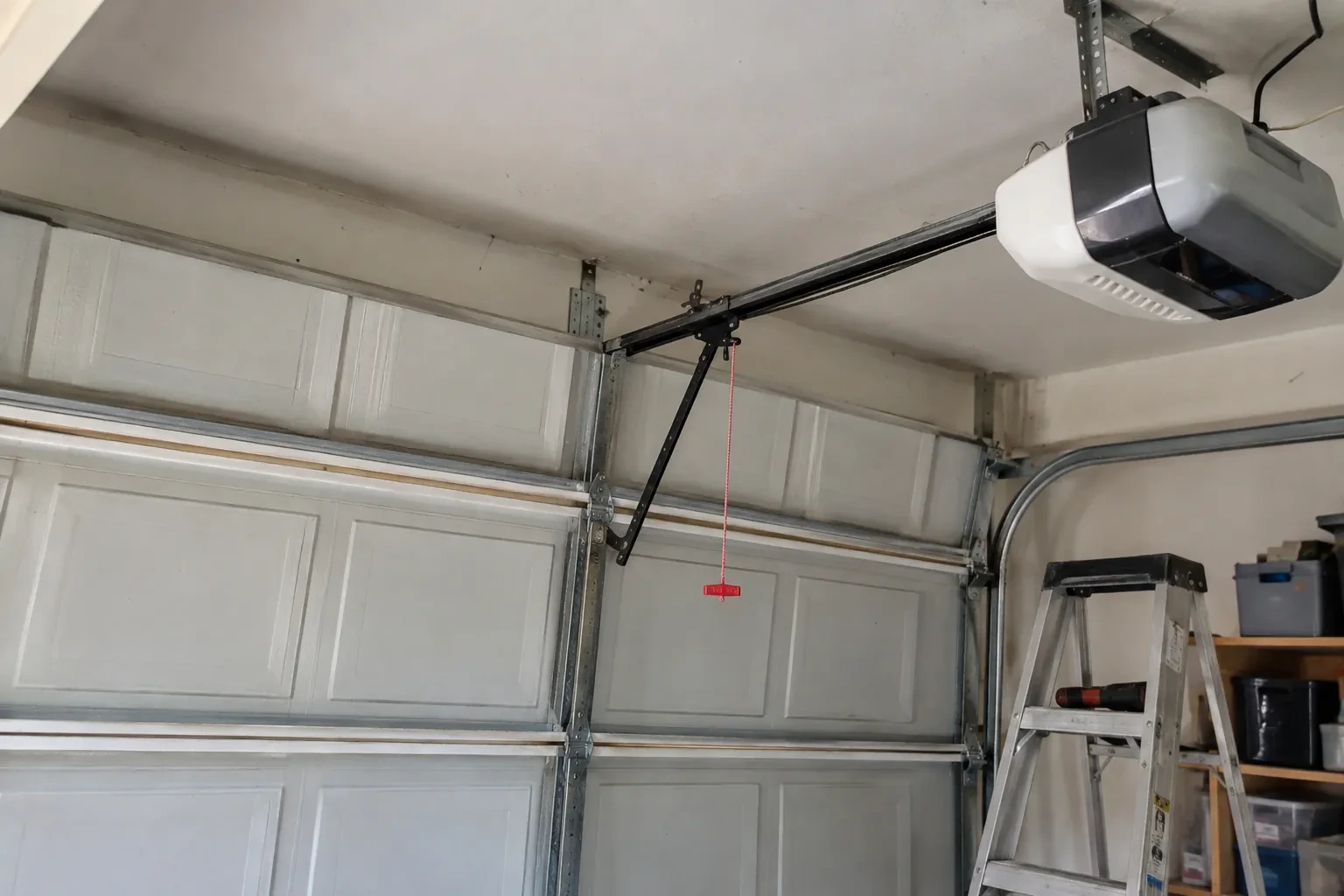
The technician needs clear access to both tracks from floor to ceiling, so moving vehicles out and shifting anything stored against the walls near the tracks helps. The visit itself runs in order: the door is watched in motion, every roller and its hardware is inspected, the door's balance is tested, the door is secured and the rollers are changed one position at a time, the track is cleaned and squared, moving parts are lubricated, and the door and opener are tested.
I lubricated everything and the grinding came back. Why?
Lubricant restores bearings and hinges that are still sound; it has nothing to offer a wheel worn oval, a nylon tire that has cracked, or bearings whose balls have pitted their race. When a spray settles the noise for a day or two and it returns, the wear is in the roller itself and replacement is the answer. Spray on the track or a plastic wheel can make matters worse by collecting grit, so the technician cleans that off as part of the job.
Related services
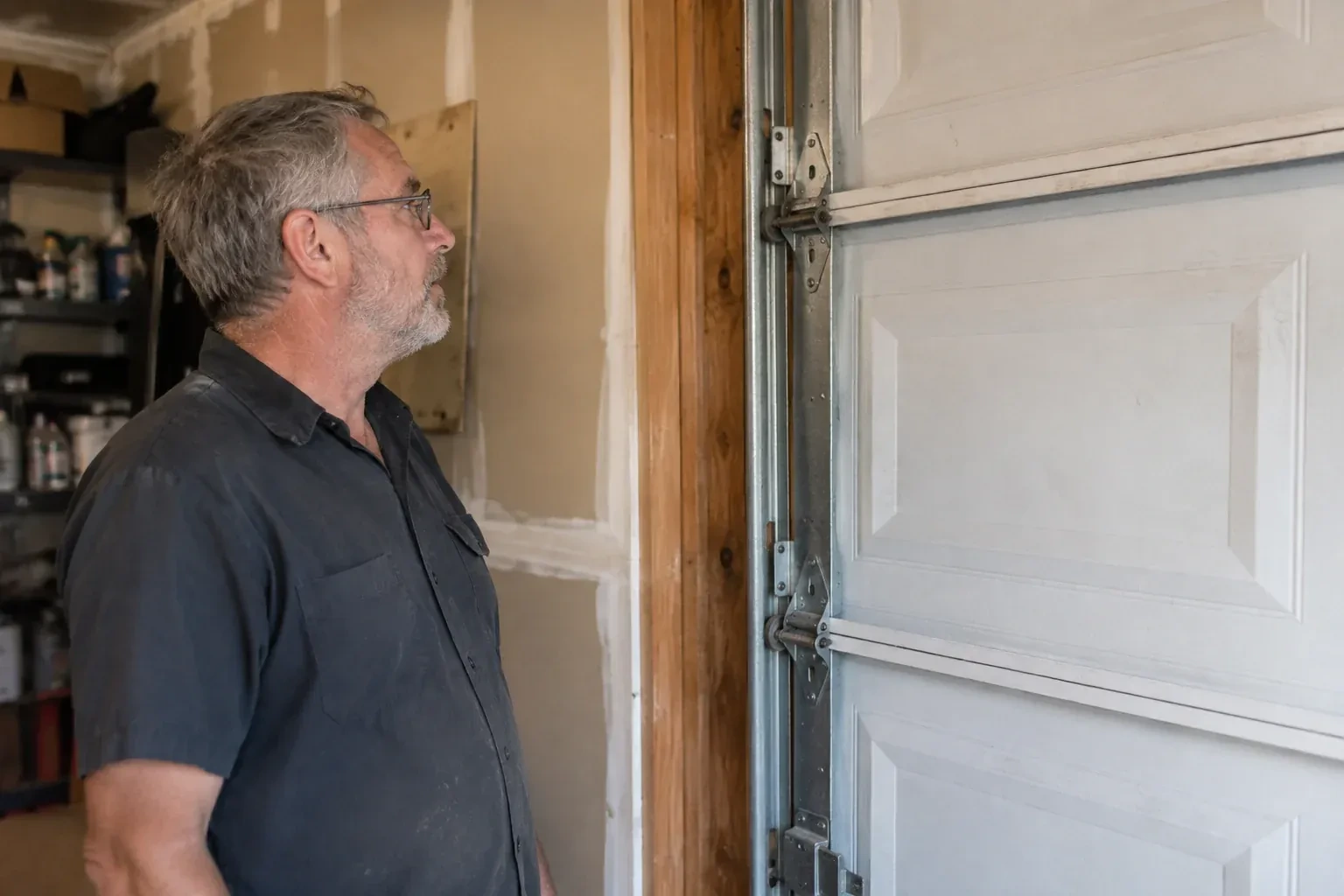
- Garage Door Track Repair or ReplacementAfter a decade of slushy winters the bottom foot of the track is flaking rust.
- Garage Door Cable ReplacementThere was a sharp crack from the garage, and when you went to look the door had dropped on one side and jammed.
- Torsion Spring ReplacementNothing broke outright, but the door has grown heavier each winter, opens more slowly and squeals as it moves.