Openers · Elmira
Belt-Drive Opener Repair in Elmira
It is minus twenty in the detached garage and the door climbs in jerks, the belt stiff as a board.
In plain words
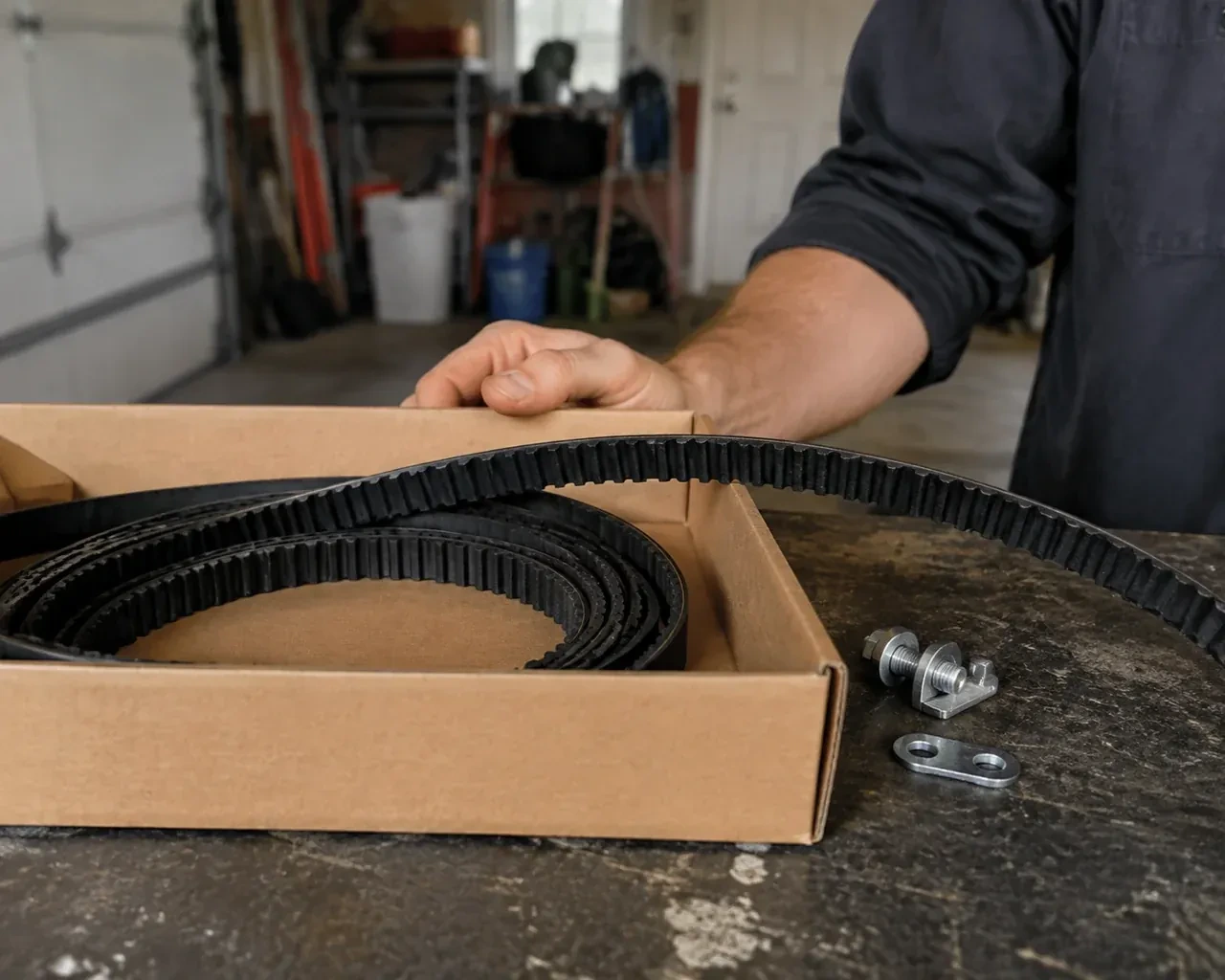
Belt-drive operators use a toothed belt reinforced with steel or fibre cords, and those belts wear in recognisable ways. Age and temperature swings make the rubber brittle, so it cracks across the back and eventually shows the cords. Rubbing on a bent rail or a misaligned joint frays one edge. A door that hits something can shear a stretch of teeth or throw the belt off the idler pulley. A small clip joins the belt to the trolley and takes every start and stop. Repair fits a belt of the right length and tooth pitch for that rail, a fresh clip, and sets the tension from scratch.
How the visit goesPress the remote and the motor runs its full cycle, lights on, the usual whir, but the door does not move a centimetre. Up at the trolley, the belt is hanging loose where a small plastic clip used to hold it.
Belt-Drive Opener Repair
How the visit goes
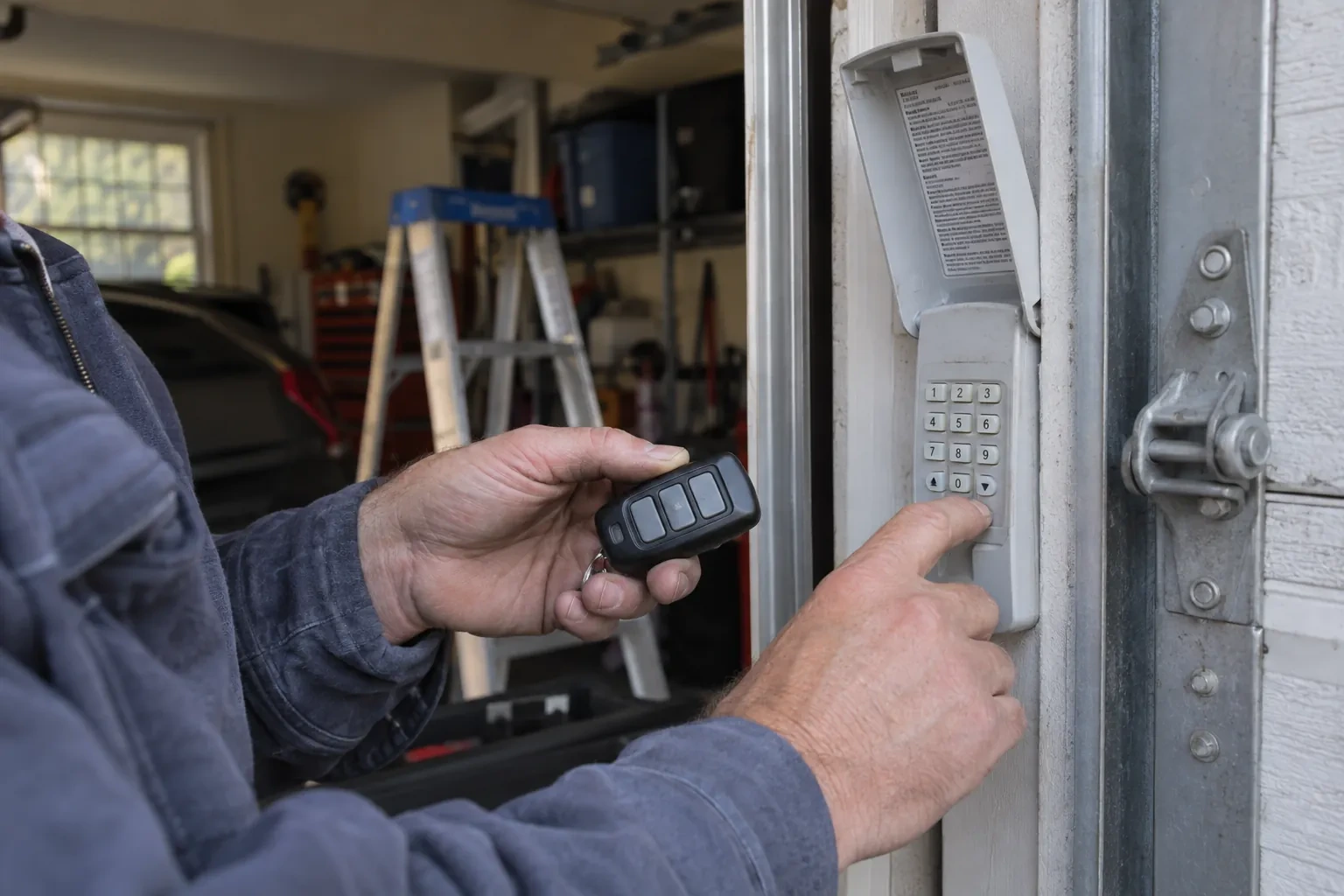
Reading the belt from end to end
With the trolley run to one end of the rail and then the other, the whole length of the belt passes under the technician's eye and fingers, on the top run and the return. What they are looking for is specific: cracks across the back of the rubber, a glazed shine that says the belt has been slipping, an edge gone fuzzy from rubbing, a stretch where the teeth are flattened or torn away, cords showing through, and the state of the clip or link where the belt meets the trolley. Each of these points to a different cause as well as a different repair, and where the wear sits along the belt says a lot about which.
Re-tensioning a belt that has stretched
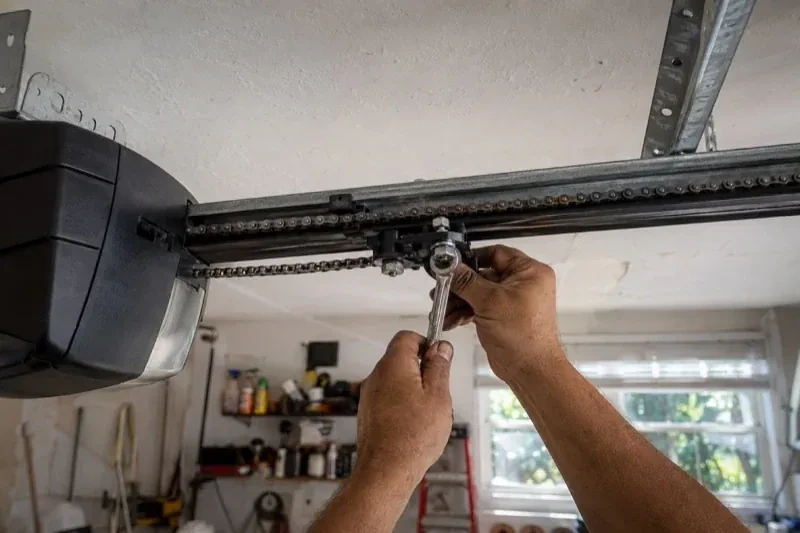
With the operator unplugged and the trolley released from the door, the technician turns the square nut on the inner trolley a little at a time, drawing the belt up until the tension spring reaches the length the maker specifies. Each turn lifts the belt slightly. They press the belt at mid-span to feel for the small give that means it is neither slack nor strained, then reconnect the trolley and run the door by motor, listening at the sprocket for the rattle that says the belt is still loose or has gone too tight. A belt that will not reach its spring length with the adjuster at its limit has stretched too far and is replaced instead.
Ready for the cold
If the garage is detached or unheated, the belt has still been tensioned to the opener maker's specified measurement, and the door hardware carries a cold-rated lubricant for the season. Expect the operator to sound a little different at minus twenty; rubber stiffens and the hum deepens, which is normal. If the door reverses on a bitter morning before it has moved, the bottom seal is frozen to the slab and the force setting is protecting the belt and the door. Free the seal by breaking the ice along the threshold, then press the button again. Wiping the seal with silicone before winter stops it bonding to the concrete in the first place.
Belt-Drive Opener Repair
In the van
Drive gear and sprocket kit
Photo-eye sensor pair
2x4 offcut for the reversal test
Belt tension spring and square nut
Rail hanger straps and fasteners
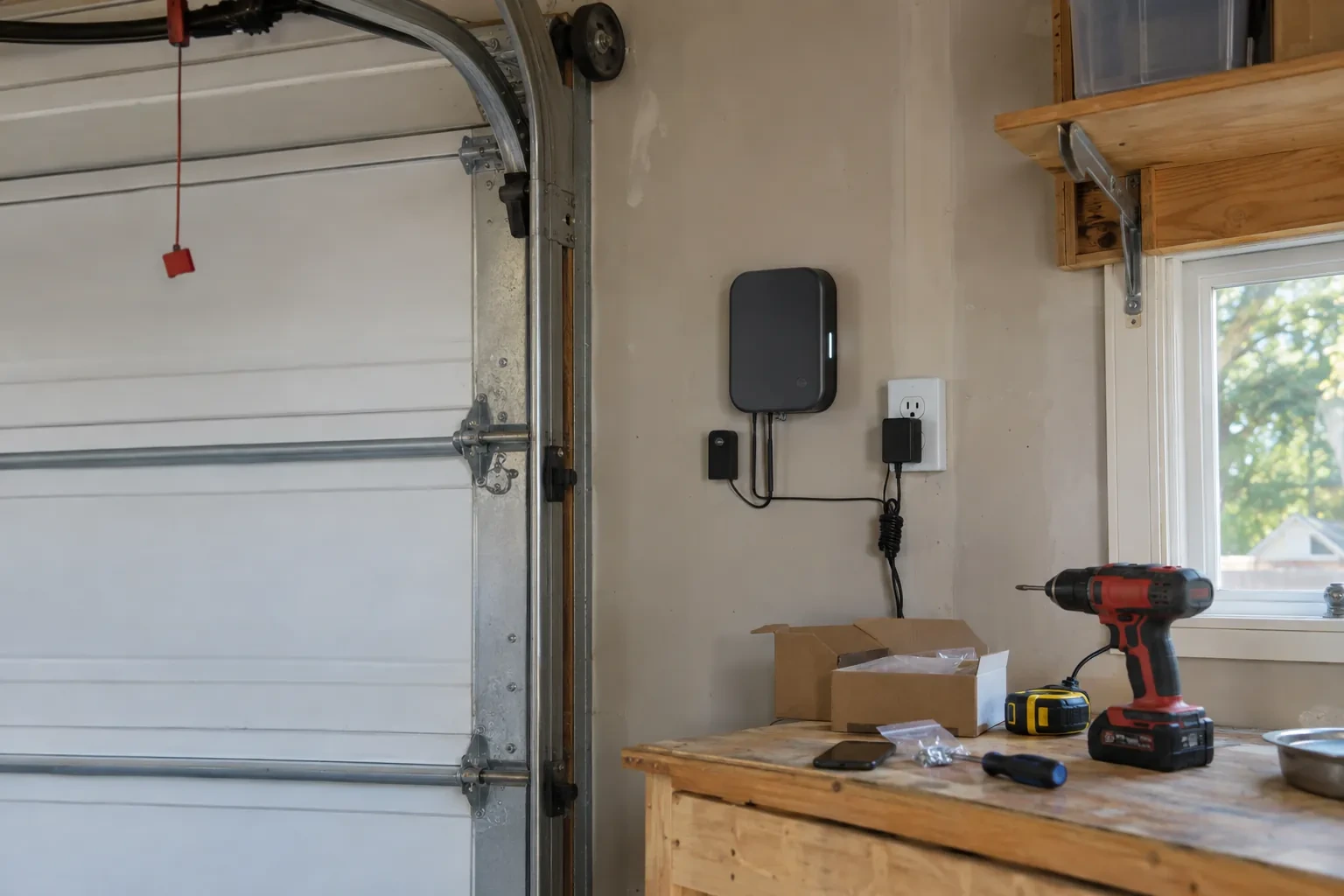
Belt-Drive Opener Repair
What affects the quote
How far the technician drives
A garage on the edge of town and one down a long rural road take different time to reach, and that trip is a line of the quote.
A second operator on the same property
Where a double garage has two belt drives, or a workshop has its own, both can be looked at in one trip, and the quote shows the two repairs on a single visit.
Adjustment or replacement
A tension adjustment with the safety tests is the smallest visit. A new belt, with a fresh clip, phasing and relearned limits, is a larger one, and the inspection decides which you need.
What to have ready
- What is the belt doing: sagging, slapping, clicking, frayed, or hanging loose?
- Are there plastic shavings or grease on top of the motor housing?
- Does the door lift easily by hand and stay put halfway with the opener released?
Belt-Drive Opener Repair: questions
QuestionsThe motor runs but the door stays still. What has happened?
Something between the motor and the door has let go. On a belt drive the usual suspects are a broken clip where the belt joins the trolley, a belt that has jumped off the sprocket or idler pulley, a trolley that failed to re-engage after the red cord was pulled, or a stripped drive gear inside the motor head, which leaves plastic shavings on the housing. Each is a specific repair.
Should the belt be lubricated?
No. The belt is meant to run clean and dry; oils and sprays soften the rubber and gather grit in the teeth, which wears the sprocket. Lubricant belongs on the door instead: hinges, rollers and springs get a garage-door lubricant once a year. The gear inside the motor head takes a light grease when it is serviced, and that is the technician's job.
I pulled the red cord during a power cut. Could that have caused this?
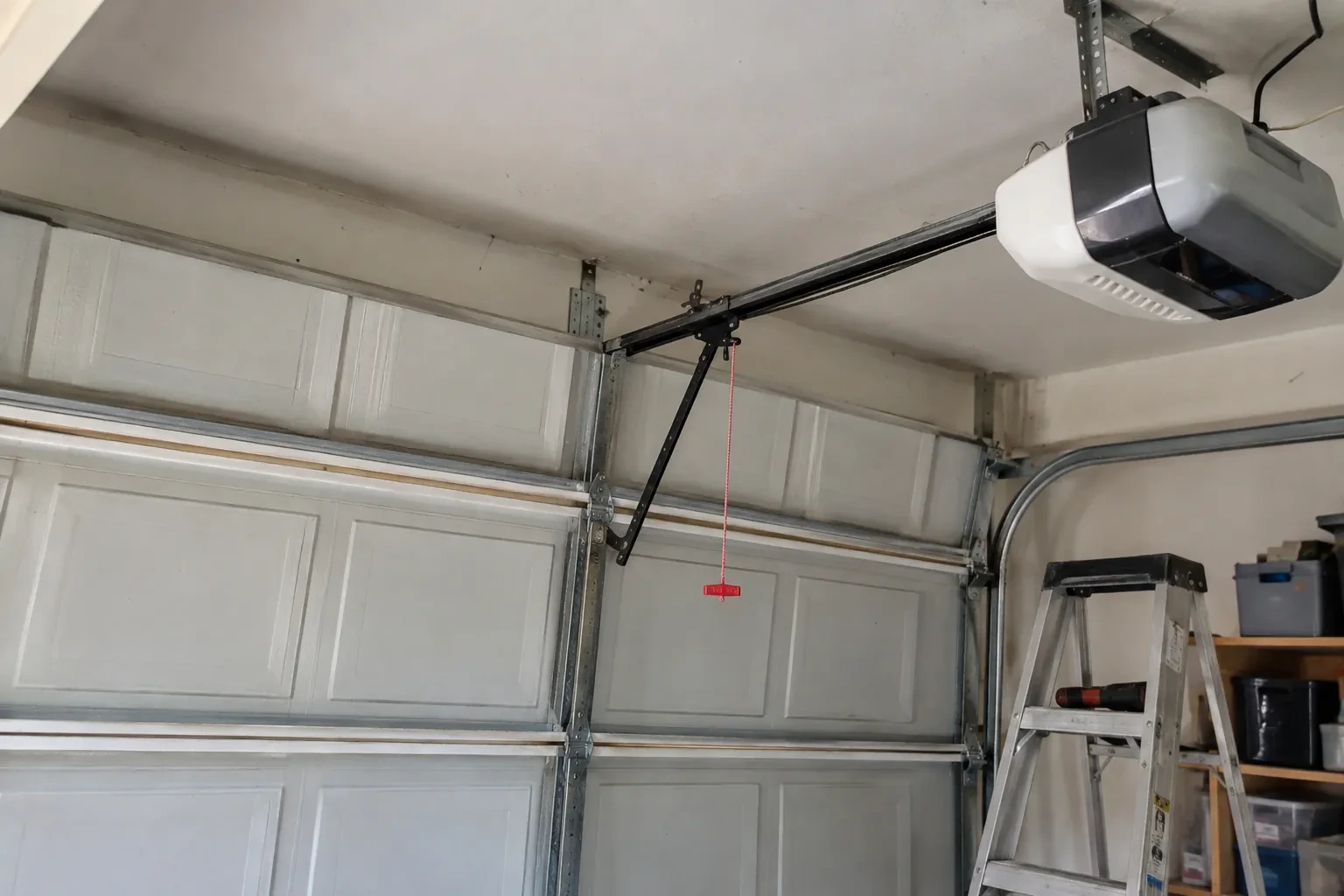
It can, if the door was open or out of balance when it was released. The release itself disconnects the trolley from the belt, so a falling door does not throw its weight onto the drive; the real risk is the door itself crashing down and damaging the tracks, hinges or panels. Nothing about the cord itself is harmful; it is designed to be used. The habit to keep is to release the door only when it is closed.