Openers · Woolwich
Chain-Drive Opener Repair
The door opens about a third of the way and stops.
In plain words
A chain-drive opener moves your door with a steel chain that runs along a rail from a sprocket on the motor head to a trolley hooked to the door arm. The technician first confirms the door is balanced, since the chain only guides a door the springs already carry. Then the chain is checked for stretch and rust, the sprocket and the gear behind it for worn teeth, the trolley and its release for wear, and the rail and hangers for movement. Whatever has failed is replaced with parts made for that model, tension and limits are set, and the safety reversal is tested.
How the visit goesThe chain hangs in a loop under the rail and slaps against it on every cycle. It used to sit snug. Now the whole house hears the door leave, and the sound has a metallic clatter it never had before.
Chain-Drive Opener Repair
How the visit goes
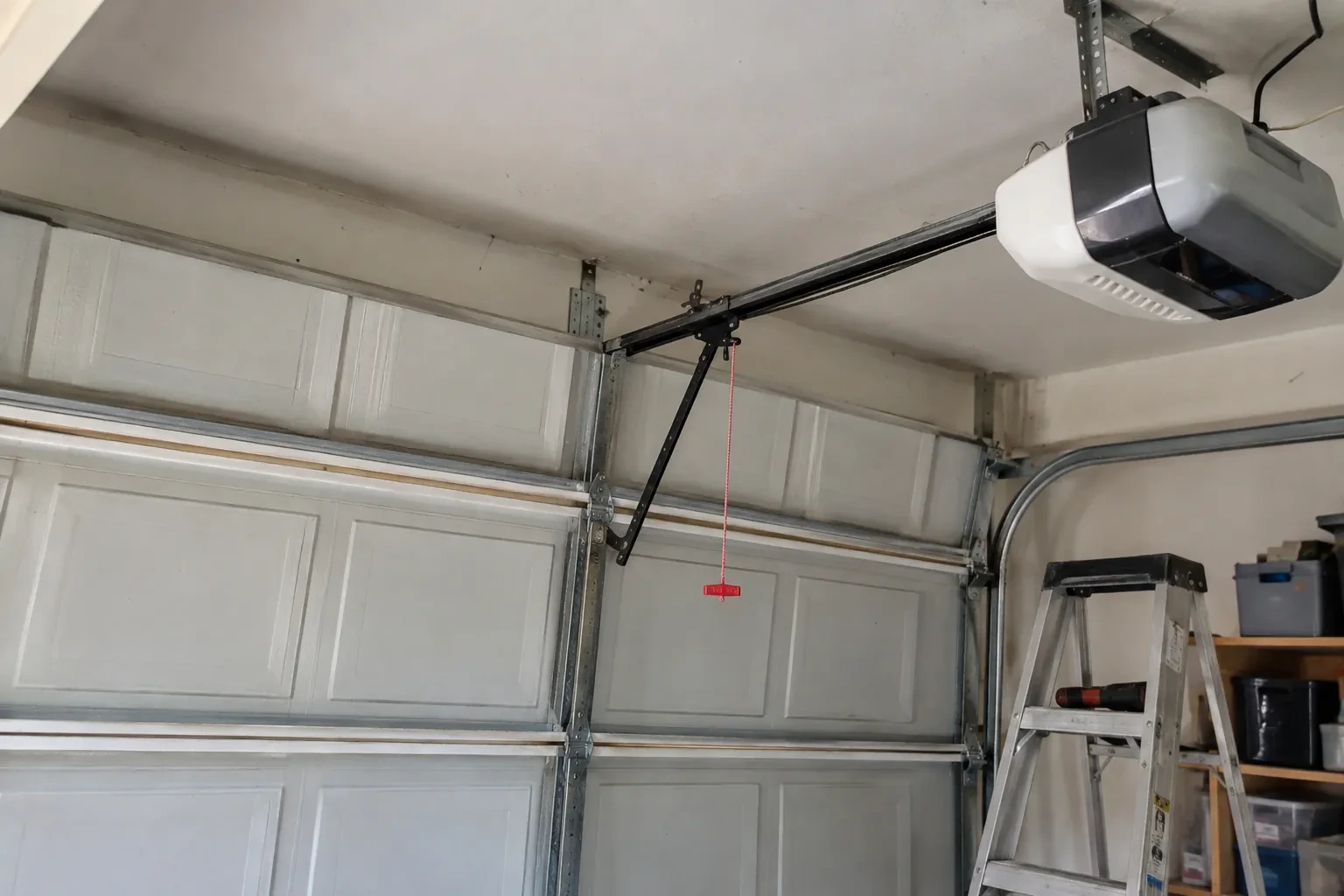
Trolley, release lever and the stop bolt
The trolley is looked at in two ways: where it sits and how it is wearing. With the door closed, the trolley should rest near the door end of the rail without touching the stop tab; with the door open, short of the stop bolt near the head. A trolley jammed against either stop explains a humming motor. The release lever is checked for a bent arm or a worn latch that lets the trolley slide past the door arm without picking it up. The technician also confirms the trolley and the motor agree about the door's position, since a chain that was run off the sprocket puts them out of phase and no amount of limit adjustment corrects that.
Fitting a new chain
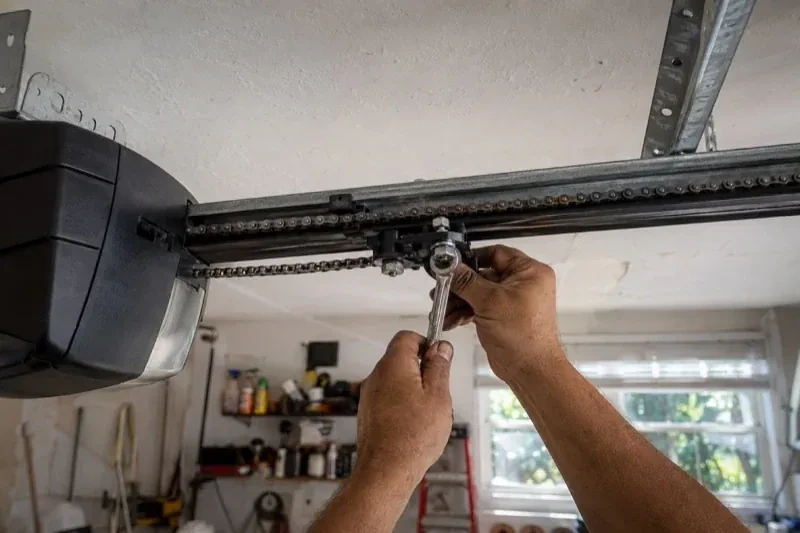
A stretched or rust-bound chain is replaced as a unit. The technician disconnects the door, slackens the tensioner and opens the master link, then draws the old chain off the sprocket, through the trolley and around the idler at the door end. The new chain, sized to the rail length, is threaded the same way, joined at the master link with the clip facing away from the direction of travel, and settled onto the sprocket teeth by hand. Any cable section on a combined chain-and-cable drive is checked for fraying and renewed if needed. The chain is then tensioned to the rail's specification and the trolley run by hand along its full length.
Balance is what protects the new gear
The drive gear that was replaced can wear out when it is asked to lift more than the chain should carry, though binding or wear elsewhere in the drive can share the blame. Keeping the load honest starts with the door's balance. Each season, with the door closed, pull the red release, lift the door by hand to about a metre and let go; it should stay put. If it sinks or creeps upward, the springs have drifted and a spring adjustment is due before the operator starts working harder to compensate. Reconnect by running the operator until the trolley picks up the arm. This one check does more for the gearbox than anything else you can do.
Chain-Drive Opener Repair
In the van
White lithium grease
Drive gear and worm gear kit
Roller chain with master link
RPM sensor
Motor start capacitor
Chain-Drive Opener Repair
What affects the quote
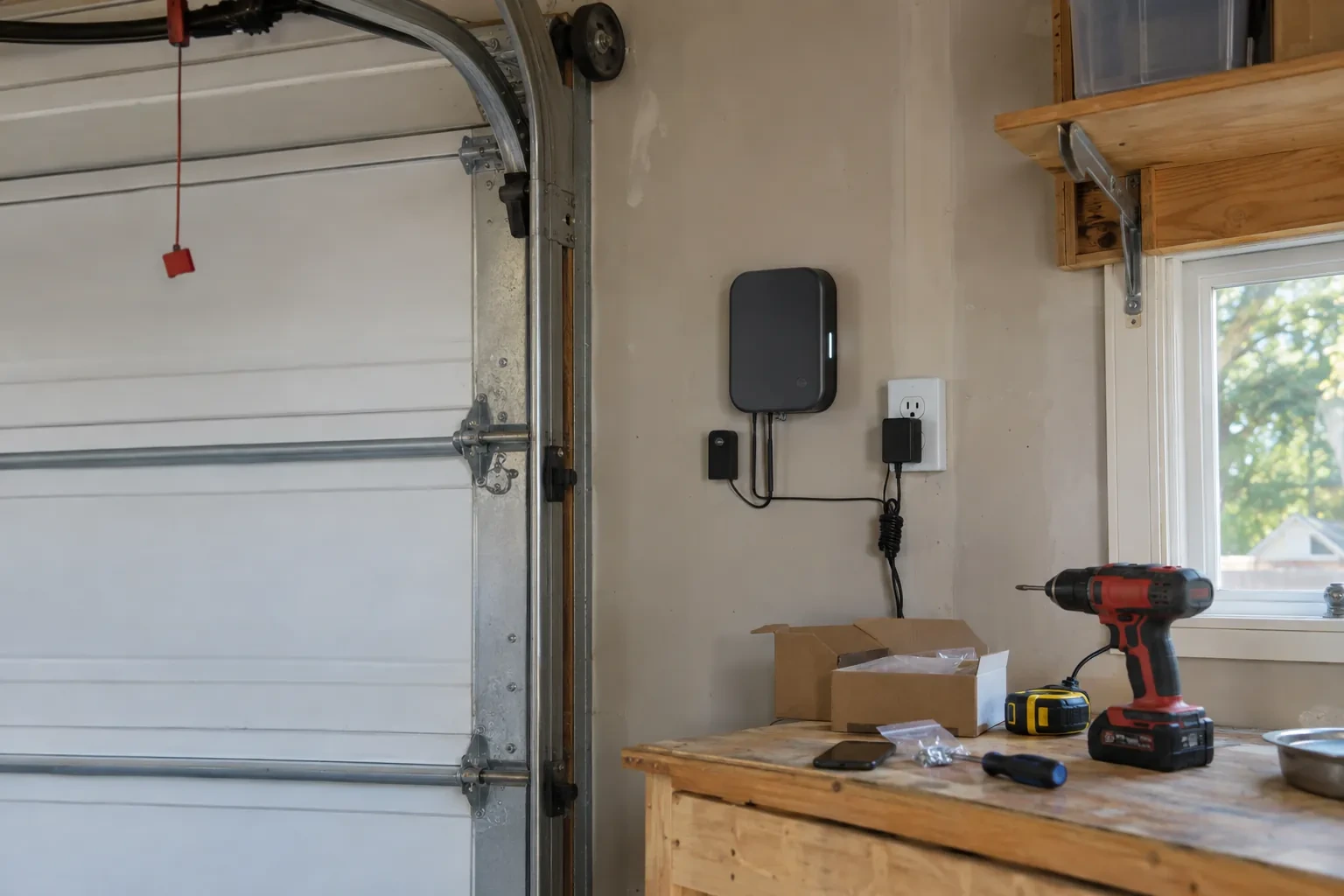
Sensors and controls that fail the check
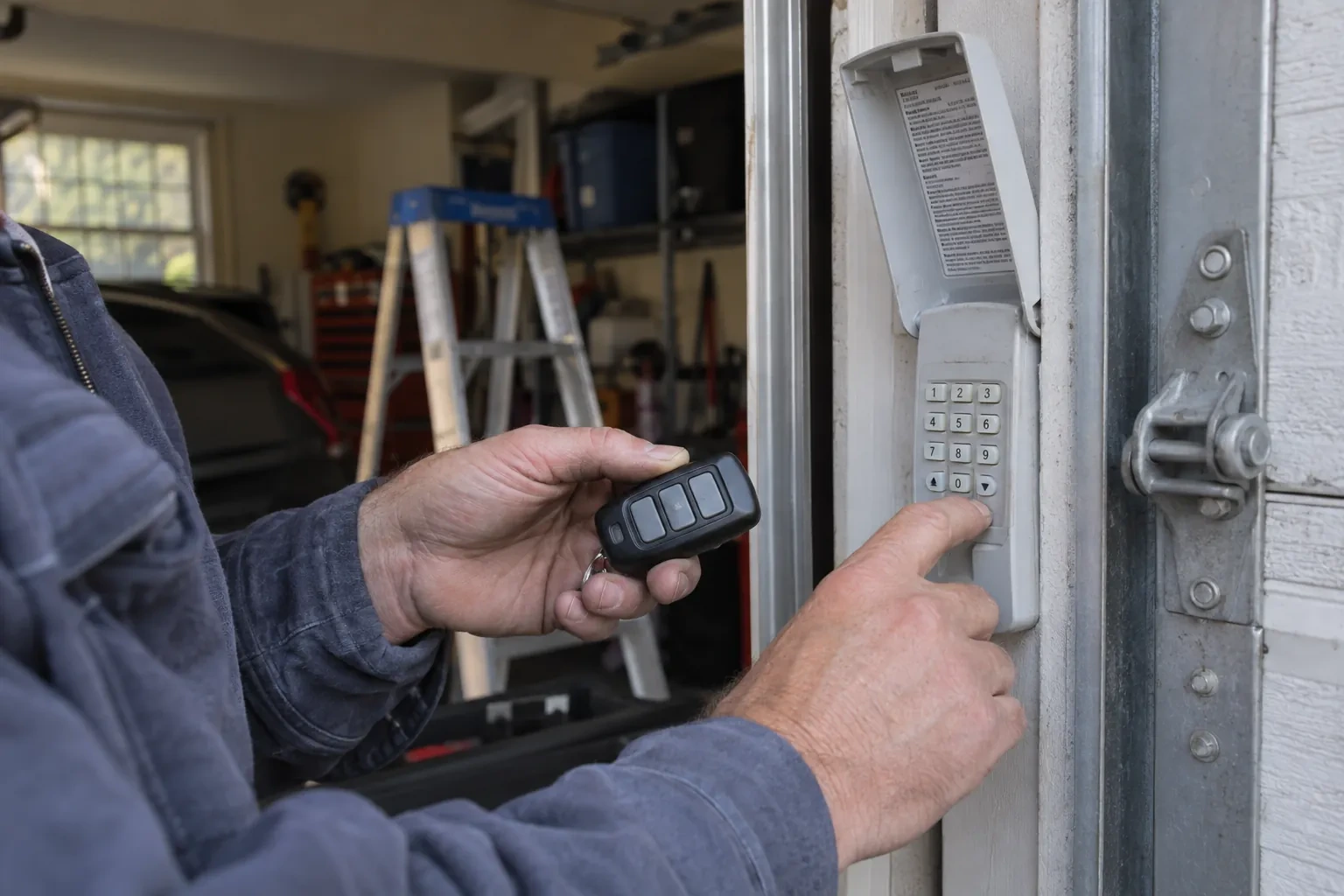
Photo eyes that are misaligned, mounted too high or dead, or a wall control that has stopped responding, are put right before the reversal can be proven and are itemised where parts are involved.
Door hardware quieted at the same time
Nylon rollers, new hinges or a vibration isolator chosen to quiet the door and the ceiling alongside the drive repair are optional items listed on their own.
Trolley and release parts
A worn inner or outer trolley, a cracked latch or a bent release lever are replaced as separate pieces, and whether any of them is needed shows only once the trolley has been run along the rail by hand.
What to have ready
- Is the chain hanging loose under the rail, or is it rusty or stiff?
- Does the door stop short, reverse at the floor, or open only partway?
- Is the garage attached and heated, or detached and unheated?
Chain-Drive Opener Repair: questions
QuestionsWhy does the door jerk or jump at the same spot every time?
A repeatable jolt at one point on the rail is usually a chain problem meeting a sprocket problem: a stiff link or a spread master link passing over worn sprocket teeth, so the chain rides up and drops a tooth. It can also be a burr or a splice plate on the rail where the trolley catches, or a roller on the door hanging up in the track at that height. The technician runs the door by hand first to tell the two apart.
My opener is decades old. Can the chain drive still be repaired?
Often, yes. Gear kits, sprockets, chains and trolleys are still made for many older heads, and tension, phase and limits can be set on almost any unit. The limit is parts: some makers no longer support units made before the mid-1990s, and those also lack the photo-eye protection expected today. The technician checks parts availability for your model and lays out repair beside renewal so you can decide with the facts.
Can you turn the force up so the door closes on cold mornings?
Force is set to the lightest level that moves the door reliably, and it is raised only a little for a cold garage. Turning it up further to overcome a heavy door or a seal frozen to the slab is not done, because too much force interferes with the safety reversal and can bend the top section. If the door is hard to move in the cold, the springs, rollers or the frozen seal are dealt with instead.
Related services
- Belt-Drive Opener RepairIt is minus twenty in the detached garage and the door climbs in jerks, the belt stiff as a board.
- Garage Door Opener ReplacementThe bedroom above the garage shakes every morning at six when the chain drive fires up.
- Photo-Eye Sensor Alignment or ReplacementAfter a cold night the door stays open until the garage warms up.