Openers · Heidelberg
Garage Door Opener Replacement in Heidelberg
The bedroom above the garage shakes every morning at six when the chain drive fires up.
In plain words
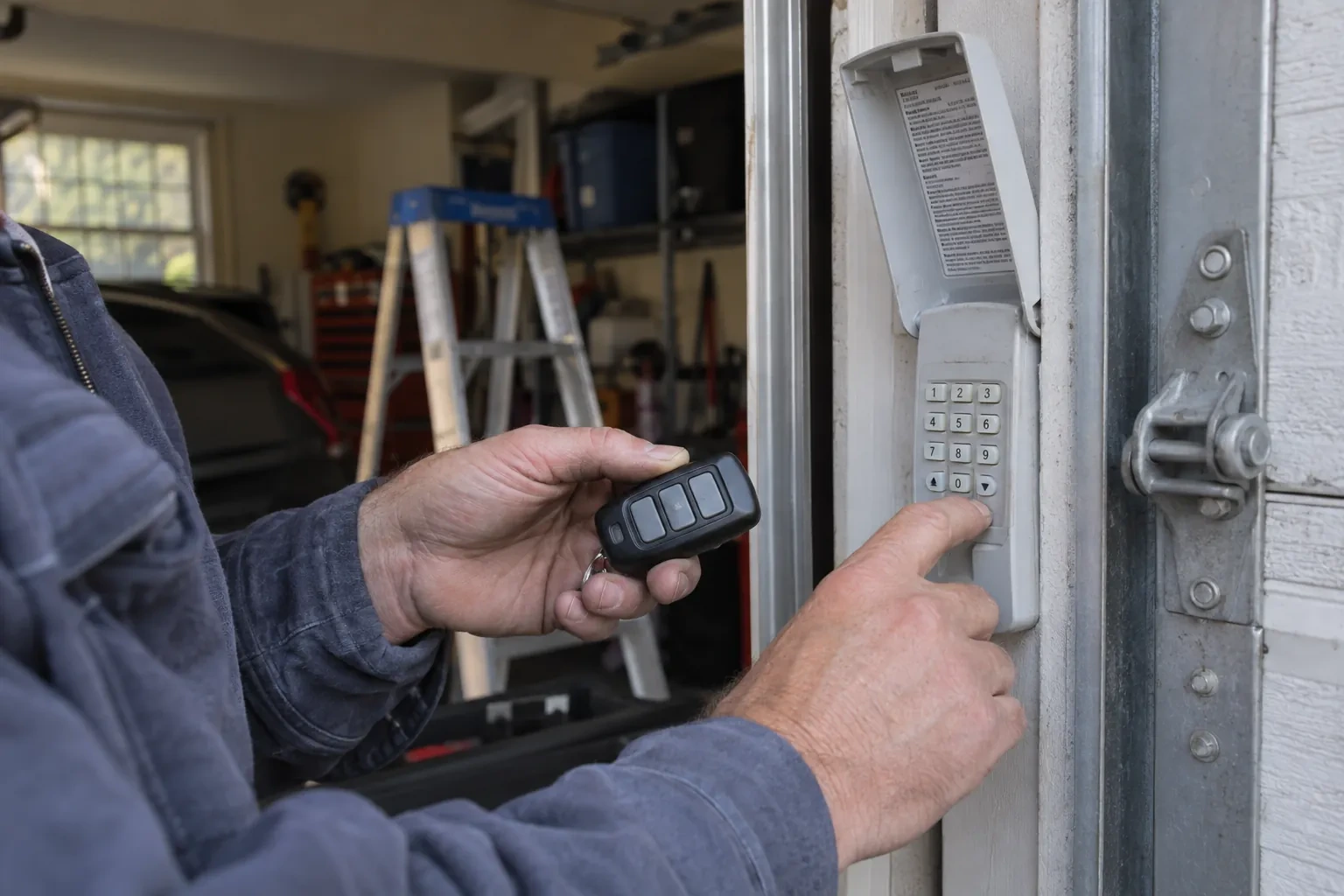
A replacement is also a chance to decide how you want to open the door. Most households leave with a couple of handheld remotes, a wireless keypad by the door for children coming home and a wall console with a light button. The in-car buttons built into many vehicles can be taught the new opener. Wi-Fi models let a phone open, close and check the door from anywhere, and some add a camera or a timer that closes the door if it is left open. Battery backup keeps everything running through a power cut. The technician sets each of these up and shows you how they work.
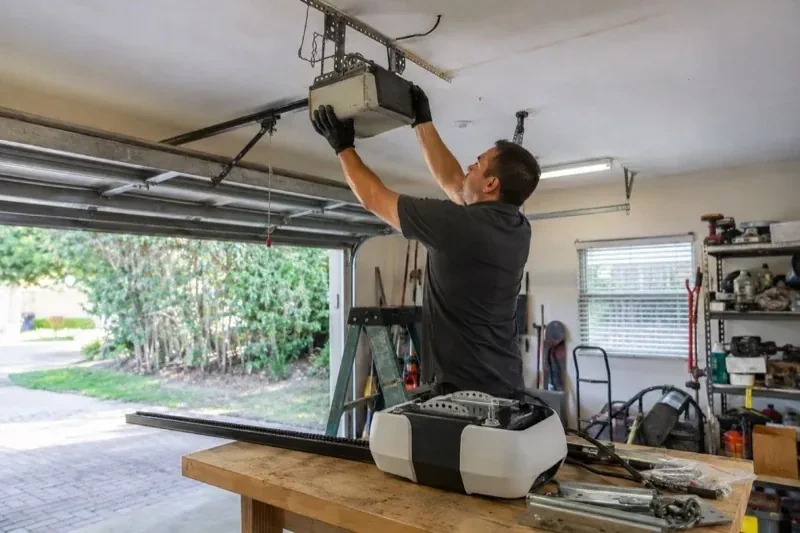
How the visit goesThe bedroom above the garage shakes every morning at six when the chain drive fires up. Everyone in the house knows the moment someone leaves for work. The door itself is fine; the racket comes from the operator and its steel chain.
Garage Door Opener Replacement
How the visit goes
Reading the old opener
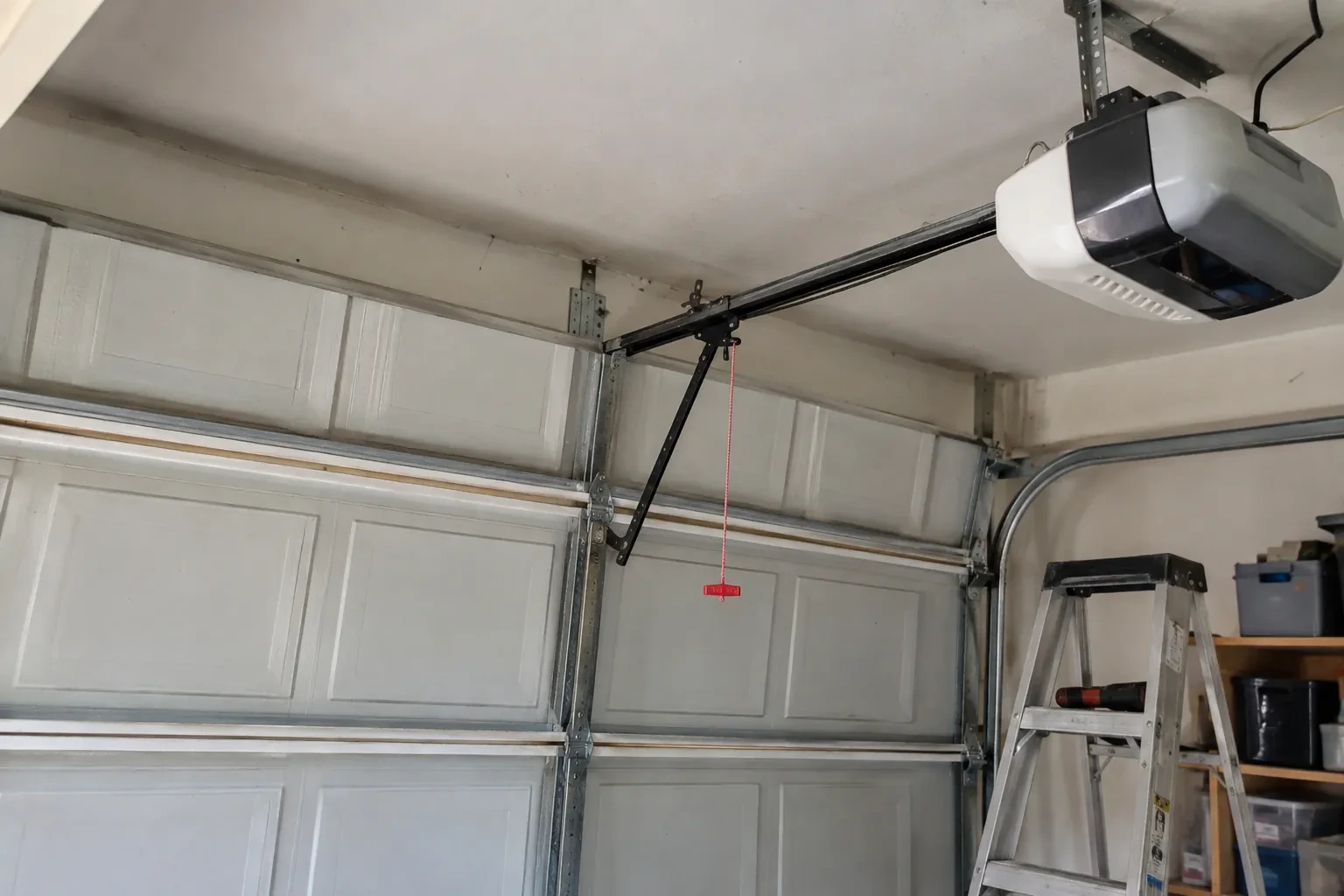
The existing unit has a story to tell. Its label gives the make, model and year, which says whether it predates photo-eye sensors and rolling-code remotes. The technician checks for oil leaking from the gearbox, plastic shavings from a stripped gear, scorching on the board, a bent rail or a worn trolley, and whether the travel limits have been fighting the door. This confirms the replacement is the right path and shows what, if anything, can be kept: the low-voltage wiring to the wall console is often reusable, while sensors and controls are matched to the new brand and generally come with the unit.
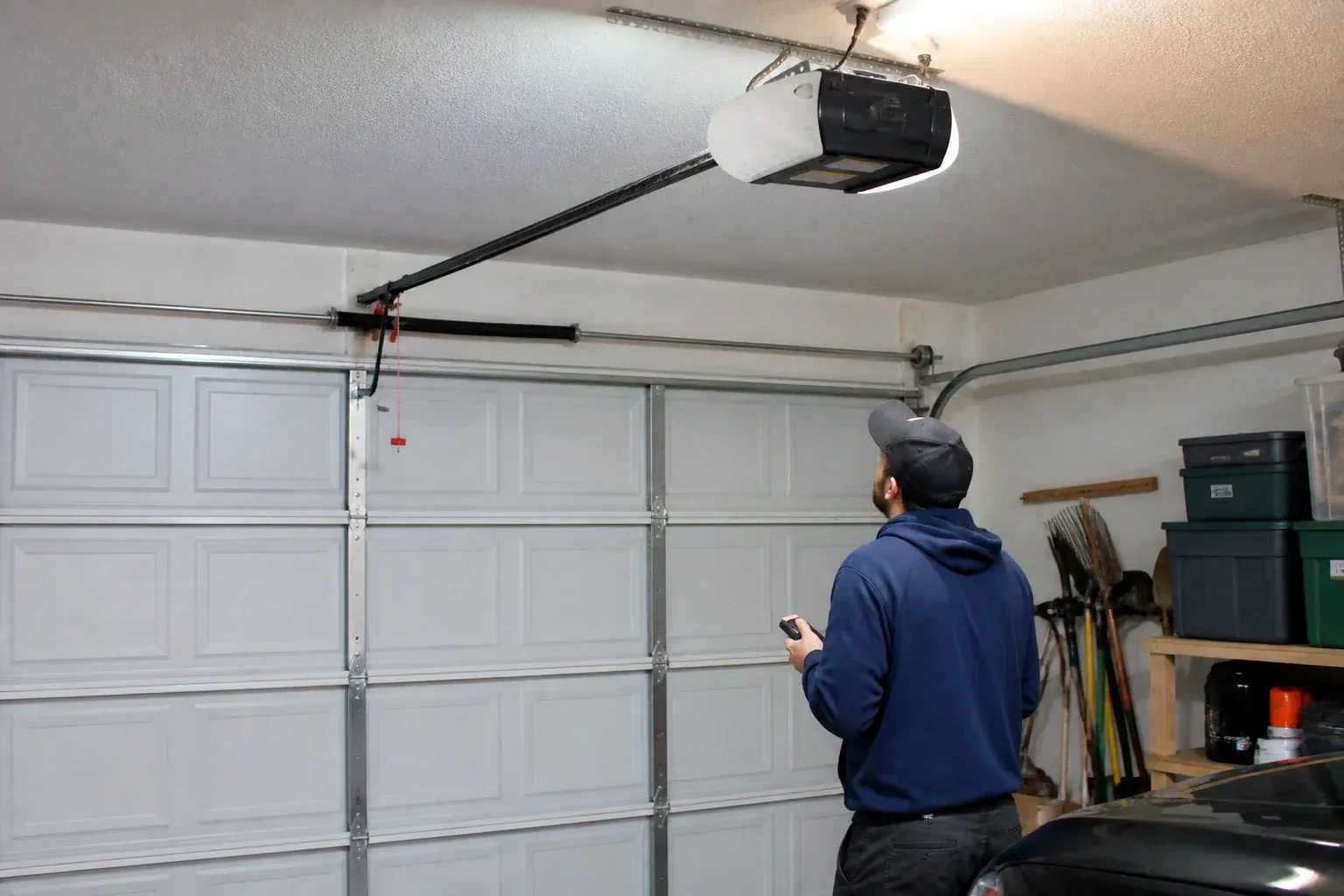
Setting travel and force
With power on, the technician teaches the operator where the door starts and stops. Newer units run a learn cycle that measures the travel and the effort the door needs; others have open and close limit screws and force dials that are set by hand. The close limit is set so the bottom seal compresses gently against the floor without the door straining, and the open limit so the top section stops short of the header bracket. Force is set to the lightest level that moves the door reliably in the garage's normal temperature, which is what lets the operator notice an obstruction and reverse rather than push through it.
Getting the door through winter
A modern operator runs at the smallest force that moves the door, so on a bitter morning when the bottom seal has frozen to the slab it will reverse rather than tear the seal or strain the top section. The right response is to free the seal, by breaking the ice along the threshold or warming it, then press the button again. Keep snow and slush cleared from the threshold, put a silicone wipe on the seal before the cold sets in, and expect the door to sound a little different at minus twenty. An operator chosen for a detached garage is rated for those temperatures, and the seasonal lubricant it was given keeps the hardware moving.
Garage Door Opener Replacement
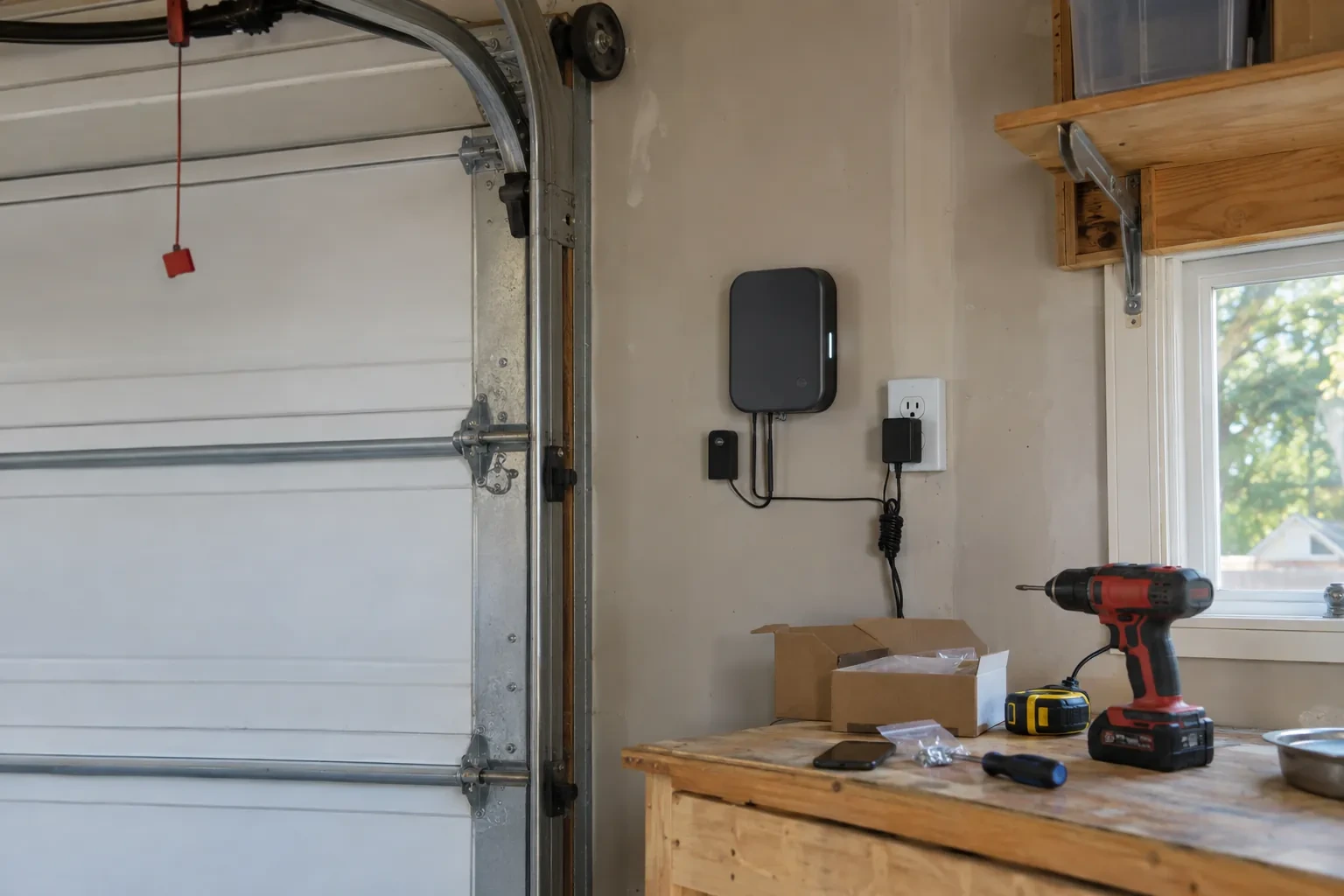
In the van
Photo-eye sensors
Rail sections and trolley
Header bracket and lag screws
Chain or reinforced belt
Backup battery
Garage Door Opener Replacement
What affects the quote
Working around what is in the garage
A vehicle lift, a storage loft, ductwork or shelving where the rail will run, or a garage that cannot be emptied before the visit, adds handling time that the technician accounts for after seeing the space.
Lighting options
Built-in LED lamps come with most heads, while a motion-activated light, an extra remote light fixture or a brighter light kit for a workshop are add-ons listed on their own.
Drive type
A chain drive, a belt drive, a direct-drive unit and a wall-mount operator sit at different points on the equipment list, and the choice is shaped by noise, ceiling space and door weight.
What to have ready
- How much room is there between the top of the open door and the ceiling?
- How wide and how tall is the door, and is it a single or a double?
- Is there a grounded receptacle in the ceiling near the opener, or is it running from an extension cord?
Garage Door Opener Replacement: questions
QuestionsHow should I prepare the garage before the visit?
Move vehicles out onto the driveway, bring any car that needs its built-in buttons programmed, and clear the floor under the door's path and the area beneath the old opener and rail so ladders can stand safely. Take bikes and boxes off shelves that hang near the ceiling line. Know where the electrical panel is, and have the phones that will use the app on hand with your Wi-Fi password.
Should an opener from before the mid-1990s be replaced rather than repaired?
Manufacturers recommend replacing units made before 1993, since most lacked external entrapment protection such as a photo-eye pair, a sensing edge or a constant-contact close control. Identify the model rather than guessing its age or remote type, since a fixed-code remote with small switches is not proof by itself. Replacing rather than repairing brings the sensor beam, a contact-sensitive force setting, remotes whose code changes on every press and a console lock button.
The door is frozen to the floor. Why does the opener reverse?
Because the operator is protecting the door. Its force setting is tuned to the small effort a balanced door needs, so a seal glued to the concrete by ice registers as an obstruction and the door heads back up rather than ripping the rubber or bowing the top panel. Loosen the seal with a plastic scraper or a hair dryer along the sill, then try again; a shovelled threshold before a cold night keeps it from recurring.
Related services
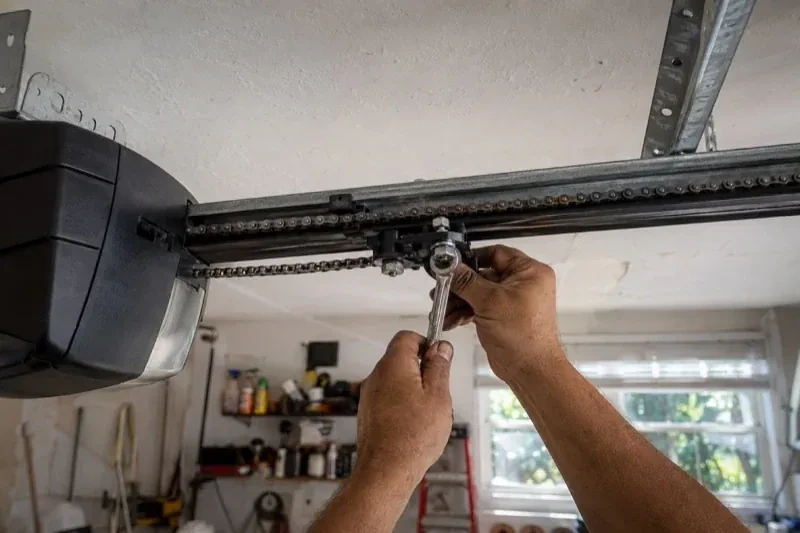
- Chain-Drive Opener RepairThe door opens about a third of the way and stops.
- Belt-Drive Opener RepairIt is minus twenty in the detached garage and the door climbs in jerks, the belt stiff as a board.
- Photo-Eye Sensor Alignment or ReplacementAfter a cold night the door stays open until the garage warms up.