Openers · Floradale
Emergency Release Repair in Floradale
It is the coldest morning of the year.
In plain words
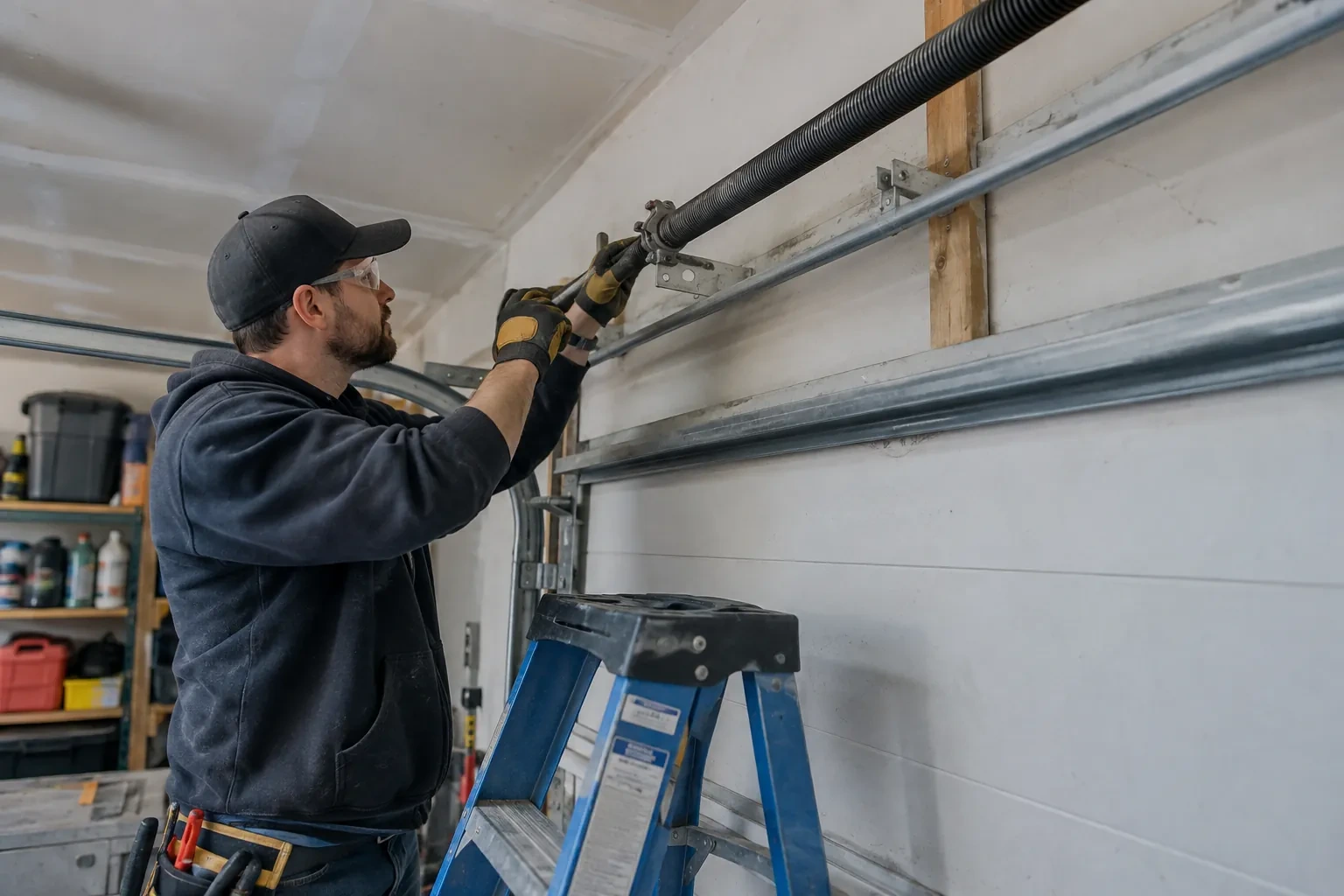
The release only earns its keep on a door that behaves once it is free of the opener, so the visit starts with the door closed and a balance test rather than with the handle. Disconnected, a healthy door lifts with modest effort, holds around a metre off the floor and stays put at the top. That is the door the release is designed for. If the door is heavy, drifts down or shoots up, the springs need attention first, work done with winding bars by a technician trained for tensioned hardware. Once the door passes, the release work goes ahead and the system is proven together.
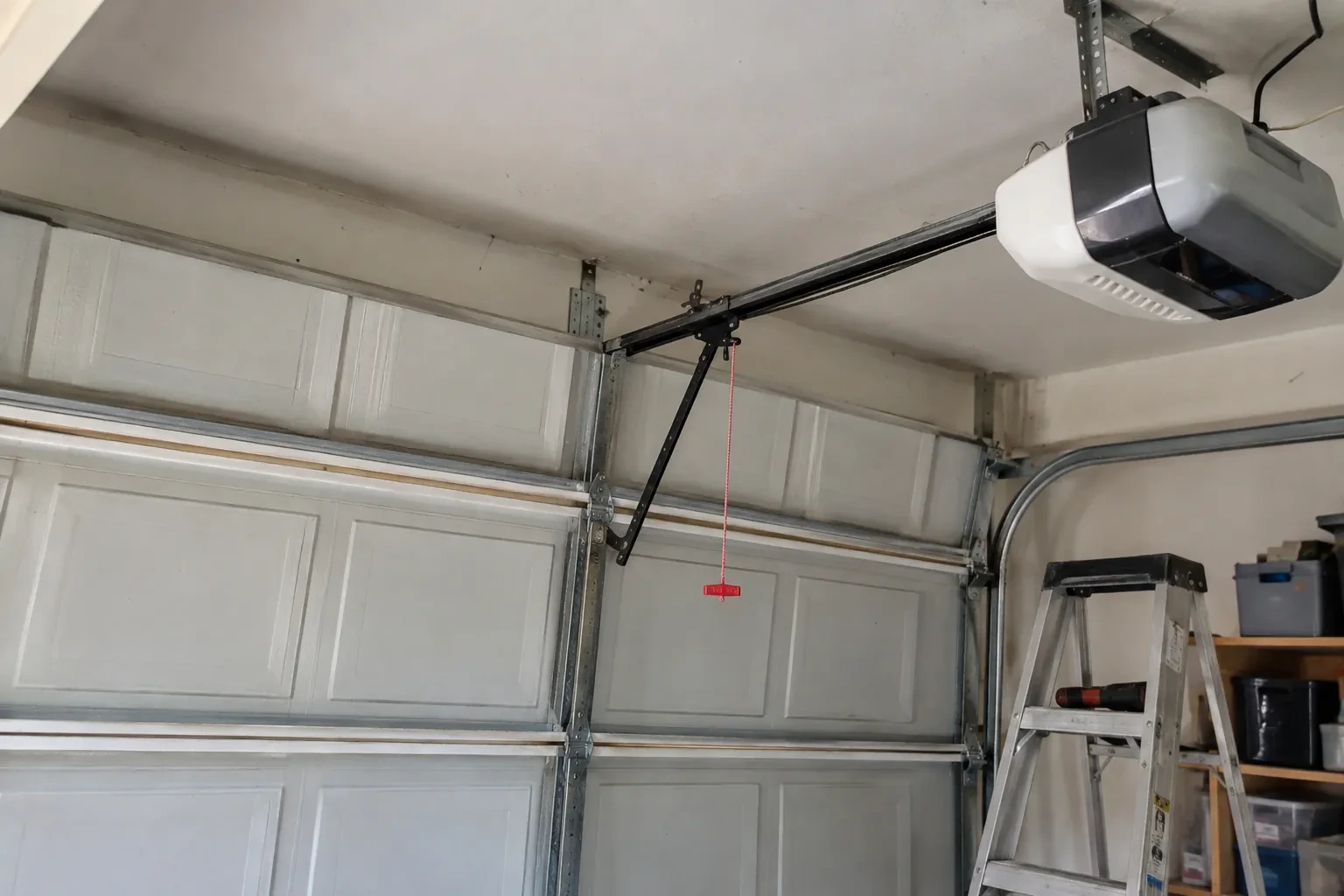
How the visit goesA previous owner knotted the release cord around the rail and stacked storage shelves right beneath it. You only discovered this in the dark, with the power off, a flashlight in your teeth and a car that needed to be somewhere.
Emergency Release Repair
How the visit goes
How the door behaves on its own
The release is then pulled with the door closed and the door is lifted by hand, using the door's own handle or a gripping point clear of the section joints. This is the balance test, and it decides the order of the work. A door that rises with modest effort, holds at about a metre and stays fully open is ready for release work. A door that feels heavy, sinks back or springs upward is telling the technician that the counterbalance needs attention first, and the release is left disconnected until that is done. Manufacturers and the industry checklist both put this test ahead of any further use of the release.
Replacing the trolley or carriage
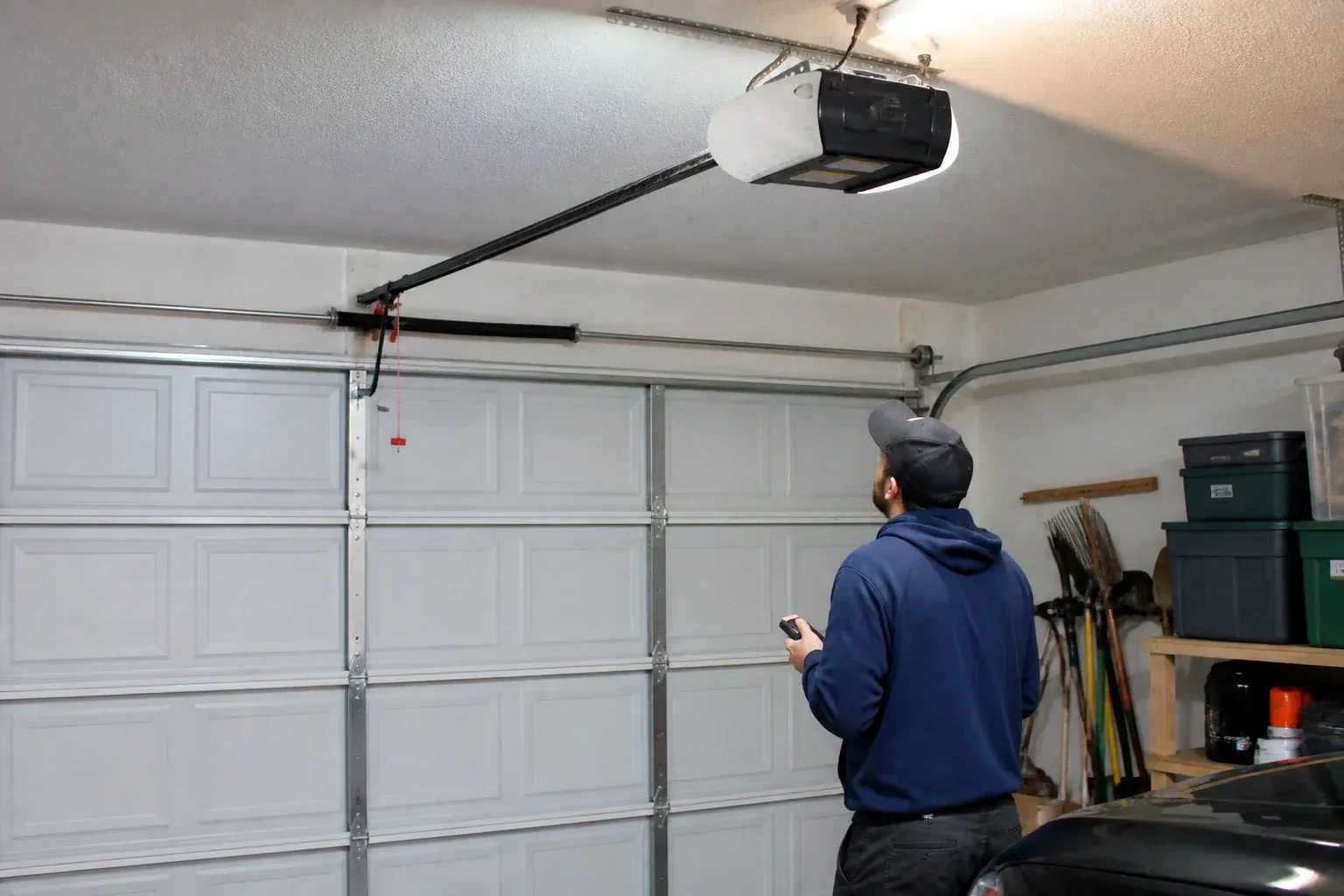
Latch teeth that have worn round, a cracked trolley body or a carriage bent when a door dropped onto it call for a new assembly. The technician slackens the drive, disconnects the arm from the door, slides the old trolley off the rail and fits the replacement that matches the opener's model and rail type, then reattaches the arm with new clevis pins and clips. The chain or belt is set to the correct tension, the trolley is run to the door and latched, and the opener is cycled until the technician is satisfied the connection is solid at both ends of travel. Old parts are shown to you before they leave.
Manual use for more than a day
If an outage runs long, you know how to keep the door in manual mode without the trolley catching the door on its own. On rails where the cord is pulled down and then back toward the opener, the lever stays held out until you return it; on others the trolley simply stays free until the opener is run. Either way, the door is lifted and lowered by hand and a manual lock or slide bolt on the door keeps it shut overnight. When power returns, reconnect before pressing any button, so the opener never runs with the door lock engaged.
Emergency Release Repair
In the van
Rope and red handle kit
Trolley and carriage assembly
Outside key release kit (lock, cable, keys)
Hole saw for the top section
2x4 offcut for the reversal test
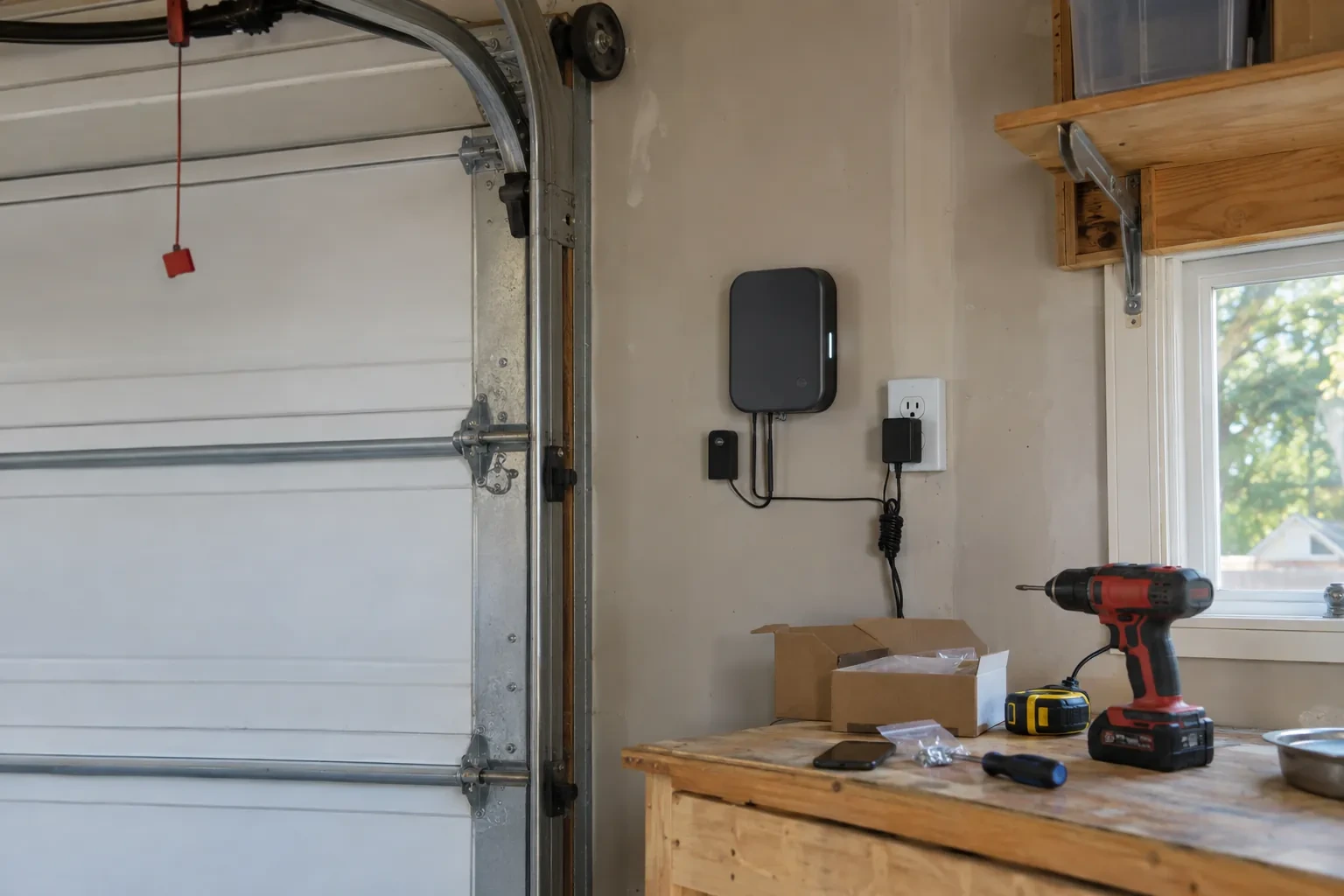
Emergency Release Repair
What affects the quote
Extra keys and a lockbox
Two keys come with an outside release. Additional keys cut for family members, or a small lockbox for the spare, are small add-ons listed as separate lines.
Battery backup as an option
If outages are the reason you called, a battery backup pack for a compatible opener may be offered alongside the release repair. It is optional and appears as its own item.
Demonstration and labelling
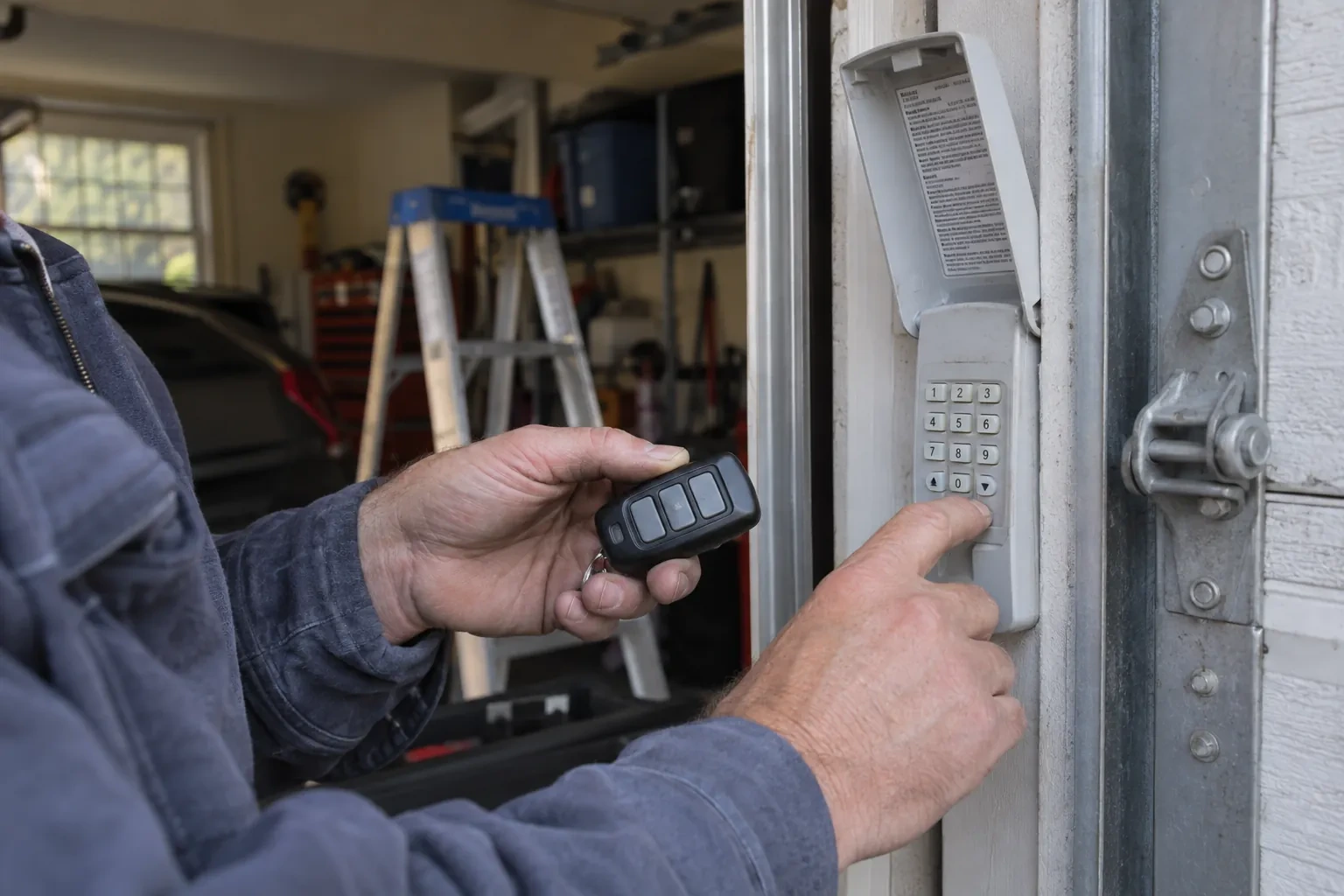
Walking the household through the release, fitting a fresh warning and instruction label near the wall control, and adding handles or gripping points to the door are small tasks that are itemized when they are part of the visit.
What to have ready
- Does the garage have a side door or a door into the house?
- Where was the door when the release was pulled, and where is it now?
- Do you lose power often, and would battery backup interest you?
Emergency Release Repair: questions
QuestionsWhy are the reversal tests done after a release repair?
Because freeing a trolley, changing a trolley or re-tensioning a chain or belt disturbs the travel limits and force settings the opener relies on. The tests prove those settings are still safe: closed onto a 2x4 lying flat, the door must reverse on contact; with something passed through the photo-eye beam while closing, it must stop and rise. They take a minute and are the same checks the standard asks of any working opener.
I pulled the release and the door was very heavy. Is the release broken?
The release did its job; the weight is the door telling you its springs are no longer carrying it. A balanced door lifts with modest effort and holds still at about a metre. A heavy one needs the counterbalance looked at, which is work with winding bars for a technician trained for tensioned hardware. During the visit the door side is corrected first, then the release is put back into use on a door that lifts as it should.
The door is stuck shut, the opener is dead and there is no other door. Can you still get in?
Usually. If the door has an outside key release, a small round lock near the top panel, that is what it is for: the key pulls a cable that frees the trolley from outside so the door can be lifted by hand. If there is no such release, the technician has other methods to reach the lever from outside, and once inside the fault is dealt with. Fitting an outside release afterwards is a sensible follow-up for a garage with a single door.
Related services
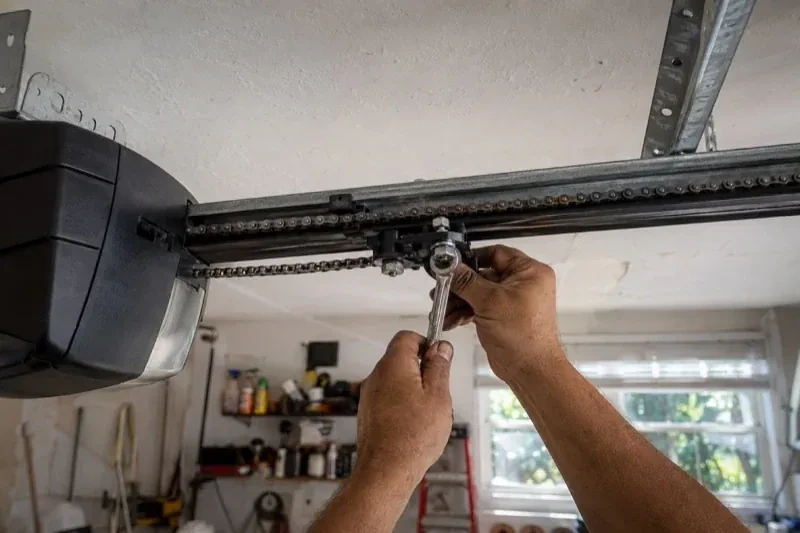
- Chain-Drive Opener RepairThe door opens about a third of the way and stops.
- Belt-Drive Opener RepairIt is minus twenty in the detached garage and the door climbs in jerks, the belt stiff as a board.
- Garage Door Opener ReplacementThe bedroom above the garage shakes every morning at six when the chain drive fires up.