Openers · Maryhill
Garage Door Opener Diagnosis and Repair in Maryhill
For a few days there was a grinding sound whenever the door started moving.
In plain words
Winter changes what an opener is asked to do. Grease in the gear case and on the rail thickens in the cold, rollers turn stiffly, and the bottom seal can freeze to the concrete overnight so the door is briefly glued shut. A force setting that was right in July now reads every one of those as an obstruction and stops. A cold-weather diagnosis sorts the seasonal from the structural: freeing the seal, lubricating the moving parts with a product made for low temperatures, checking that the balance is still right, and then confirming the force is low enough to stay safe while high enough to work.
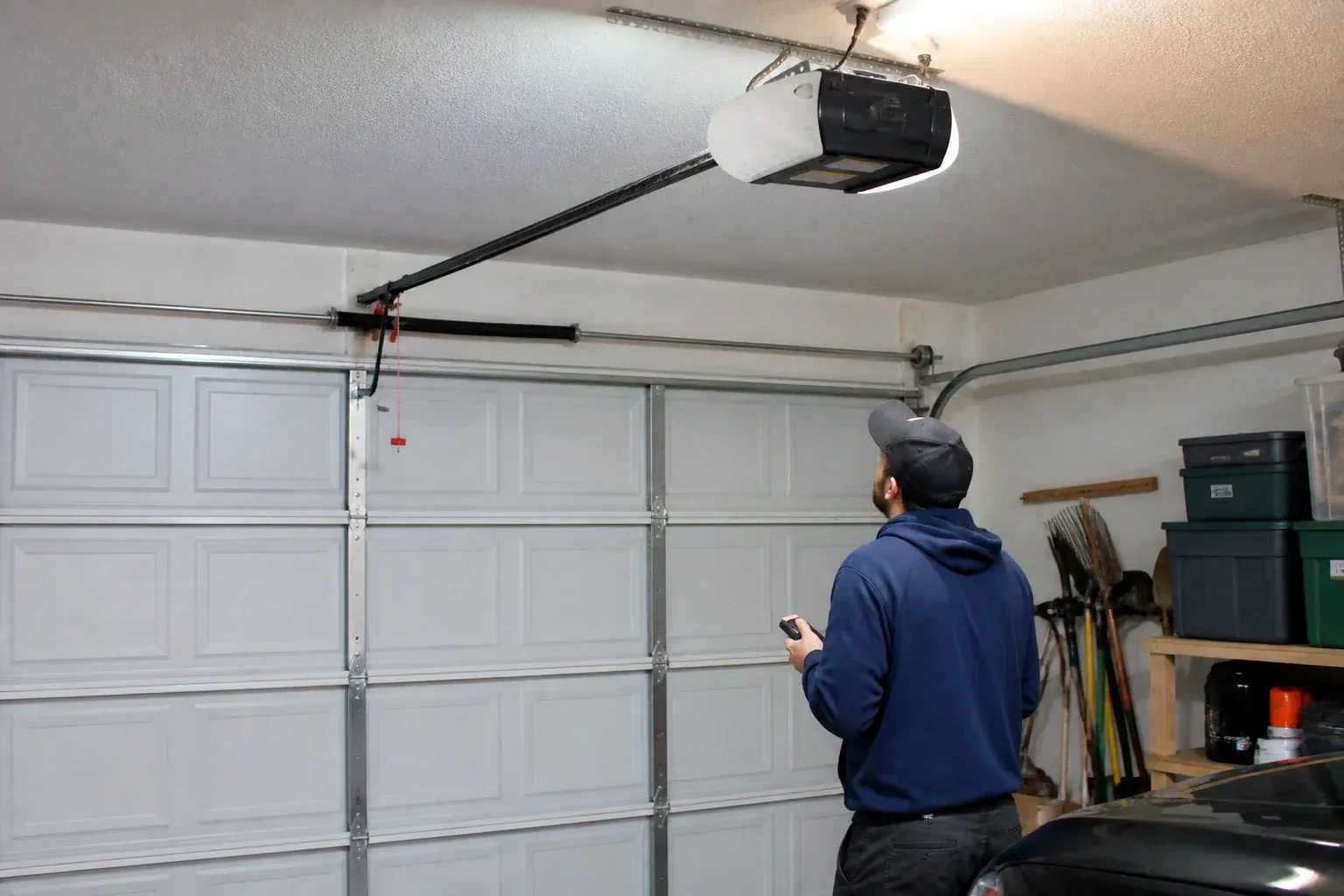
How the visit goesThe door goes up perfectly. Coming down is the trouble: partway to the floor it stops, climbs back to the top, and the light on the opener blinks at you. The only way to close it is to stand inside holding the wall button the whole way down.
Garage Door Opener Diagnosis and Repair
How the visit goes
From motor to trolley
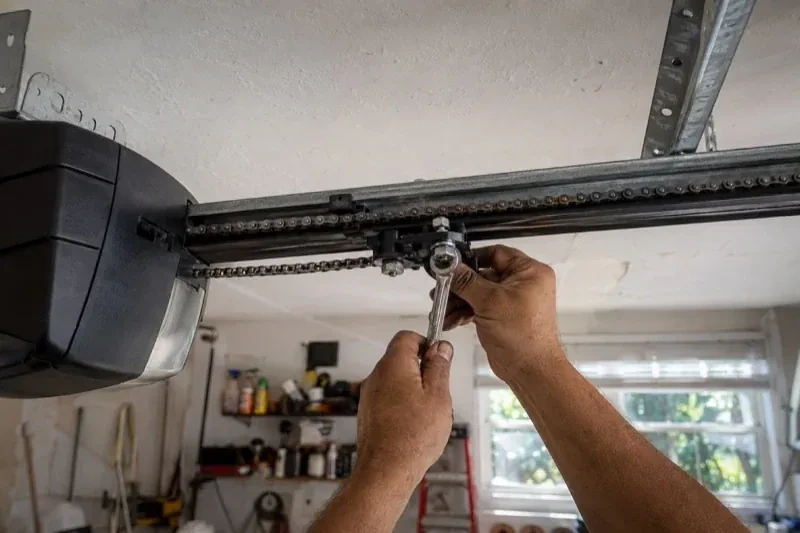
Behind the cover of the head unit and along the rail sits the drive train: motor, capacitor on AC models, drive gear, sprocket, and then the chain, belt or screw that moves the trolley. The technician listens first, because sounds are specific. A hum with no motion suggests a capacitor or a stripped gear; a motor that runs while the trolley slides alone points to a disengaged carriage or a broken drive; a grinding start followed by silence is a worn gear finishing its life. Then the parts are inspected directly: gear teeth, sprocket, chain tension, belt condition, trolley wear, and the coupling between rail and head.
Controls, remotes and programming
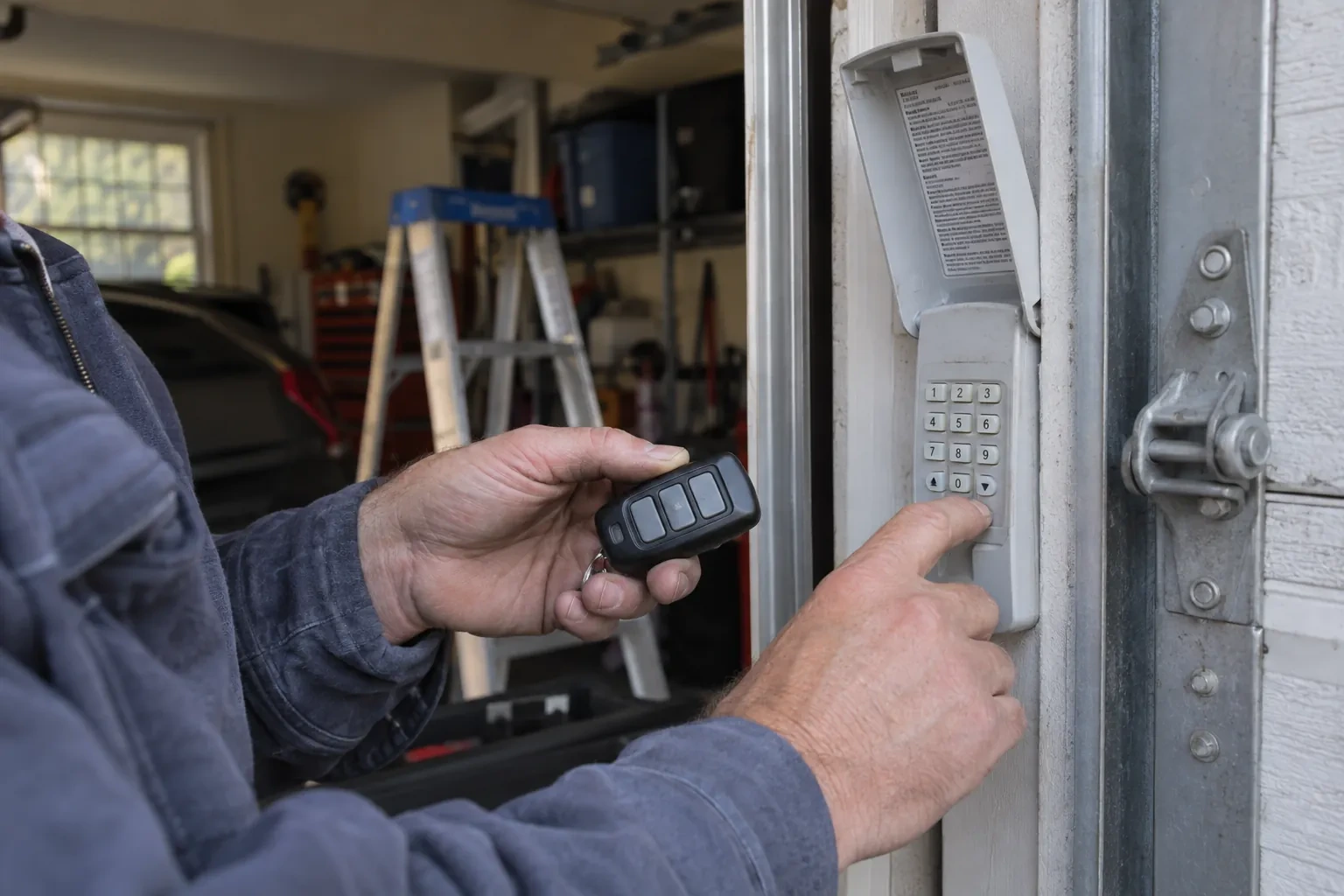
Control faults are corrected at the control that failed. A wall console in lock mode is released by holding its lock button until the indicator stops flashing. Remotes get fresh batteries of the type the maker specifies, then are reprogrammed to the head unit with its learn button if the memory was cleared. Range problems are traced to interference, most often from certain LED bulbs in the opener's own sockets, and cured by swapping bulbs or extending the antenna wire. A wall control with a shorted or pinched cable gets new low-voltage wire; a failed receiver or wall control is replaced with one compatible with the opener's frequency and coding.
Knowing the red handle
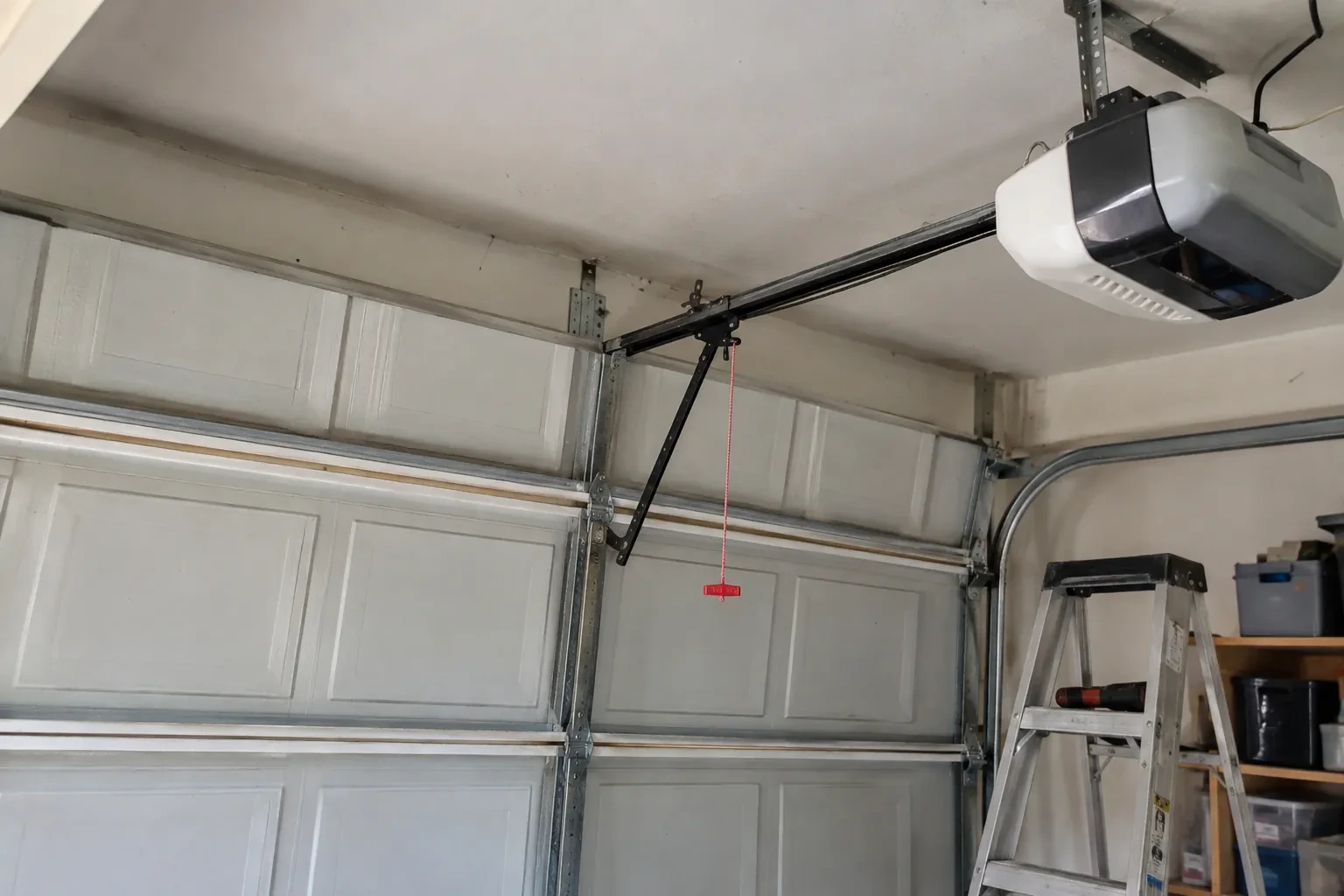
The red cord hanging from the rail is the emergency release, and you now know how to use it properly. Pull it only when the door is closed, so a door that turns out to be unbalanced has nowhere to fall. The door then lifts by hand, useful during an outage. To reconnect, most units re-latch when the opener is run and the trolley meets the carriage, or when the door is lifted until it clicks. The handle should hang no higher than about 1.8 metres and clear of the car. If the door feels heavy when released, that is a spring message, not a test of strength.
Garage Door Opener Diagnosis and Repair
In the van
Logic board or receiver
Start capacitor
Trolley and carriage
Garage door lubricant
Wall control
Garage Door Opener Diagnosis and Repair
What affects the quote
Type of drive
Chain, belt, screw, direct-drive and wall-mounted jackshaft openers each have their own parts and their own labour; a gear kit on a chain unit is a different job from a coupler on a screw drive.
Season and weather
A frozen seal, a stiff door and an unheated garage in the cold months add steps to a diagnosis, such as freeing the door and re-lubricating for low temperatures, and the quote allows for them.
Wiring to be re-run
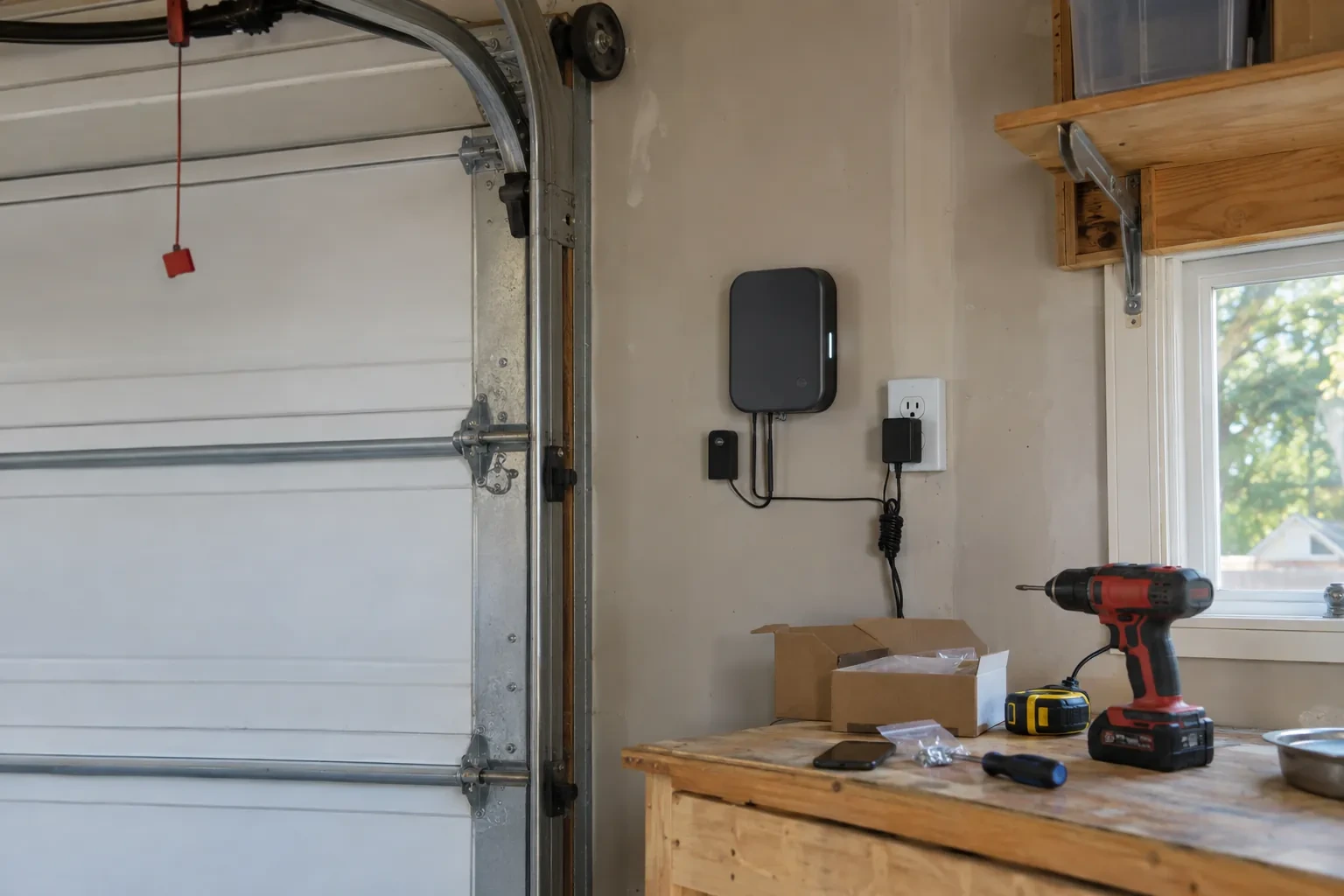
Damaged low-voltage wire to the sensors or the wall control is replaced along its whole length and clipped clear of the track, so the distance and route from head unit to door frame affect the time.
What to have ready
- Is the door quieter or noisier than it used to be, and where is the sound coming from?
- Has anyone pulled the red emergency release cord recently?
- Are the lights on the opener or the wall control blinking, and in what pattern?
Garage Door Opener Diagnosis and Repair: questions
QuestionsThere are white plastic shavings under the opener. What are they?
Teeth from the drive gear. Many chain-drive openers use a nylon gear between the motor and the sprocket, and after years of running, especially against a heavy or dry door, its teeth shear off and fall as fine white curls onto whatever is parked below. The motor then spins without moving the chain. The gear and sprocket are replaced as a kit, and the door balance is checked so the new gear is not asked to carry the same load.
Why does the door stop just above the floor and reverse?
Two usual reasons. The travel limit is set a fraction too long, so the door reaches the slab, meets it harder than expected and interprets that as an obstruction. Or the bottom seal has stiffened or frozen and the last few centimetres take more force than the setting allows. Both are adjusted after the door is checked for balance, and the fix is confirmed by closing the door several times and running the contact reversal test.
How long does a diagnosis visit take?
The checks themselves run in a set order and take a modest part of an hour on most doors. What extends a visit is the repair that follows: a gear kit or capacitor adds a little, a sensor re-wire or a trolley change adds more, and a door-side problem such as a balance fault may mean a second piece of work. You are told where things stand once the cause is found, before any further work begins.
Related services
- Belt-Drive Opener RepairIt is minus twenty in the detached garage and the door climbs in jerks, the belt stiff as a board.
- Garage Door Opener ReplacementThe bedroom above the garage shakes every morning at six when the chain drive fires up.
- Photo-Eye Sensor Alignment or ReplacementAfter a cold night the door stays open until the garage warms up.