Garage Doors in Conestogo, OntarioFor landlordsand property managers.
If you look after rental homes or a row of townhouses in Conestogo, one call covers every door. We keep notes on each address, replace like with like so tenants are not learning a new remote, and send a clear written summary of what was done so your records stay in order.
If you look after rental homes or a row of townhouses in Conestogo, one call covers every door. We keep notes on each address, replace like with like so tenants are not learning a new remote, and send a clear written summary of what was done so your records stay in order.
Careful work on heavy doors.
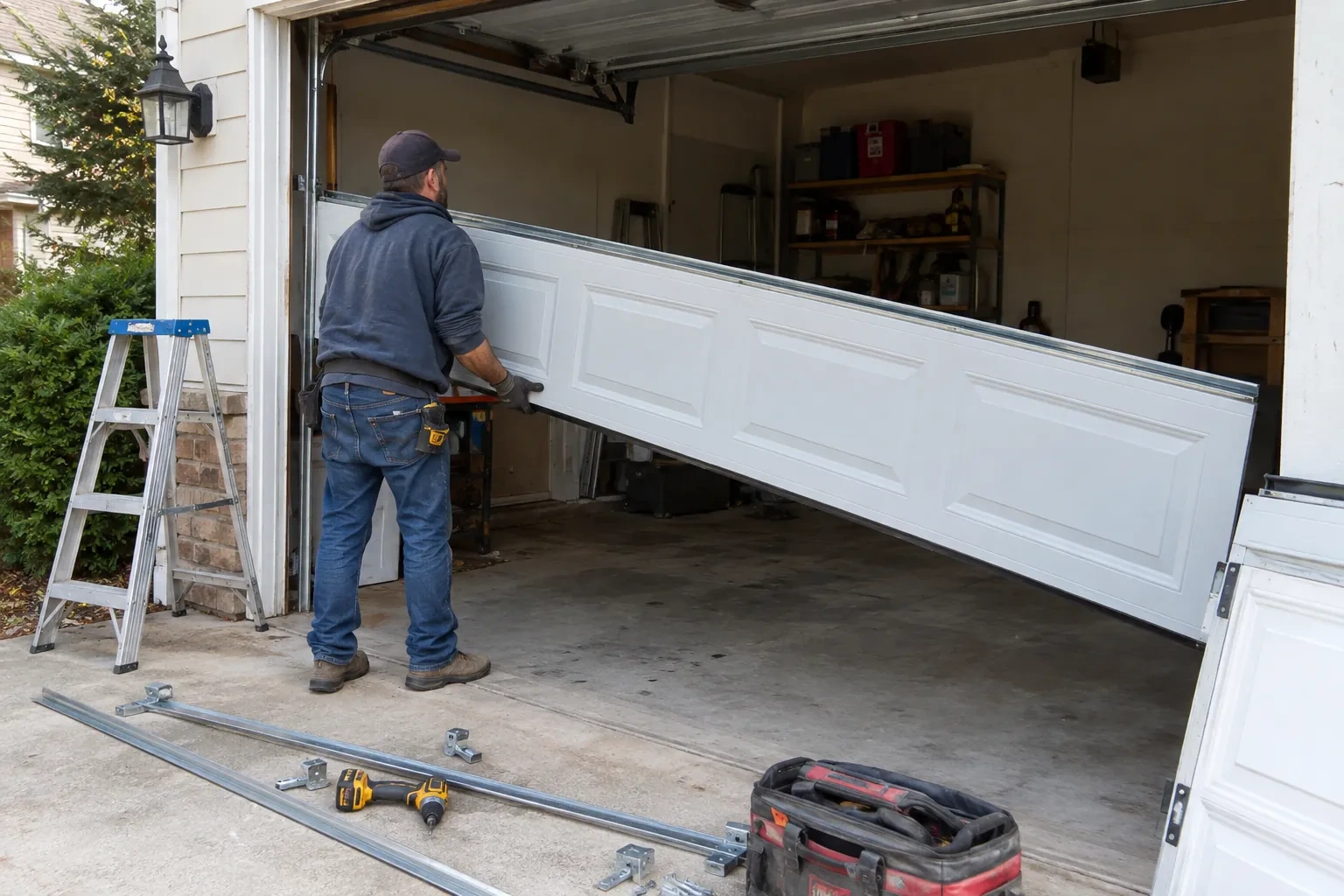
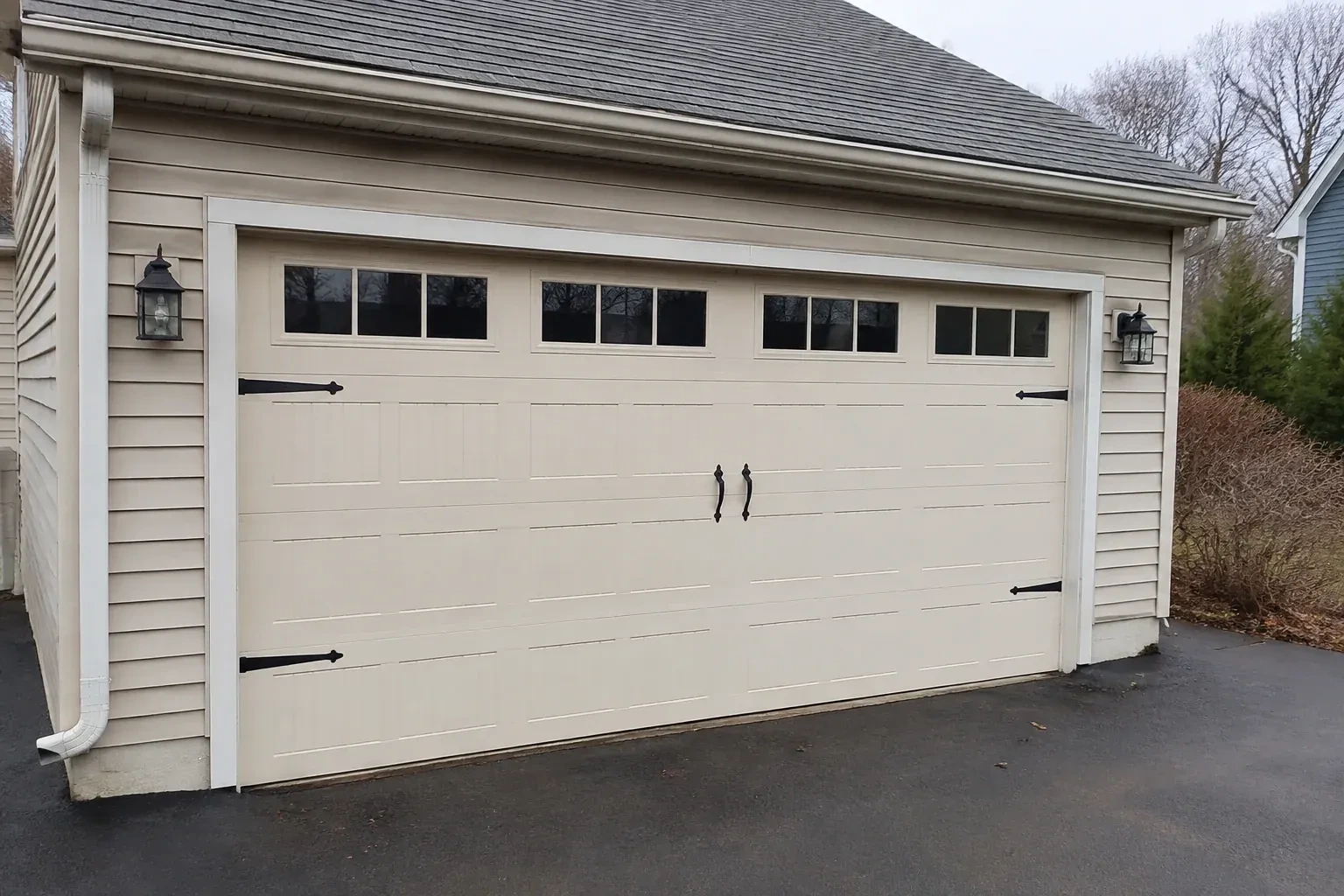
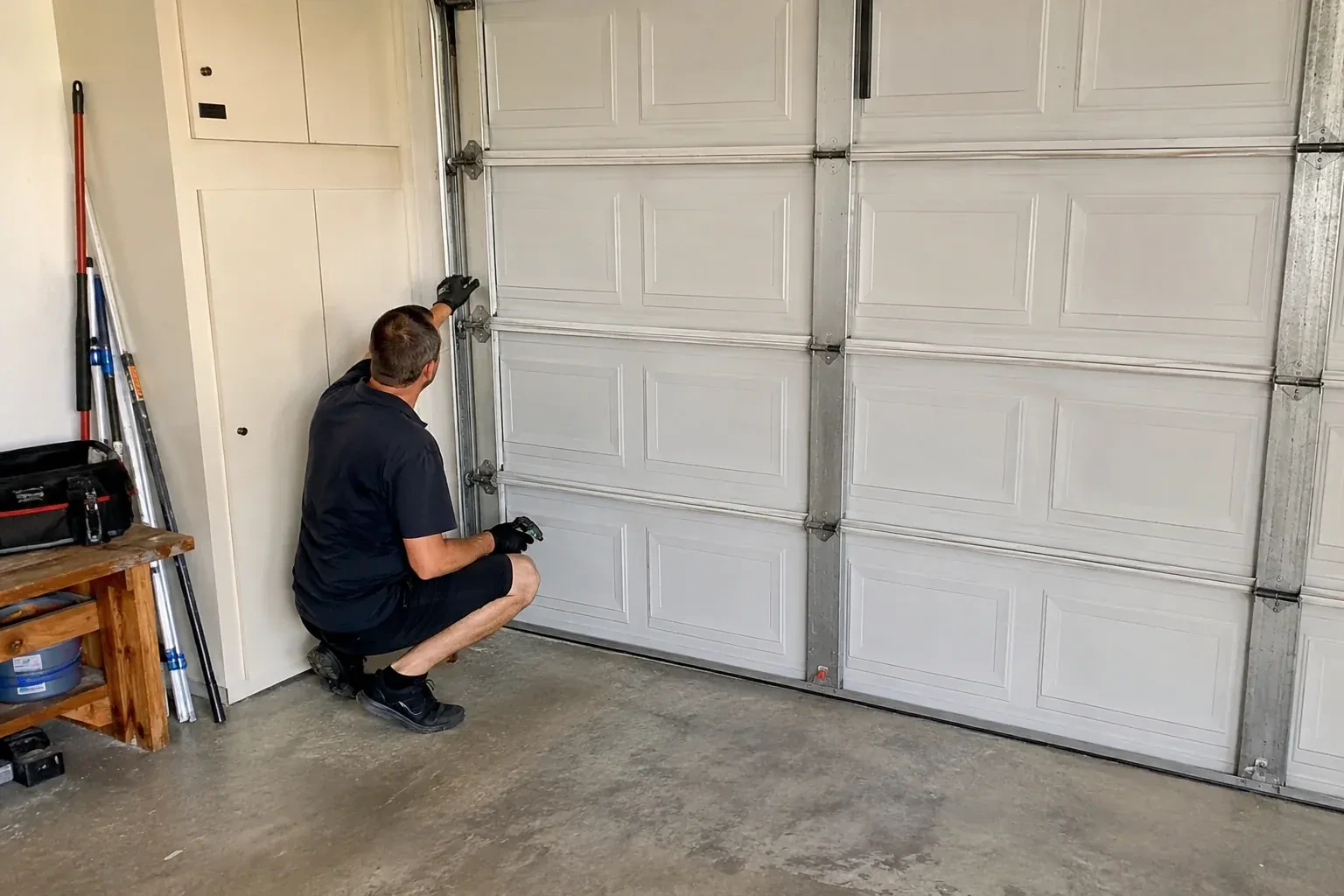
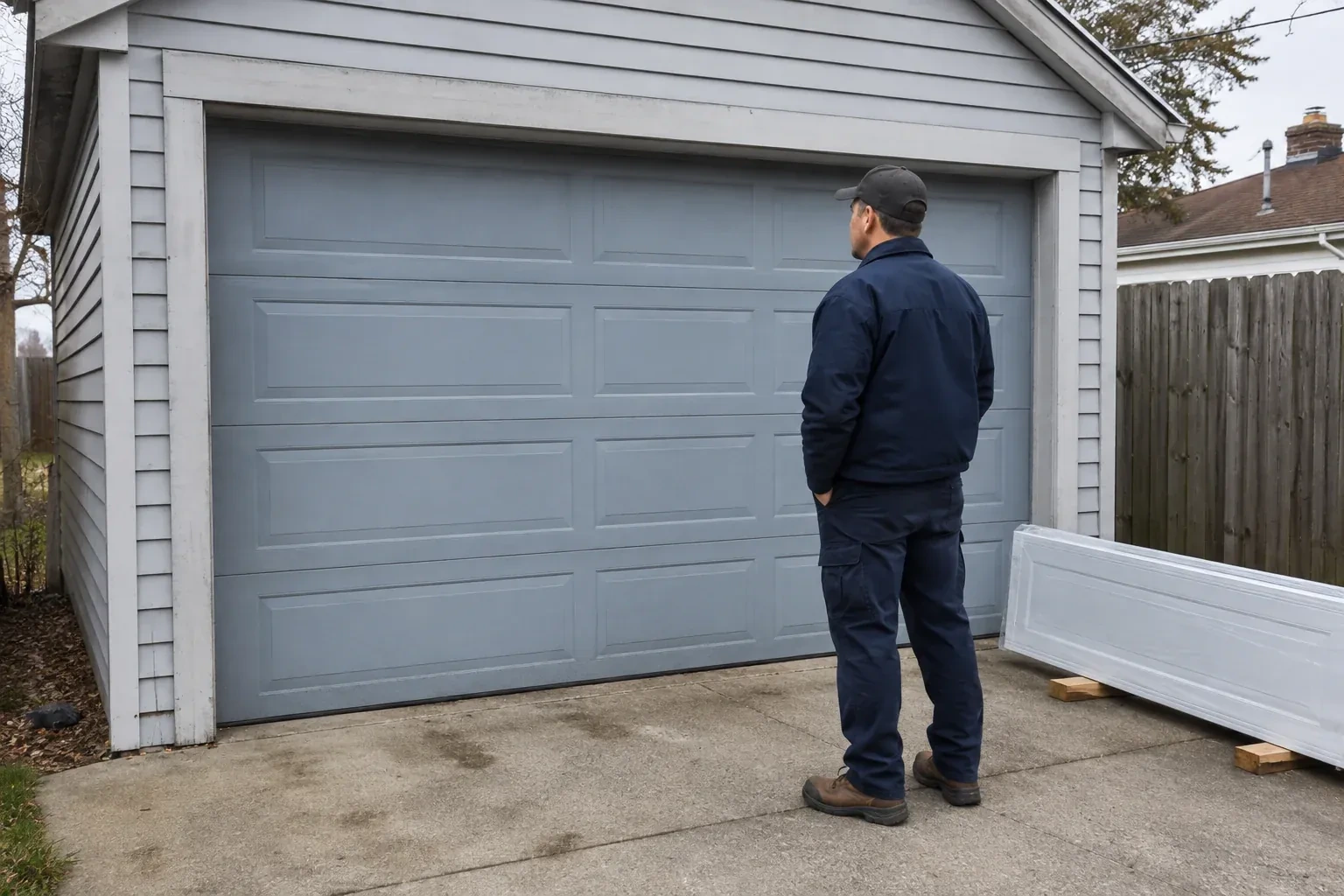
A new door for a home in Conestogo is planned with more time than a repair. We measure the opening and headroom, talk through insulation, windows, colour and panel style, show samples at the house, and install the door and its hardware plumb, level and balanced so it looks and runs right from the first day.
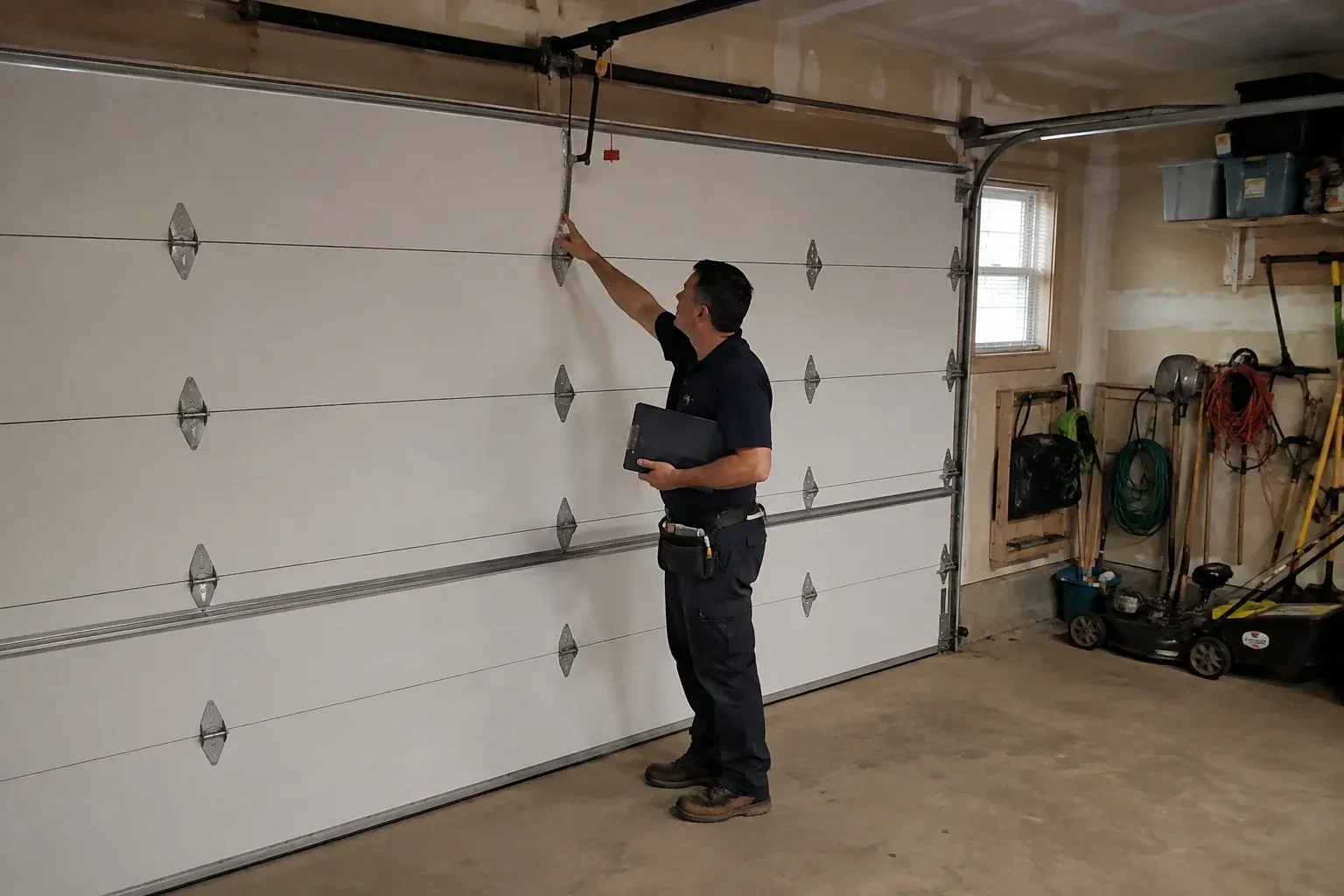
We have been servicing garage doors in Conestogo for long enough to recognize the door styles that came with each stretch of building. That familiarity helps when a spring needs matching or an older opener needs a sensible upgrade. Homeowners and businesses in the area can expect a careful look at the door, plain talk about the options and a repair or installation done properly.
20years in business
24/7open every day
Understanding first. We explain the fault in plain terms and check that it makes sense to you before moving on to the repair.
Respect for the space. Drop sheets, careful handling of stored items, and a full clean-up. We are guests in your garage and act like it.
Choices laid out plainly. Each option comes with what it involves, how long it tends to last and what it means for the opener and the rest of the door.
From a stuck door on a winter morning to a planned replacement before the house goes on the market, the services on this page cover what garage doors in Conestogo typically need. Each one explains what is checked, how the work is done and what you can expect afterwards.
About 47% of homes in Woolwich were built in 1980 or earlier, according to the 2021 Census.
Where housing ages are mixed, many older houses have already had a newer door and opener fitted, so the door's age and the house's age are not the same thing. The technician reads the door itself, its spring type, tracks and opener, before recommending anything.
Single-detached houses make up about 76% of homes in Woolwich (2021 Census).
Mostly houses
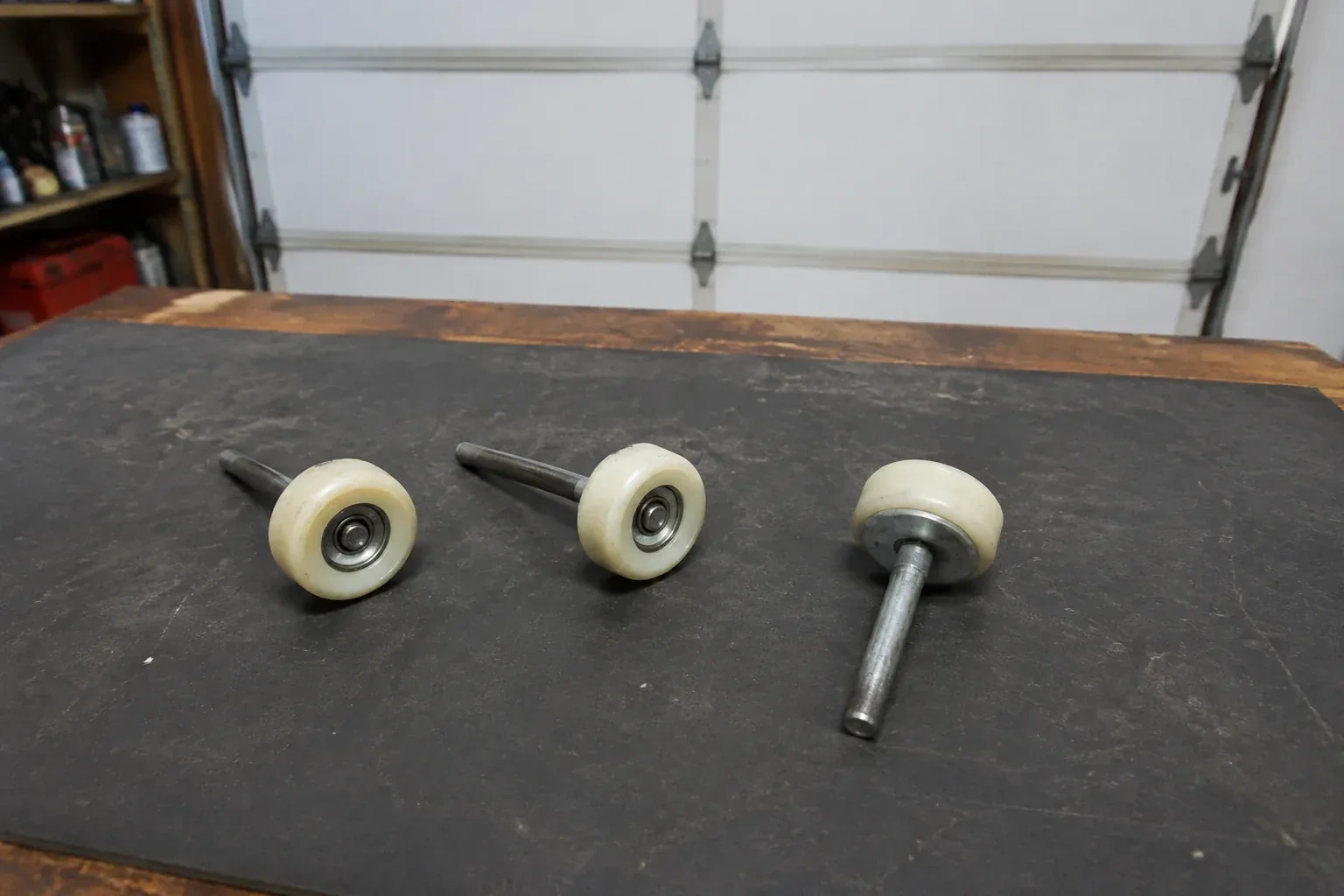
Where homes are detached, the garage is frequently a workshop or storage room as well as parking, and the door may be opened dozens of times on a Saturday. Sealed-bearing rollers, protected sensors and a regular tune-up keep a hard-working door running smoothly.
Lifting hardware fails in sequence: a dry bearing loads a cable, the cable frays at the drum, the drum groove wears, the spring works harder than it should. Catching the first link in that chain saves the rest.
Every morning the door announces itself: a rattle on the way up, a grinding squeal on the way down, loud enough that the neighbours know when you leave.
Sectional doors, carriage-house styles, full-view glass and insulated steel all sit in this group, along with the conversions and hardware upgrades that change how a door performs.
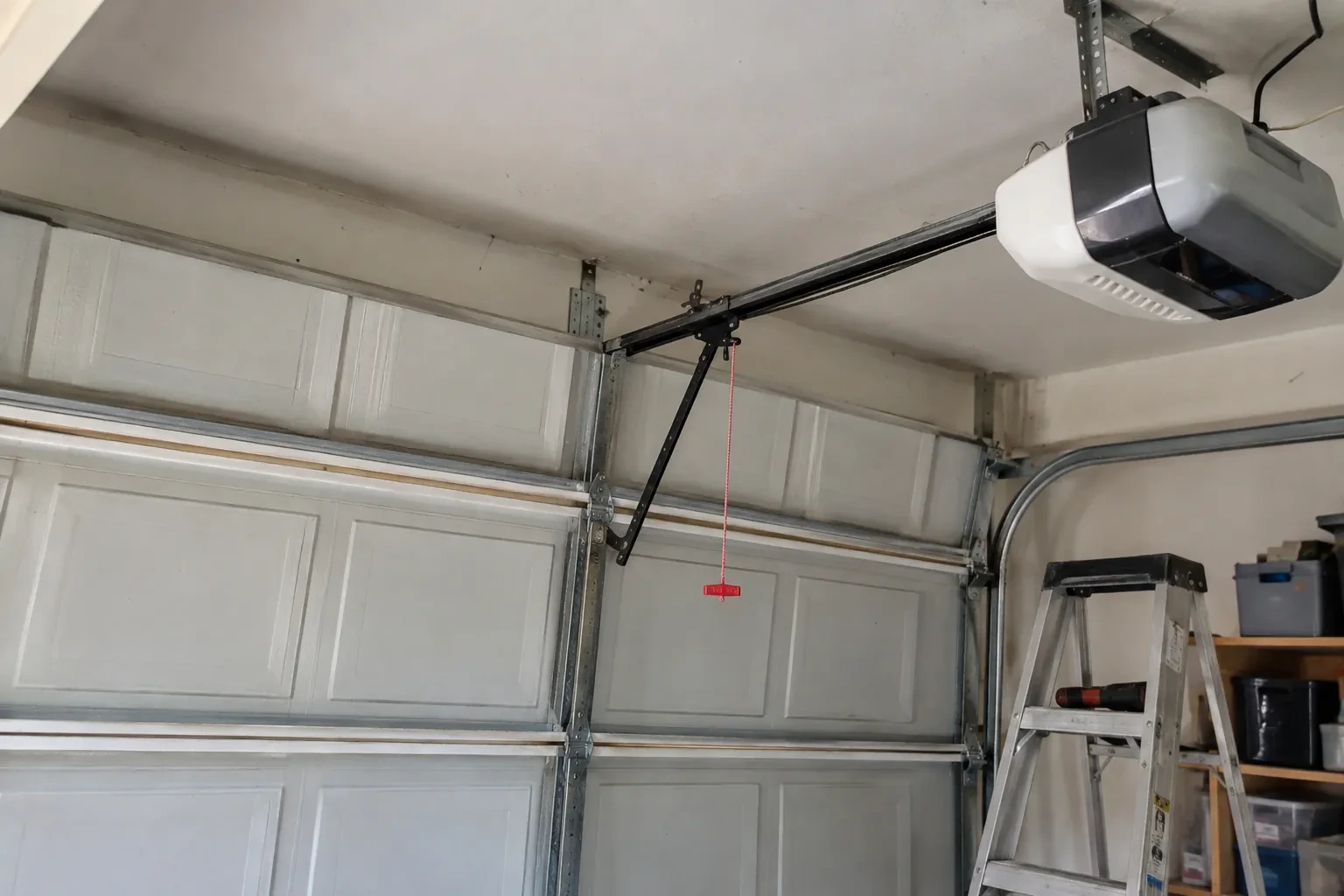
The door opens about a third of the way and stops. Turning the limit screw on the head has made no difference, and the trolley seems to sit in the wrong place along the rail when the door is fully closed.
It is minus twenty in the detached garage and the door climbs in jerks, the belt stiff as a board. By the afternoon, when the sun has been on the door, it runs almost normally again.
The bedroom above the garage shakes every morning at six when the chain drive fires up. Everyone in the house knows the moment someone leaves for work.
After a cold night the door stays open until the garage warms up. There is frost on the sensor lenses and a ridge of salty slush piled against the brackets where the snow blower was parked.
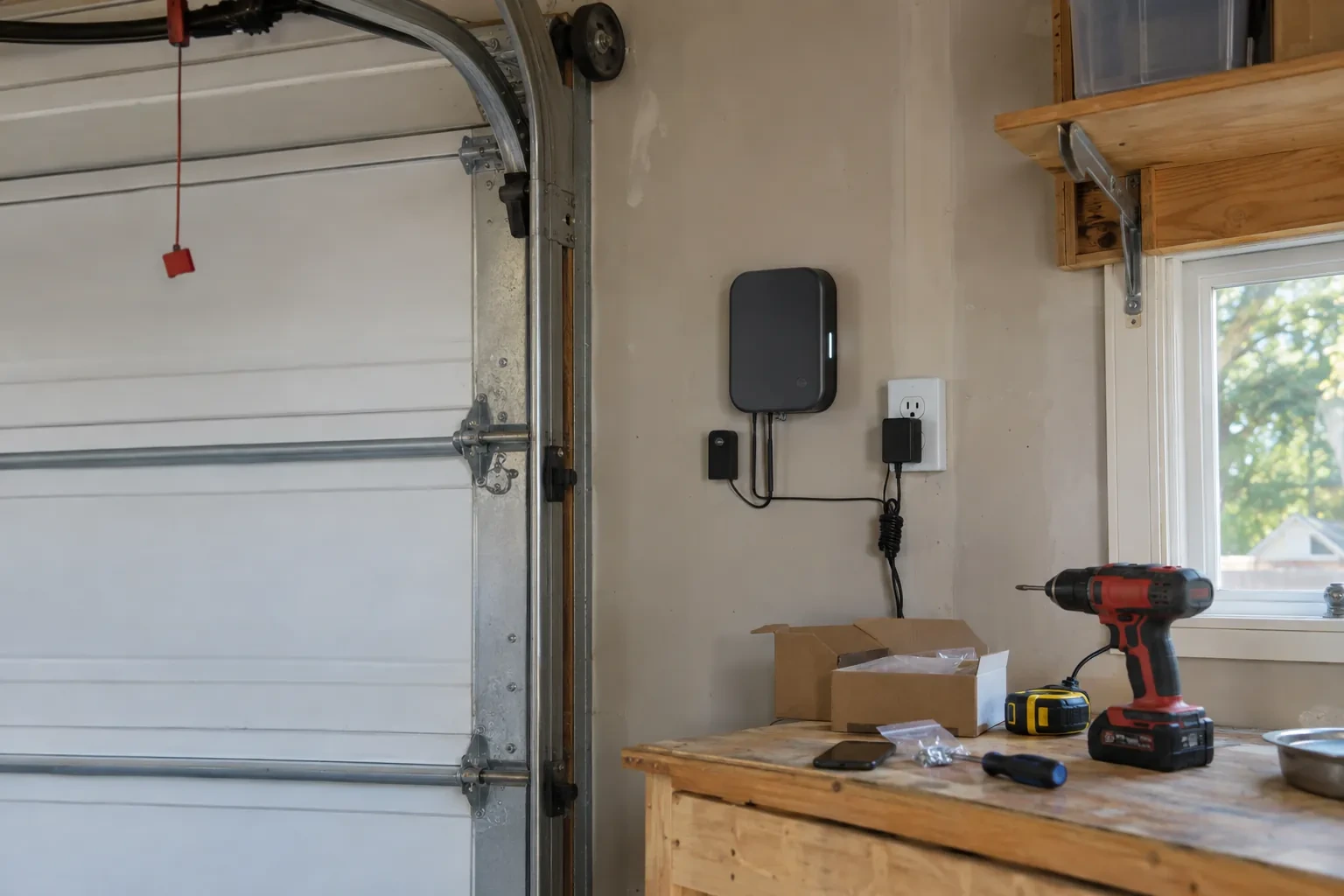
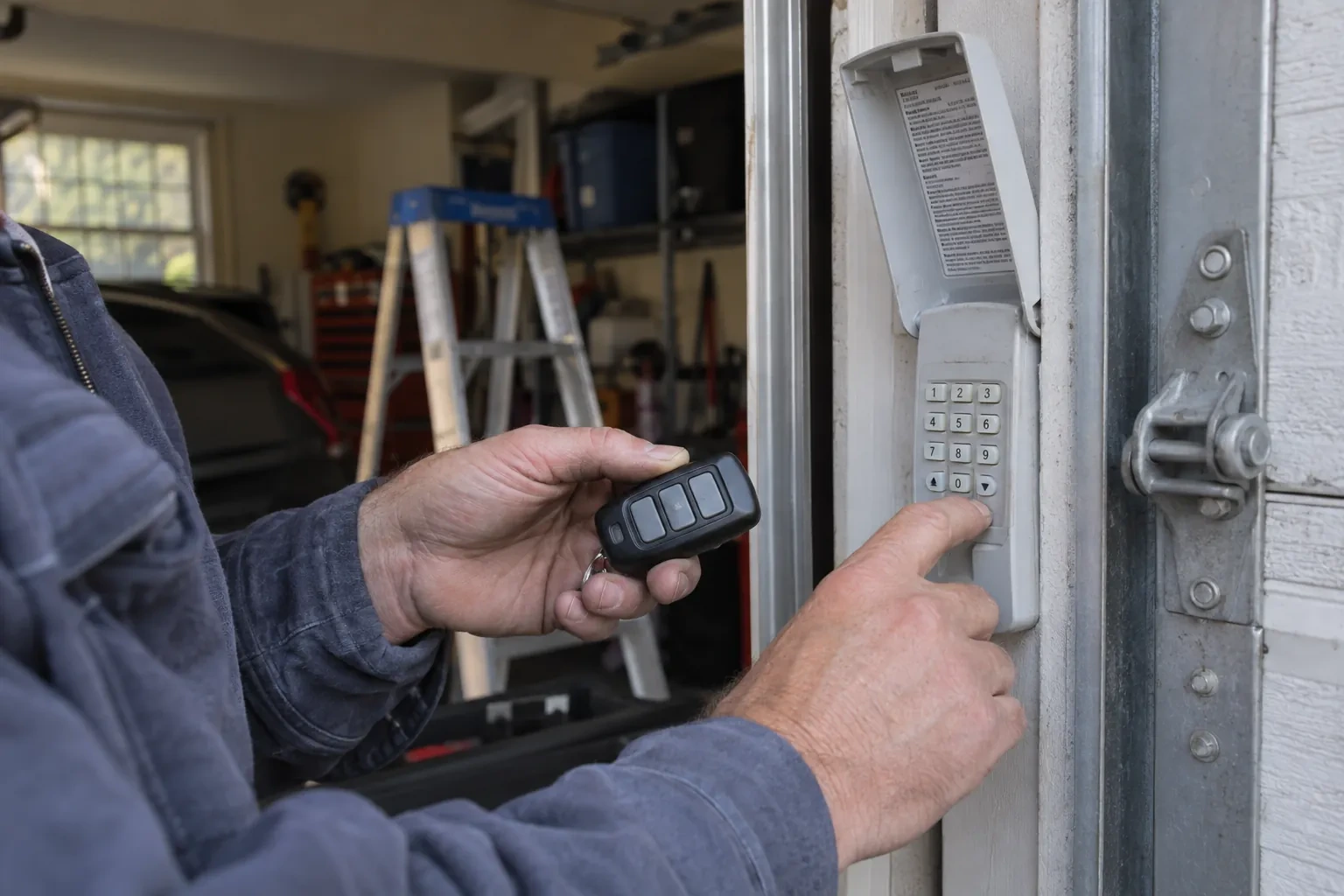
There is a wireless symbol printed on the opener above the car, and the manual mentions an app, but the head unit has never been connected to anything. You downloaded the app once, it asked for a serial number and a network, and the moment passed.
It is the coldest morning of the year. A week of slush and road salt has crusted over the outside release lock, the key will not seat, and the opener inside is silent after the overnight outage.
Which fix fits?
After an overnight freeze the door stuck to the slab, the opener strained, and something gave.
WhyTrade guidance treats a garage door as a system: sections, hinges, rollers, tracks, cables, springs and opener all depend on one another, and an impact on one section rarely stops there.
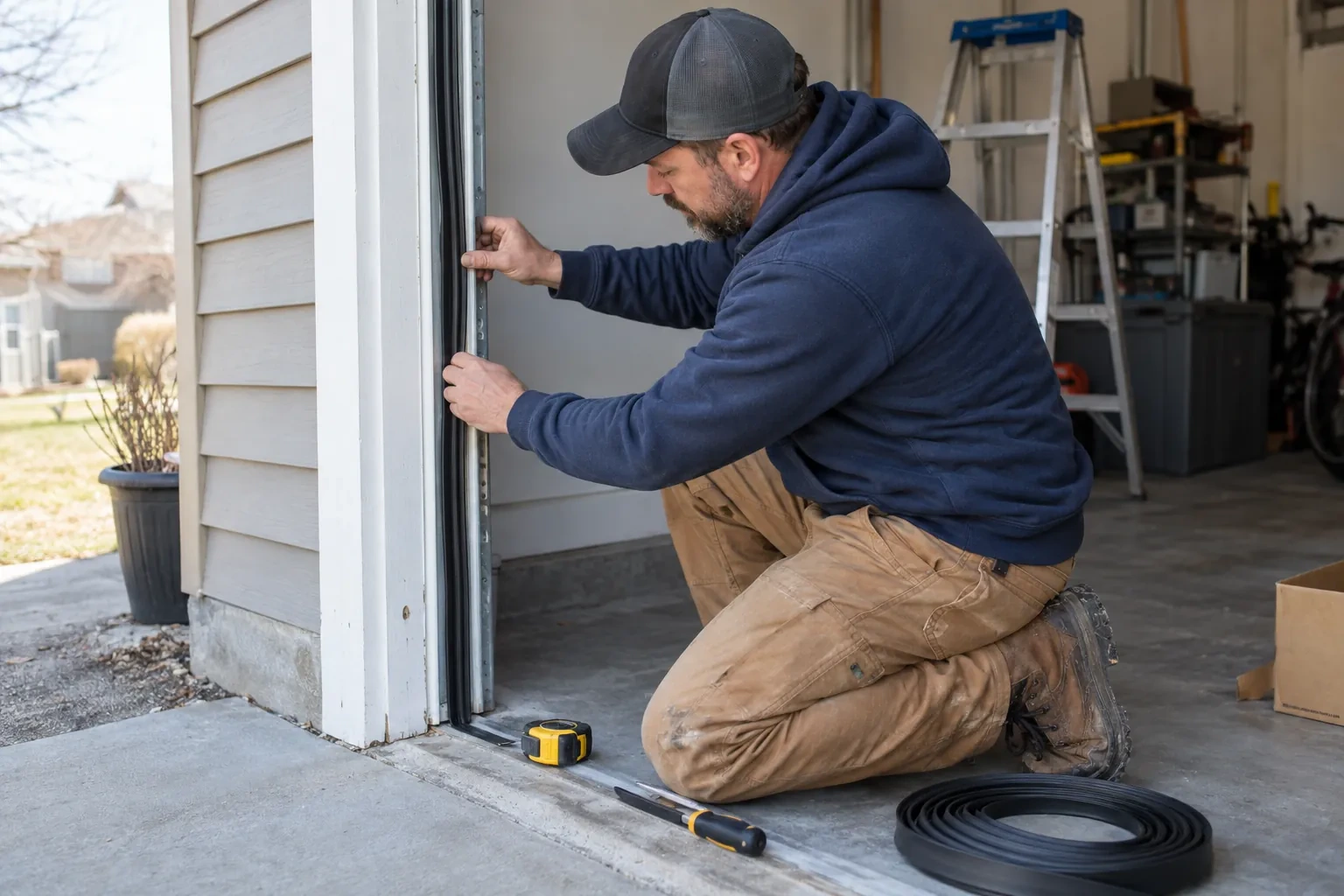
Every mild afternoon the snow melts off the car, runs to the door, and by morning the rubber strip along the bottom is frozen to the concrete.
WhyThe opener deserves as much attention as the track.
An entrance. Not an afterthought.
1/10Garage Door Panel Replacement
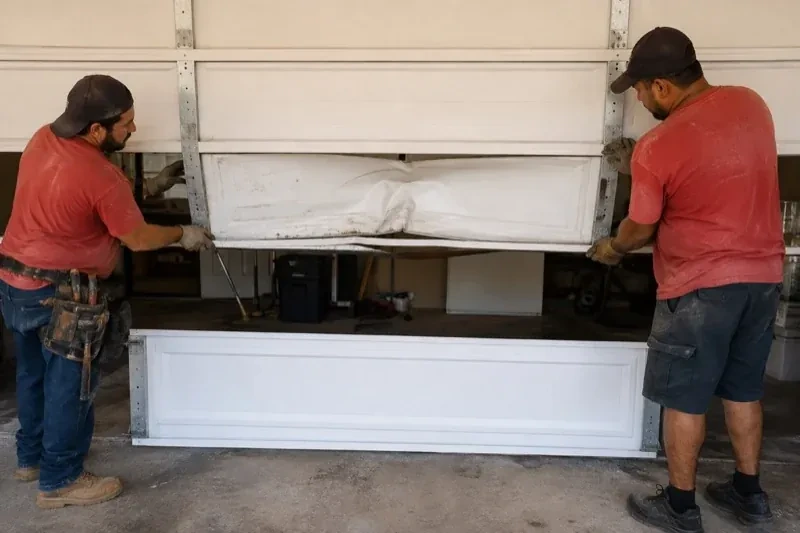
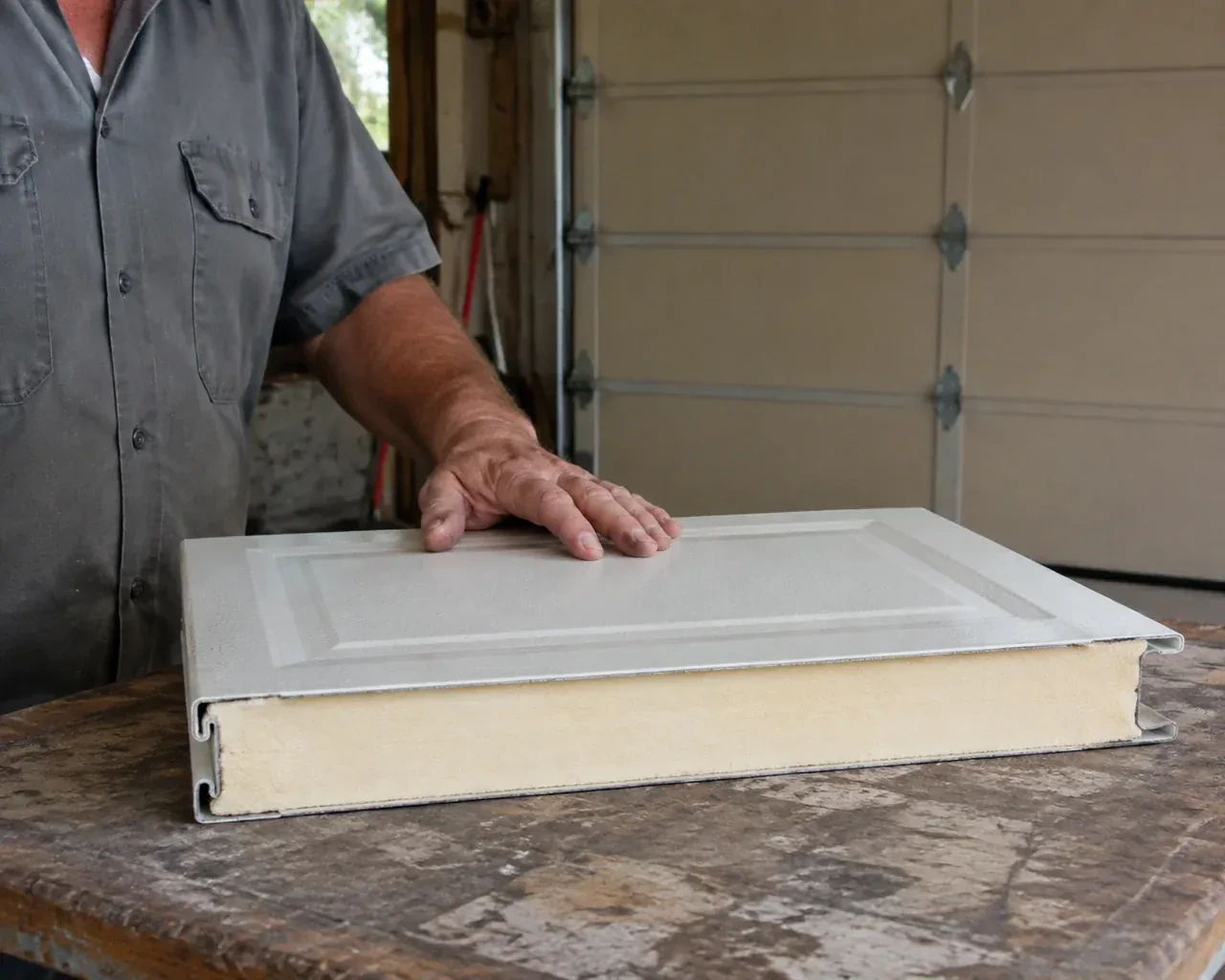
After an overnight freeze the door stuck to the slab, the opener strained, and something gave. The bottom section is bowed inward, one hinge has torn free of its screws, and the rubber seal along the bottom no longer sits flat.
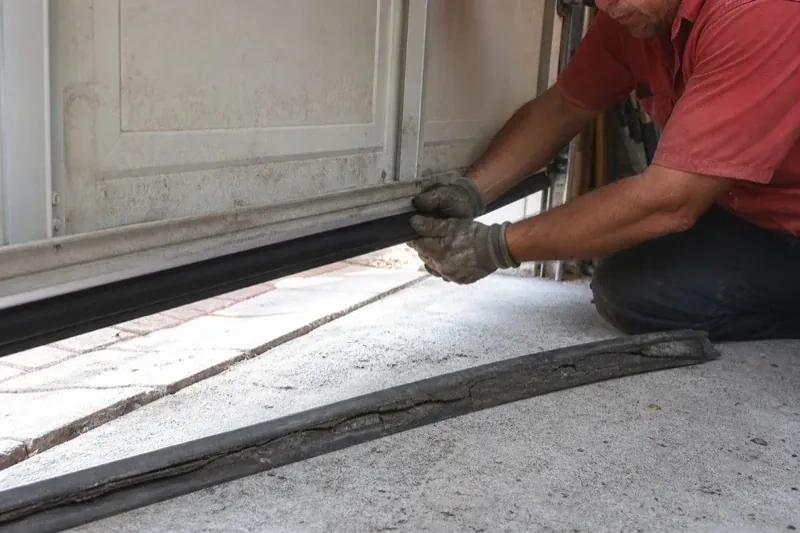
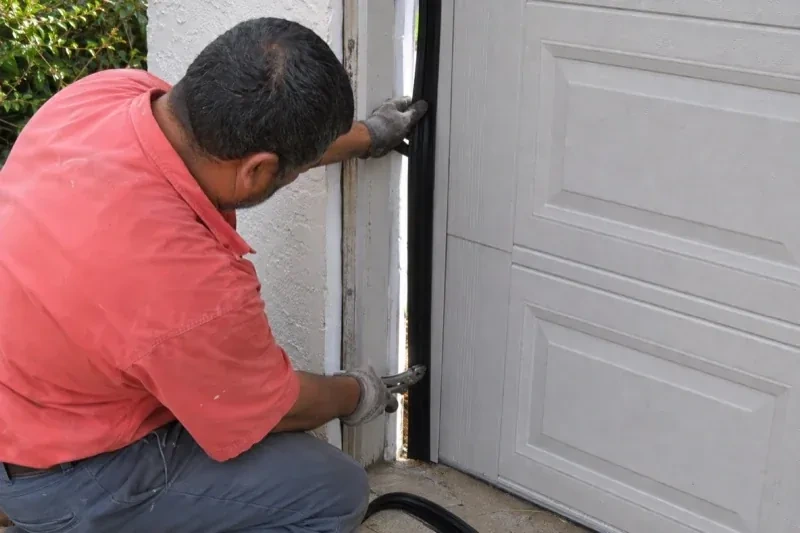
Every mild afternoon the snow melts off the car, runs to the door, and by morning the rubber strip along the bottom is frozen to the concrete. Last week the opener lifted the door and left half the seal on the floor.
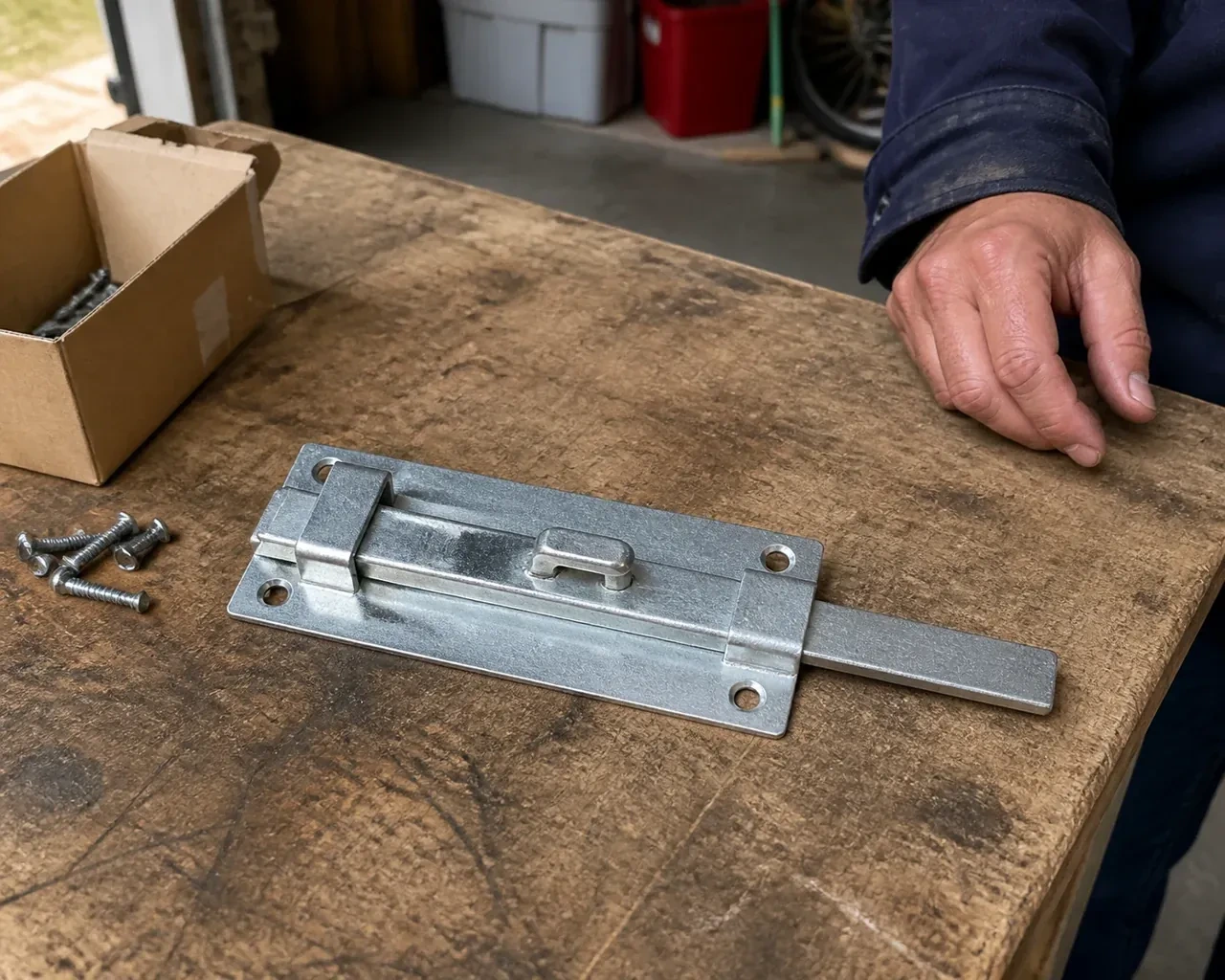
The outside handle wobbles in your hand and the inside knob spins round and round with nothing attached. The screws that held the lock through the door skin have pulled loose, leaving oval holes, and the whole thing hangs on by little more than paint.
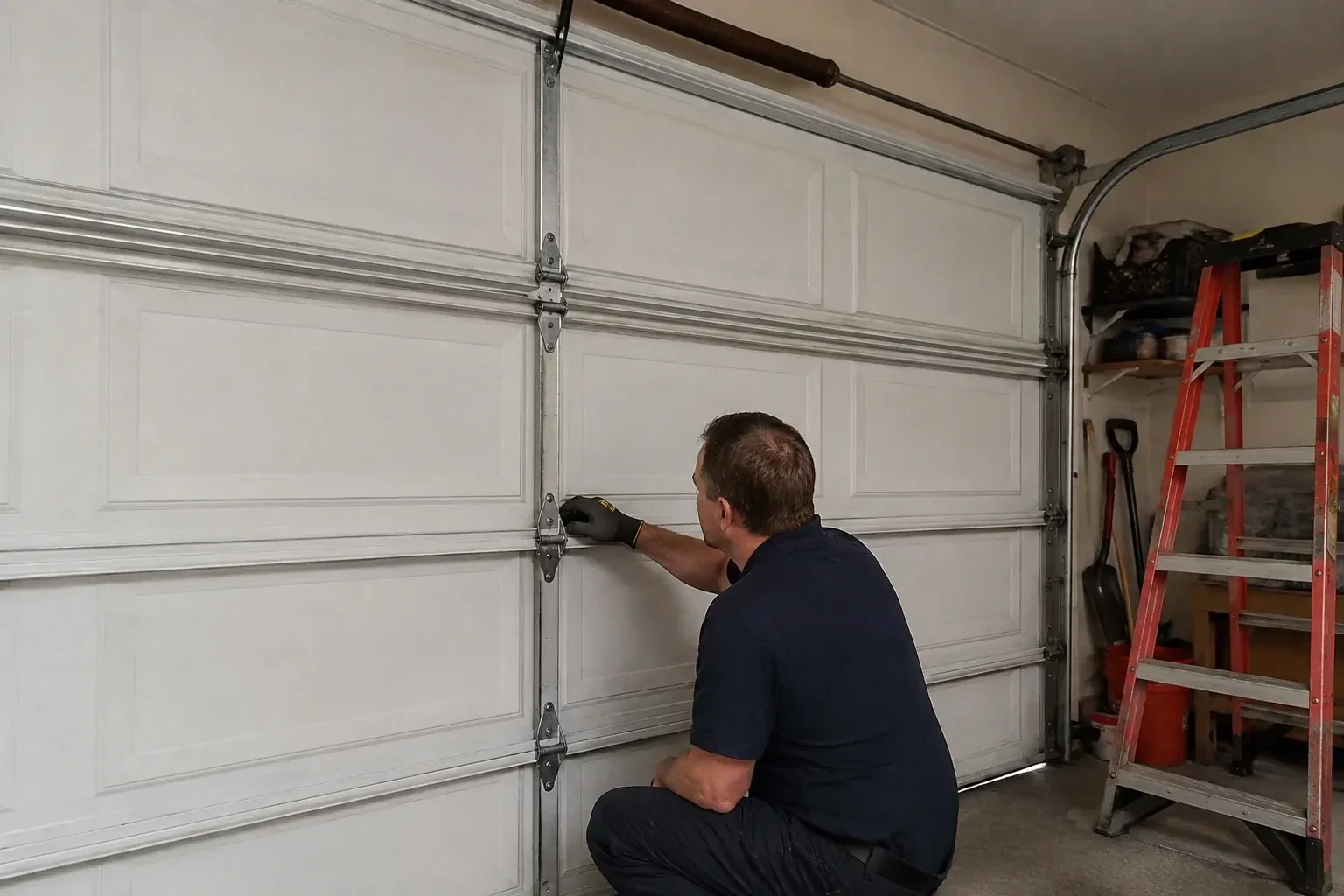
After a cold night the bottom seal had frozen to the slab. The opener strained, something gave, and now one of the upper hinges sits with its leaf bent outward and the panel below it flexes when the door moves.
The door starts to rise, gets about the height of your knee, then shudders and reverses. The opener sounds strained, and the top section flexes as the trolley pulls on it, because the motor is doing work the spring used to do.
On cold mornings the door barely makes it up. The motor whines, the door crawls, and once or twice it has given up halfway. By afternoon, with the sun on the garage, it runs almost normally again.
The door will only go down while a finger stays on the wall button; let go and it stops or reverses. From the remote it opens fine but never closes, so someone has to stand in the garage every time.
The existing door has reached the point where panels, rollers and finish all look tired. Rather than reproduce the same appearance, you want the replacement to become a considered architectural feature.
One busy service-bay door has become louder than the matching doors beside it. Its hinges show movement at the fasteners, several rollers have side play, and the operator vibrates through the supporting structure.
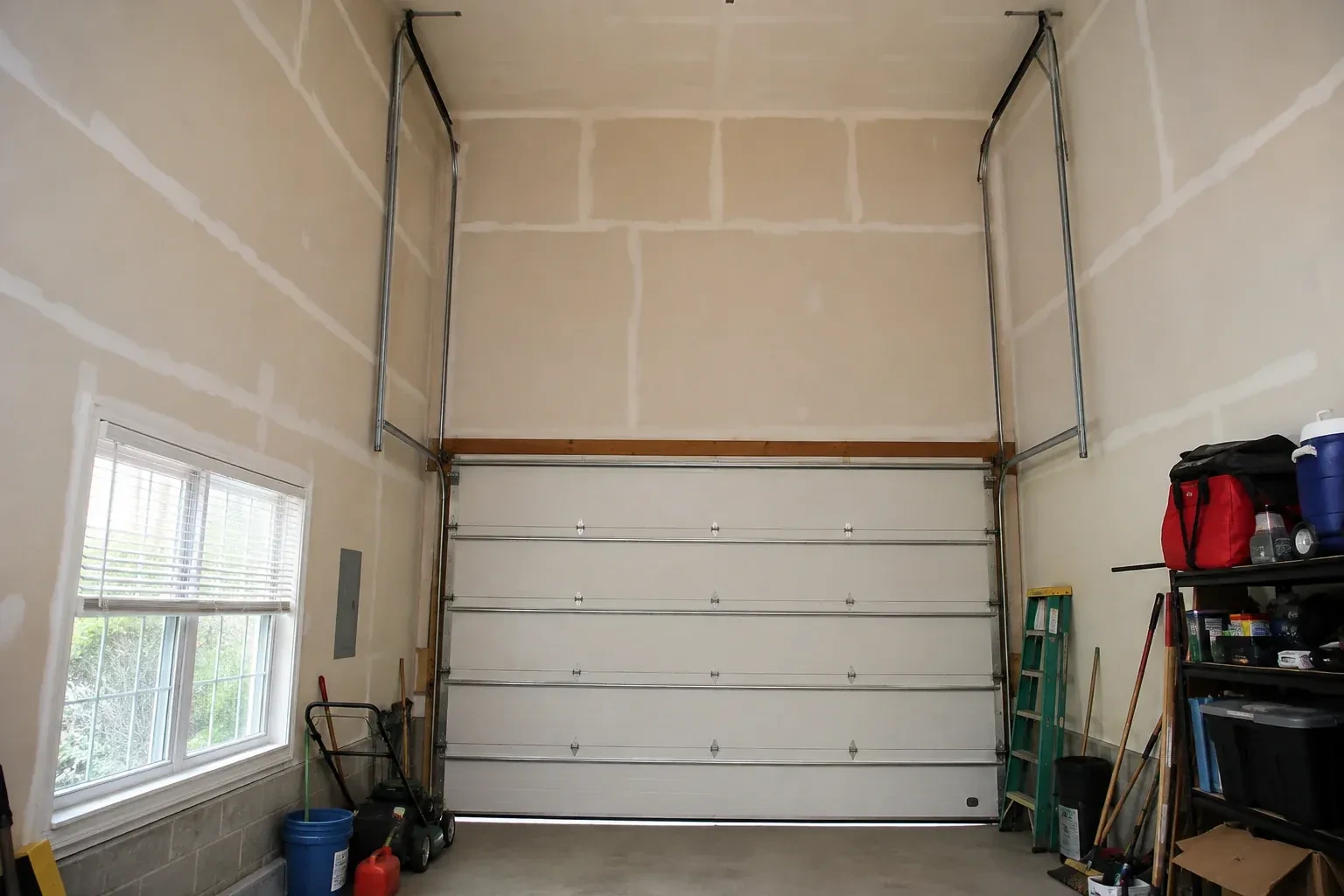
A garage project has reached the measurement stage, and overhead clearance is the deciding detail. The current springs, drums and tracks were built for standard lift, while the intended use calls for additional vertical travel.
Can one damaged section be replaced without replacing the whole door?
Usually, yes. A sectional door is built from separate sections joined by hinges, so a single creased, rusted or cracked section can be unhinged and exchanged while the others stay in place. The conditions are that a section for your make, model and size is still available and that the rest of the door and its hardware are in good order. When damage spans several sections or the design is discontinued, a full door is compared alongside.
How long should I allow for the work?
Plan on an hour or two for a straightforward replacement on a standard door, including the inspection and the opener reset. A retainer replacement, a hardened seal that has to come out in pieces, a wood door with a nail-on strip or the addition of a threshold seal each add time. The technician will give you a realistic window once the door has been looked at.
What lubricant belongs on a garage door lock?
Dry graphite or a PTFE lock lubricant for the key cylinder, because oil traps grit and moisture in the pins. A light silicone film for the bars and their guides, wiped rather than dripping, so salt spray and slush have less to cling to. Grease is avoided everywhere on the lock, as it thickens in the cold and collects dirt that gums the action.
Will new hinges make the door quieter?
Often noticeably. A cracked or loose hinge is the source of many pops, clicks and rattles, and a hinge that holds its roller square lets the wheel run flat instead of scraping the track lip. Combined with fresh lubricant on the knuckles and rollers, the door settles into a steady rumble. Any noise that remains usually points to the rollers, the opener chain or the springs, which the technician can identify for you.
Can a spring be adjusted rather than replaced?
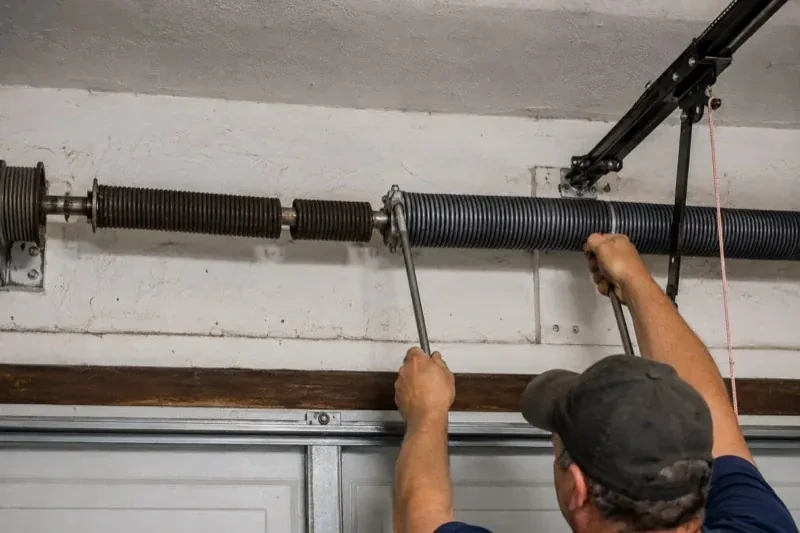
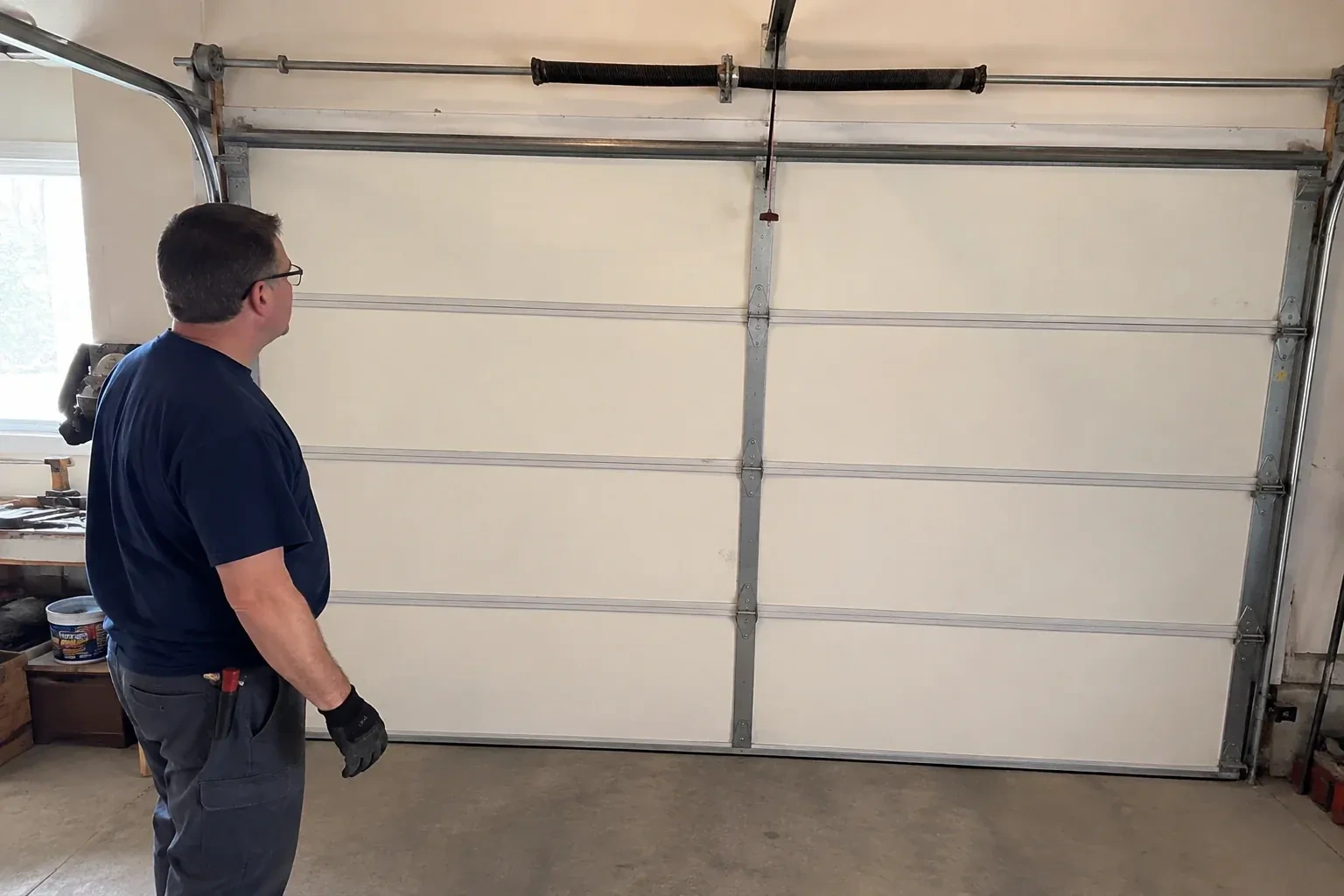
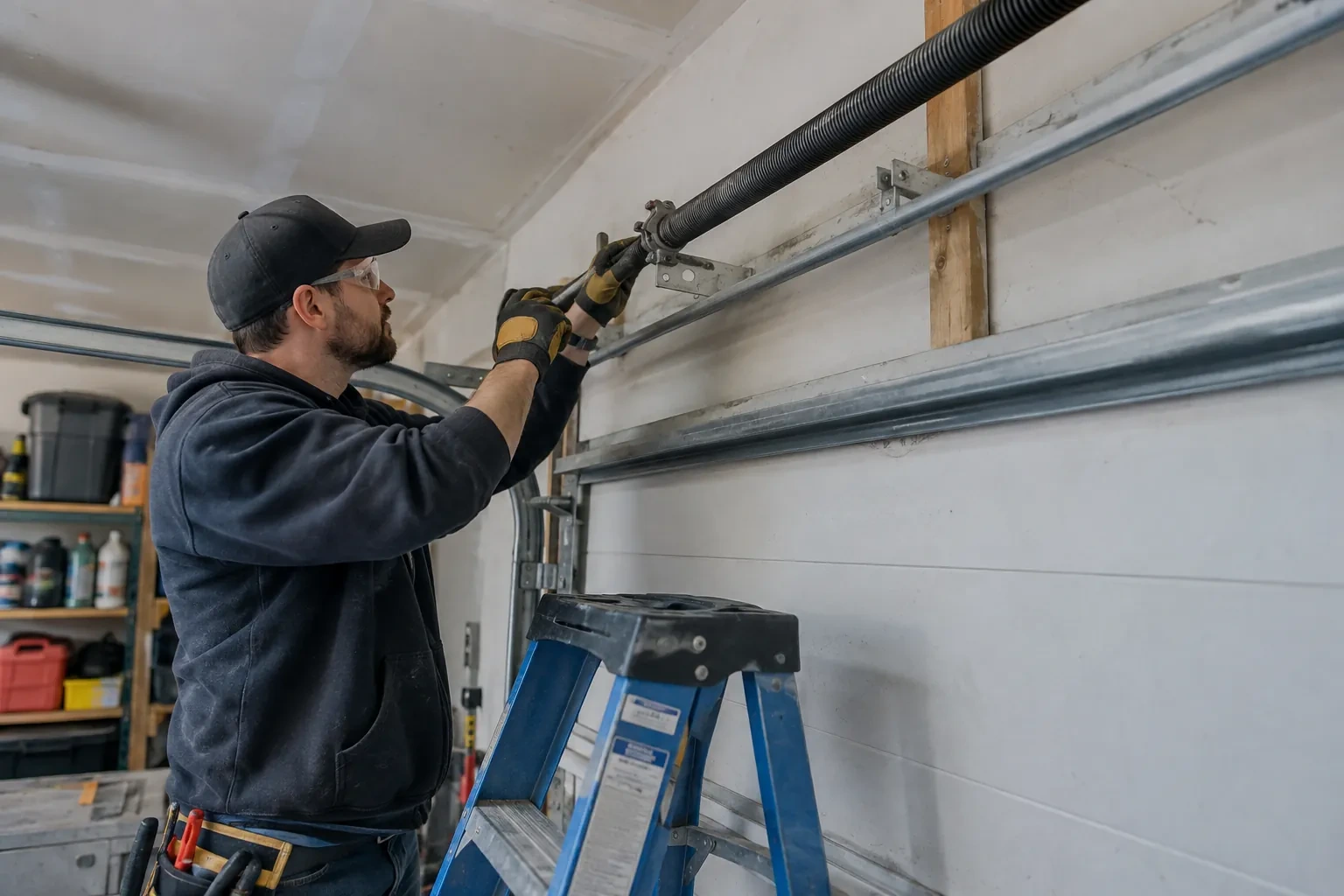
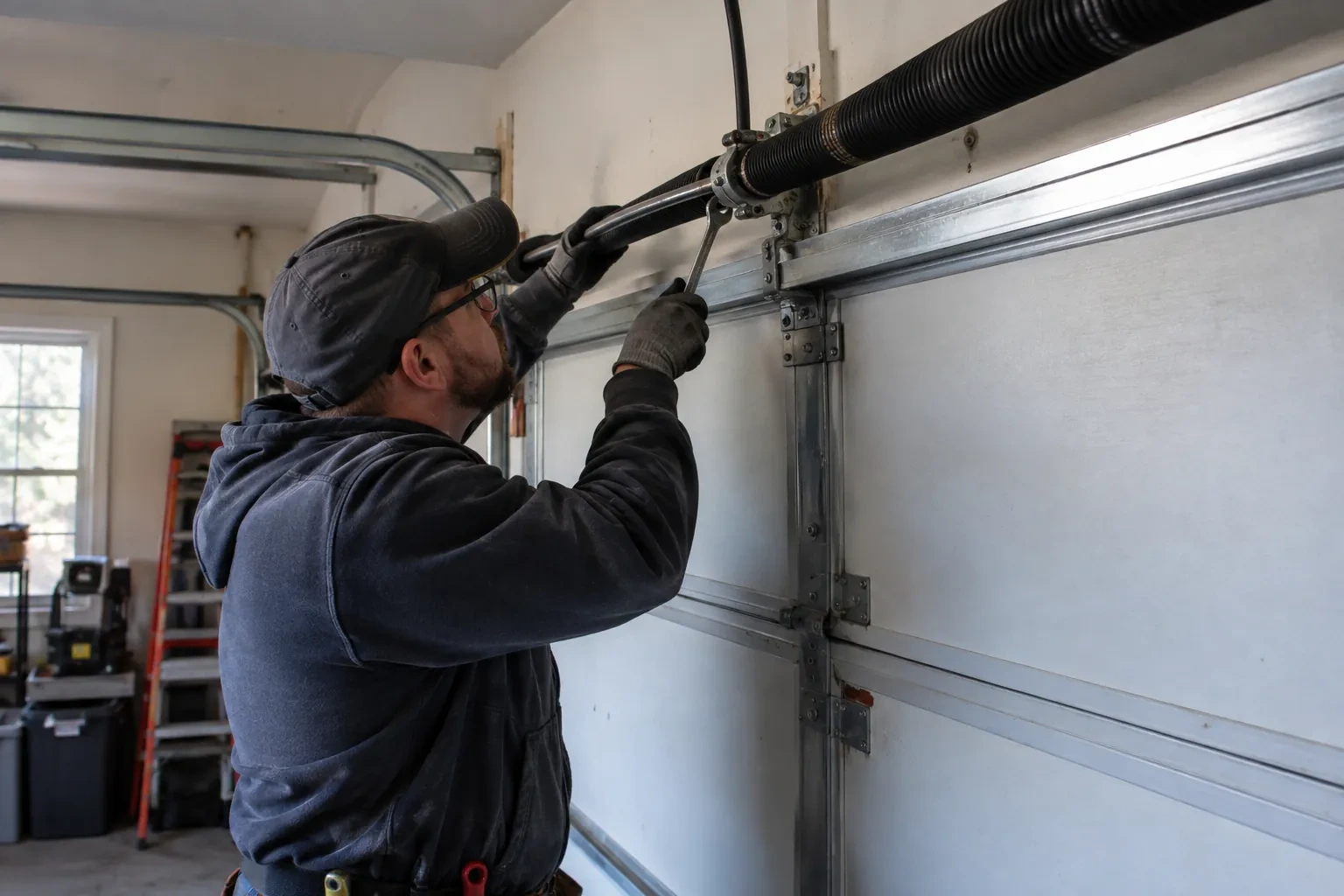
A spring that is intact but has relaxed slightly can be given a little more tension, within limits, to restore balance; this is a normal adjustment on a door that has settled. A spring with a broken coil is replaced as a unit, since the wire has reached the end of its life. The technician checks the condition of the steel and recommends whichever restores a balanced, safe door.
How long do garage door springs last?
Springs are rated in cycles, one cycle being an open and a close. A standard residential spring is commonly rated for around ten thousand cycles, which for a family using the door several times a day works out to roughly seven to ten years. Higher-cycle springs are available. As a spring nears its rating it loses tension, which is often why a balance adjustment is needed.
How high off the floor should the sensors sit?
Low. The industry checklist expects the beam no more than roughly 15 cm (6 in) up from the floor, so that a small child, a pet or a bicycle wheel breaks it. Both sensors are set at the same measured height and level with each other, since a difference of a couple of centimetres is enough to lose the beam. Within that rule the technician can raise them a little to keep them out of the strip where slush collects.
Which opener safety checks are completed after installation?
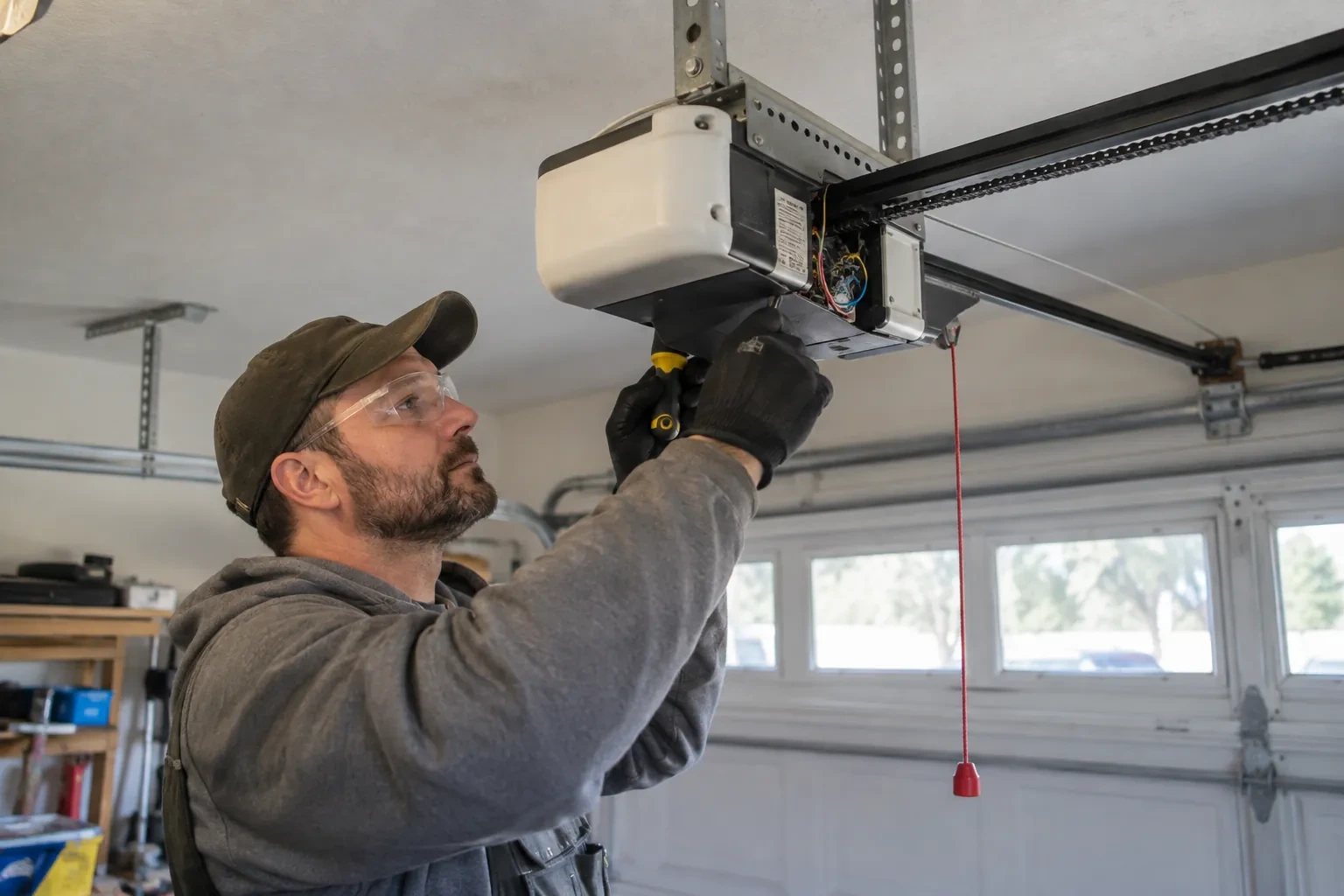
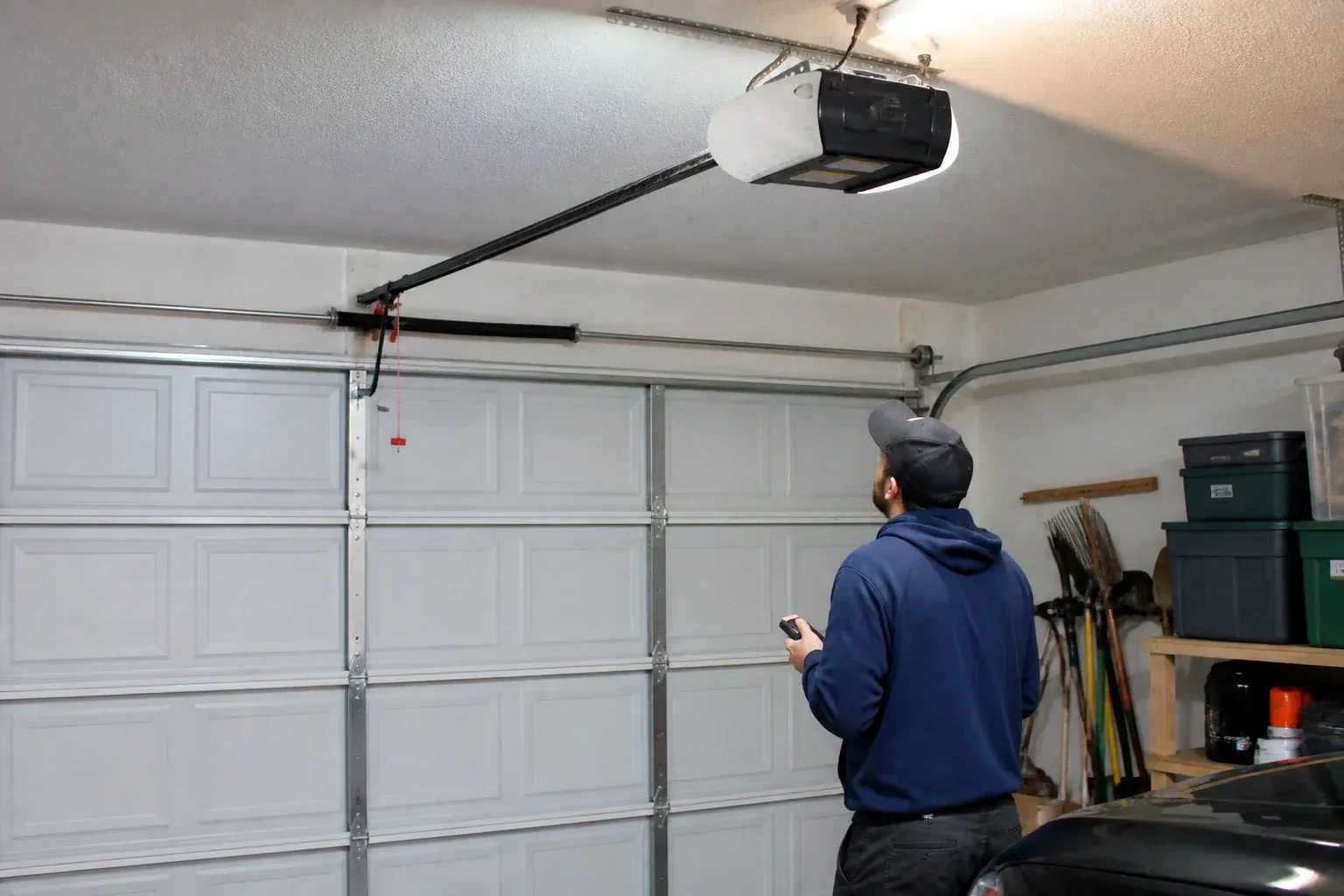
The technician confirms that photo eyes are aligned and respond when their beam is interrupted during closing. Contact reversal is tested according to the opener instructions, and open and closed travel limits are reviewed. Wall controls, remotes and the manual release are also operated. These checks connect the automatic equipment to the new door's actual movement instead of carrying forward former settings.
Does a torn bottom seal always mean a seal-only repair?
Not always. The rubber may simply be worn, but a bent retainer, uneven floor, crooked door or impact-damaged bottom section can produce the same gap. The technician checks how the door lands before replacing material. Correcting level or retainer shape first allows the new seal to contact evenly without being stretched to compensate for another fault.
Can a high-lift conversion create room for a vehicle lift?
That is a common reason to consider one. The assessment uses the lift's raised height, the vehicle profile and working clearance to define the needed zone. The proposed door path is then measured against that zone, including the lowest section in the open position. Final feasibility depends on available wall height, ceiling conditions, structure and equipment placement.
Request a visit
A new door for a home in Conestogo is planned with more time than a repair. We measure the opening and headroom, talk through insulation, windows, colour and panel style, show samples at the house, and install the door and its hardware plumb, level and balanced so it looks and runs right from the first day.